
RebateLedger Blog — Trade Claims, Schemes & Channel Finance
Practical playbooks on distributor claims, trade schemes, GST-compliant settlements and channel finance — written for the teams who run them.
Every guide is grounded in how Indian distributors, manufacturers and wholesalers actually work — spanning distributor and dealer claims management, secondary scheme settlement, trade-promotion management and trade spend, rebates, chargebacks and deductions, GST and compliance for trade schemes, and channel and DMS finance. Whether you are reconciling a debit note, accruing a volume-slab scheme, disputing a chargeback, or issuing a Rule 53(1A) credit note, you will find a step-by-step playbook here — plus the in-product help center and hands-on tutorials when you are ready to do it in RebateLedger.
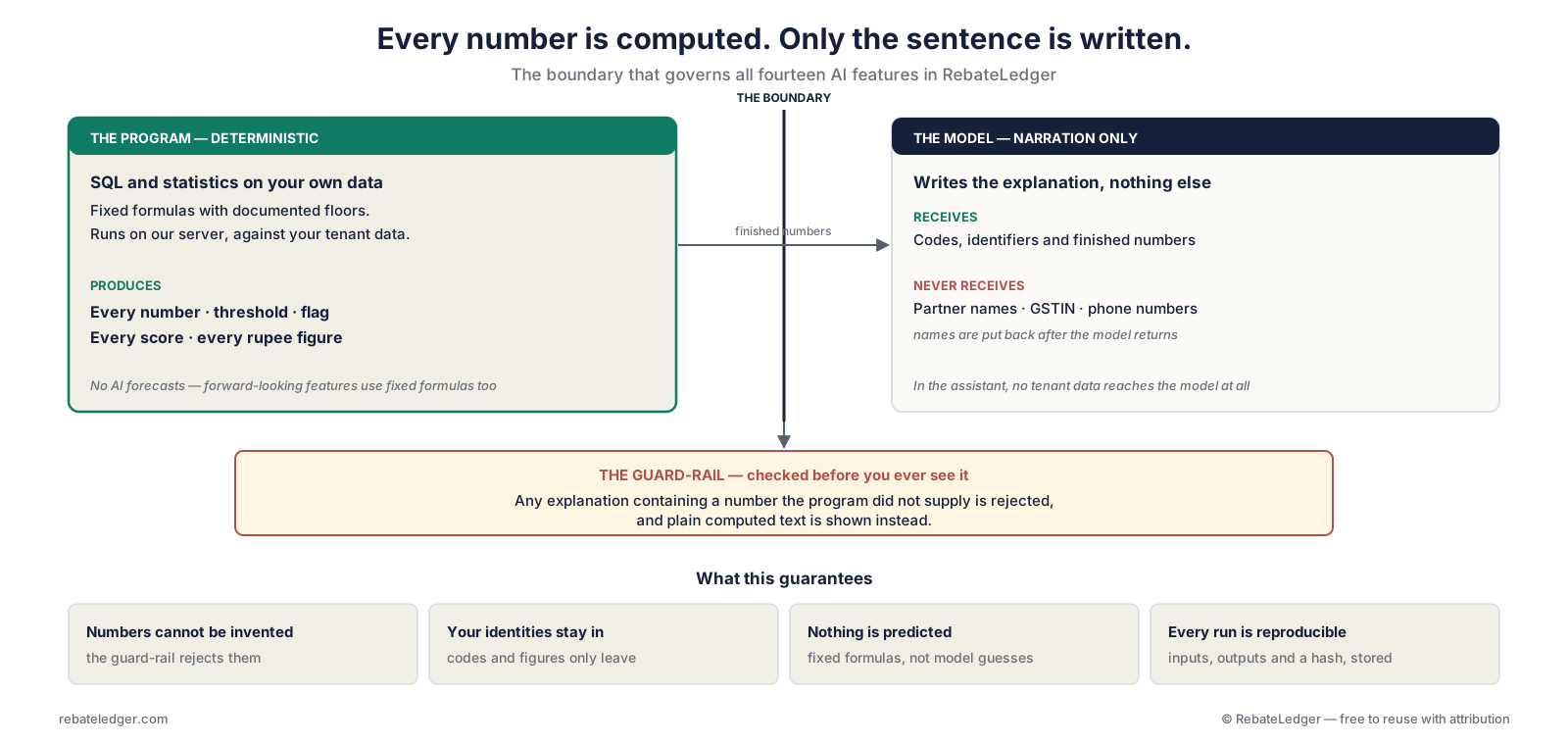
AI in RebateLedger: Every Number Is Computed, Not Generated
The fourteen AI features in RebateLedger, what each one does, and the boundary that keeps every figure computed by program rather than written by a model.
Read articleLatest articles
AI in RebateLedger: Every Number Is Computed, Not Generated
The fourteen AI features in RebateLedger, what each one does, and the boundary that keeps every figure computed by program rather than written by a model.
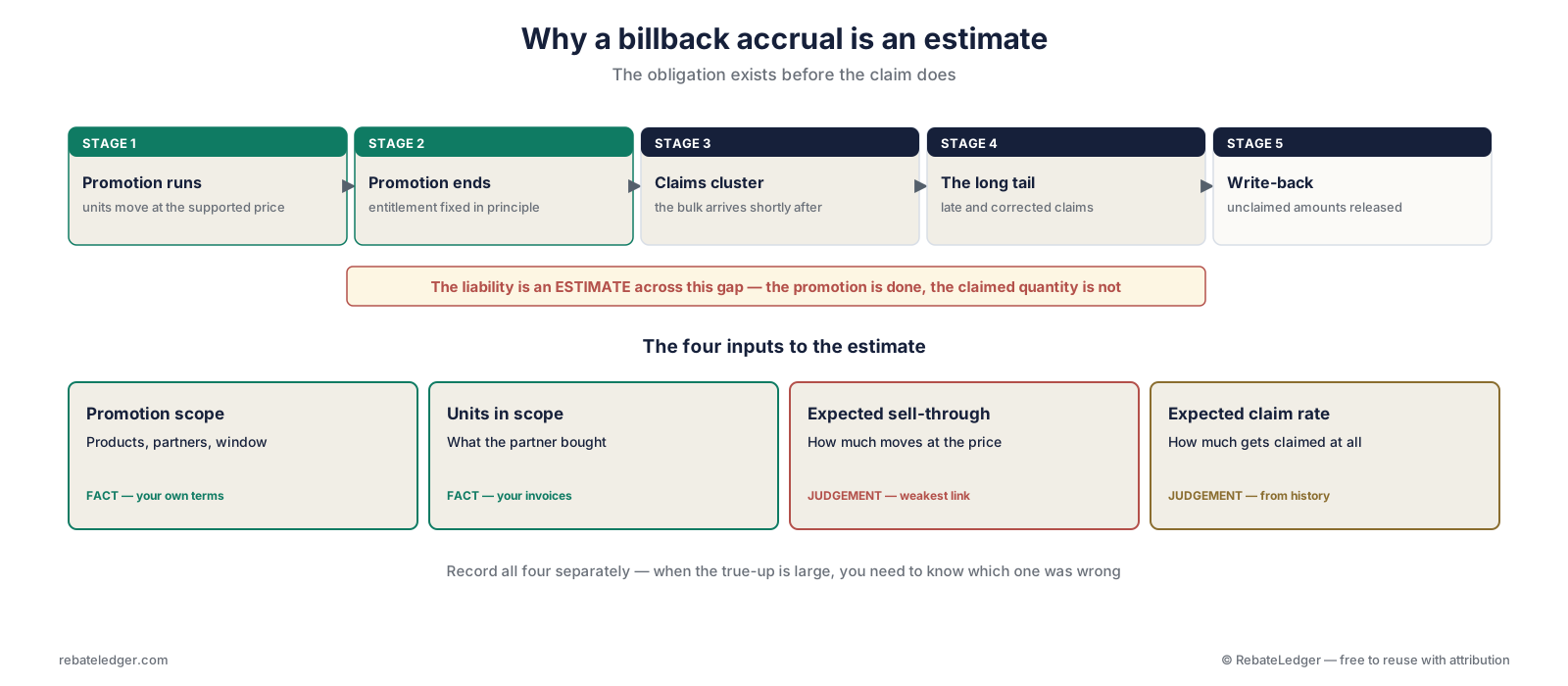
Billback Accrual: Estimating What You Owe Before the Claim Arrives
A billback is the hardest claim type to accrue, because entitlement depends on sell-through you cannot see. How the estimate is built and trued up.
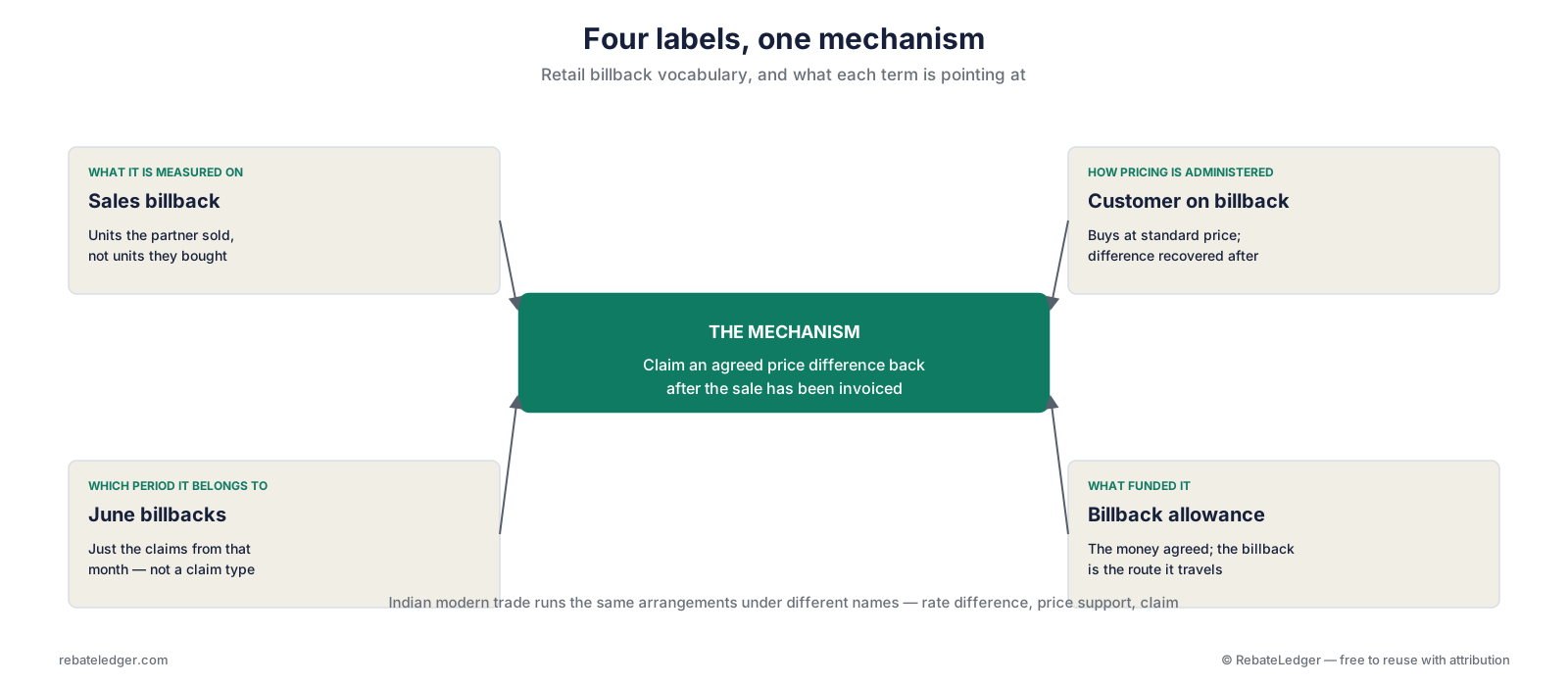
Billback in Retail: Sales Billbacks, Customer on Billback and Period Billbacks
Retail and beverage distribution use billback vocabulary nobody defines — sales billback, customer on billback, June billbacks. What each one means.
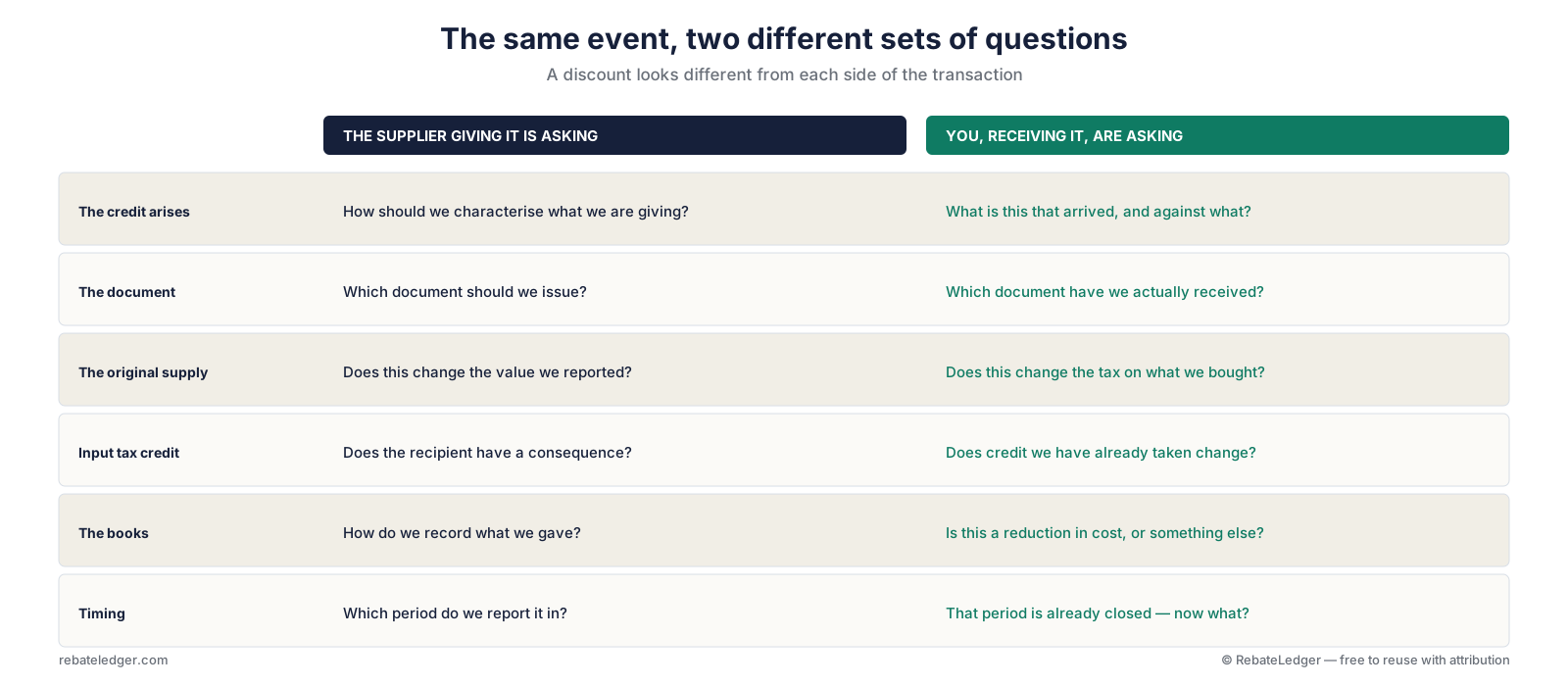
GST on Discounts and Rebates You Receive: The Buyer's Side
Most guidance covers the supplier giving a discount. What questions arise for the business receiving one, and what determines each answer.
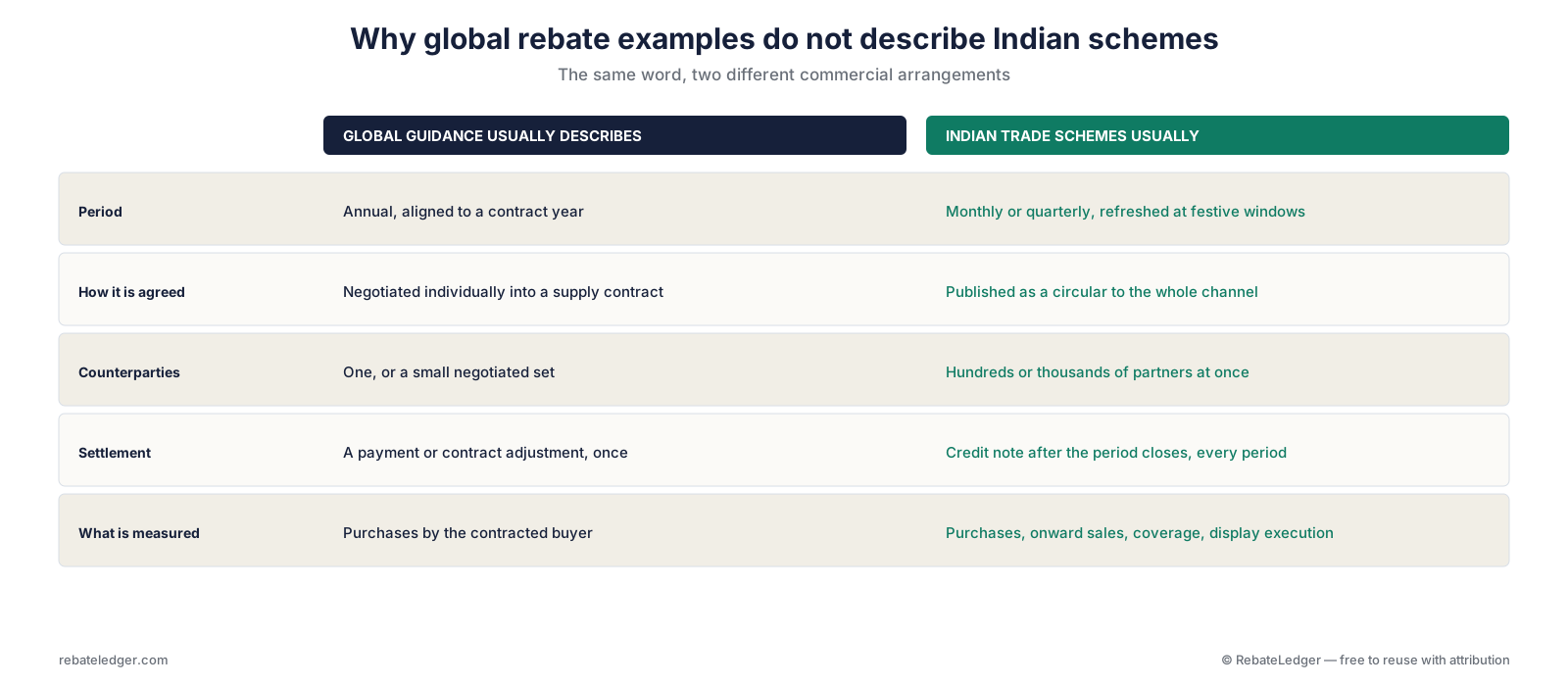
Rebate Scheme Examples in India: Why Global Examples Do Not Fit
Global rebate examples describe annual negotiated contracts and consumer mail-in offers. Indian trade schemes work differently. What changes, and why.

Turnover Discount (TOD) Under GST When It Wasn't Agreed at Year Start
A year-end TOD not established at or before supply fails Section 15(3)(b) — no GST credit note; the route is commercial, and the dealer keeps full ITC.

Turnover Discount (TOD): Meaning, Agreement Structure and Settlement
TOD is a periodic discount earned on total purchase turnover, usually slabbed and settled by credit note — governed by the agreement, not by statute.

Ship and Debit: How Special Pricing Agreements Actually Work
Ship and debit — how a special pricing agreement authorises a lower price, how the claimback is computed, and how it differs from price protection.

Documents Required for a Distributor Scheme Claim: The Checklist by Claim Type
The document checklist by claim type — volume, rate difference, price protection, expiry, liquidation, display — plus the four anchors every claim needs.
Free Goods and Scheme Goods: What They Really Cost You
Free goods do not cut the price — they cut the cost per unit. The arithmetic everyone gets wrong, and why most systems record scheme goods incorrectly.

What Are Market Development Funds (MDF)?
Market development funds — what MDF is, how accrual and discretionary funds differ, how the money moves from earned to reimbursed, and why it lapses.
How Do Large FMCG Companies Like HUL Settle Distributor Claims?
How large FMCG companies settle distributor claims — DMS-integrated workflows, defined claim types, scheduled cycles. The lesson is discipline, not budget.

Net Landing Cost: What You Actually Pay for a Case
Your invoice says ₹950 a case. Your real cost is ₹835. Net landing cost step by step, with the full calculation and where distributors get it wrong.
Primary vs Secondary Trade Margin: How the Chain Splits
Where margin sits at each tier of the Indian channel, how primary and secondary margin differ, and why stockist margin is rarely what a rate card says.
PTR, PTS and PTW: What Each Price Means and How to Calculate It
Price to retailer, price to stockist and price to wholesaler explained, with the formulas, a worked example from MRP downward, and the rounding trap.
Sale or Return, Consignment and Outright Sale: Who Owns the Stock
SOR, consignment and outright sale compared — where title passes, who carries unsold-stock risk, how each is invoiced, and the GST treatment of each.
Trade Discount vs Cash Discount: Not the Same Thing
Trade discount reduces the price. Cash discount buys early payment. Why one is a pricing decision and the other a financing decision, with the maths.
Billback Accounting: Income Statement Treatment Explained
Where billbacks land on the income statement, contra-revenue versus expense, when to accrue, and worked journal entries for both sides.
Billback Deduction vs Markdown Allowance: The Difference
A markdown allowance funds a price cut at shelf. A billback deduction recovers it by short-paying an invoice. The retail deduction family, explained.
Billback vs Chargeback: What Is the Difference?
A chargeback is claimed against an authorised price on one sale; a billback is billed for an earned allowance afterwards — with worked examples.
Deductions Start in Sales and Land in Finance: Fixing the Handoff
Most invalid deductions start with a sales commitment nobody wrote down. Why the sales–finance handoff produces them, and who should own the dispute.
How to Audit Rebate Claims: 12 Tests You Can Automate
What a rebate claim audit checks, twelve automatable tests written so you can implement them, and how to tell which findings are worth pursuing.
How to Calculate Rebate Accruals Accurately
Accrue against each transaction at the rate you expect to earn. Tiered, retrospective and growth rebates worked month by month, with the true-up.
Rebate Claim Documentation: What You Need for Each Claim Type
The evidence set for every claim type — volume, scheme, price protection, damage, promotional, freight — plus the ten reasons claims get rejected.
Rebate Software for Automotive Parts Distribution: What to Look For
Why automotive parts distribution breaks general rebate software — supersession, multi-supplier programs, cores, warranty — and the features that follow.
Supplier Rebate Accounting: Treatment, Timing and Journal Entries
Supplier rebates reduce the cost of inventory, not other income. Recognition timing, tiered rebates, journal entries and the controls auditors look for.
Trade Scheme & Rebates Ledger in Tally: Which Group, and Why
Which group to create a Trade Scheme & Rebates ledger under in Tally, whether scheme spend is an expense or a revenue deduction, and how to reconcile it.
Vendor Billback vs Rebate: Which Is Which, and Why It Matters
A rebate is earned on cumulative performance and settled in arrears. A billback is billed per event against an agreed price. Same money, different trigger.
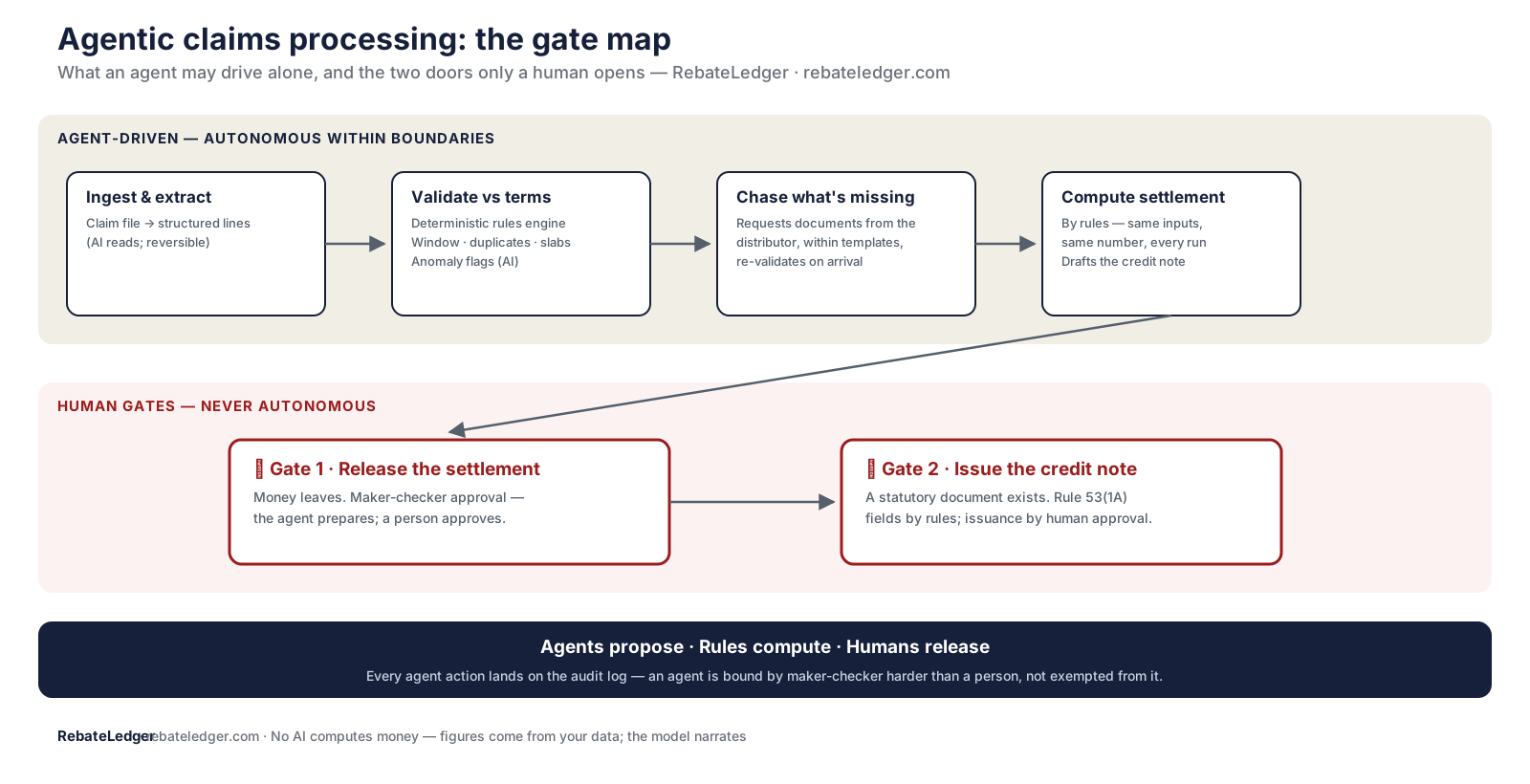
What Is Agentic Claims Processing for Distributor Settlements?
Software agents that take a claim through ingest, validation and credit-note drafting, pausing at approval gates. What's real, and what must stay human.
Is There AI Software for GST Credit Note Automation in India?
The automatable chain is claim validation, commercial-vs-GST decision support, Rule 53(1A) document generation, reconciliation — and where rules must rule.
Can AI Automatically Match Distributor Claims to Scheme Terms?
Yes for the deterministic 80% — extraction, rule matching, duplicate and window flags. What is genuinely rules, what is AI, and where humans must stay.
Distributor Ledger Reconciliation With Claims and Credit Notes
Why the company ledger and the distributor's books disagree, and the monthly three-way reconciliation across ledgers and the claim register that closes it.
Channel Incentive Accrual Audit Checklist: the 15 Checks
Fifteen checks across completeness, accuracy, cutoff and documentation that prove channel incentive and scheme accruals are right — for auditors and teams.
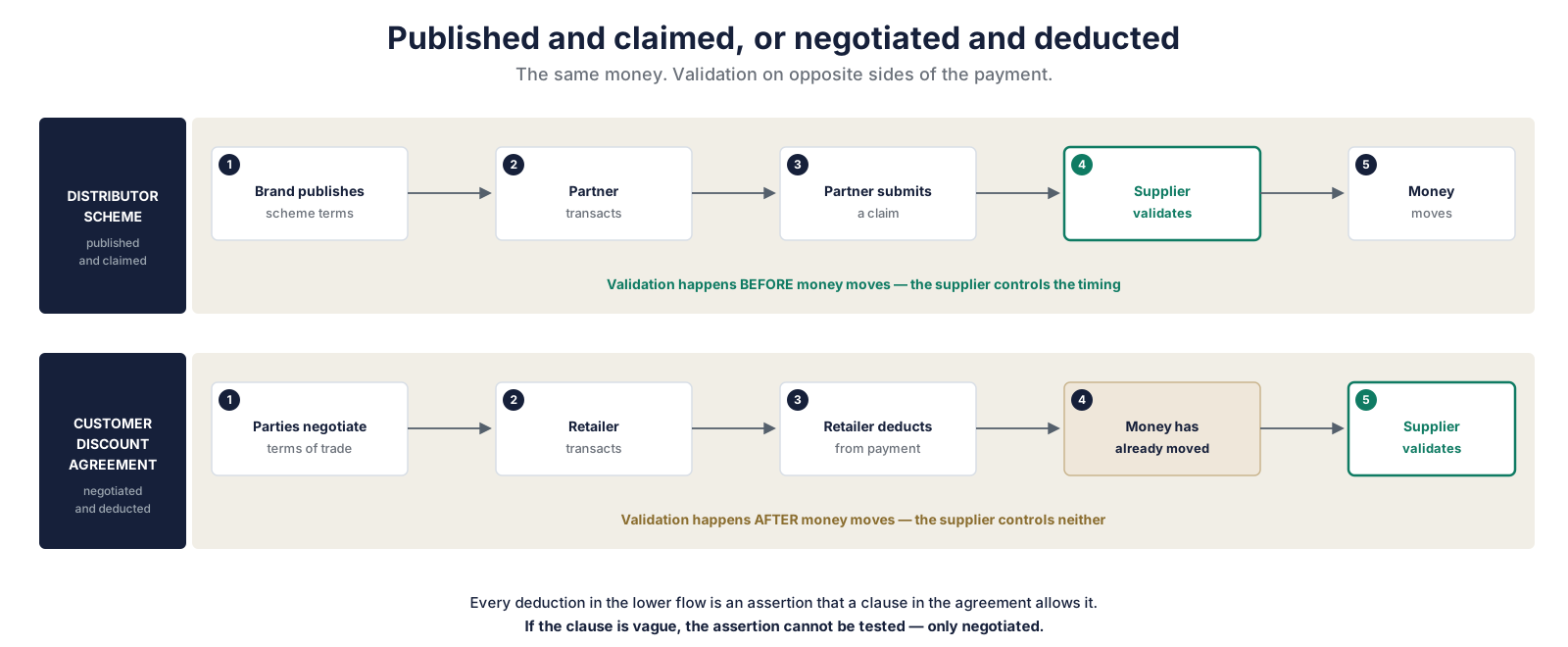
The Customer Discount Agreement: What Your Terms of Trade Must Contain
What a customer discount agreement with an organised retailer must contain, and why every deduction you receive later traces back to a clause inside it.
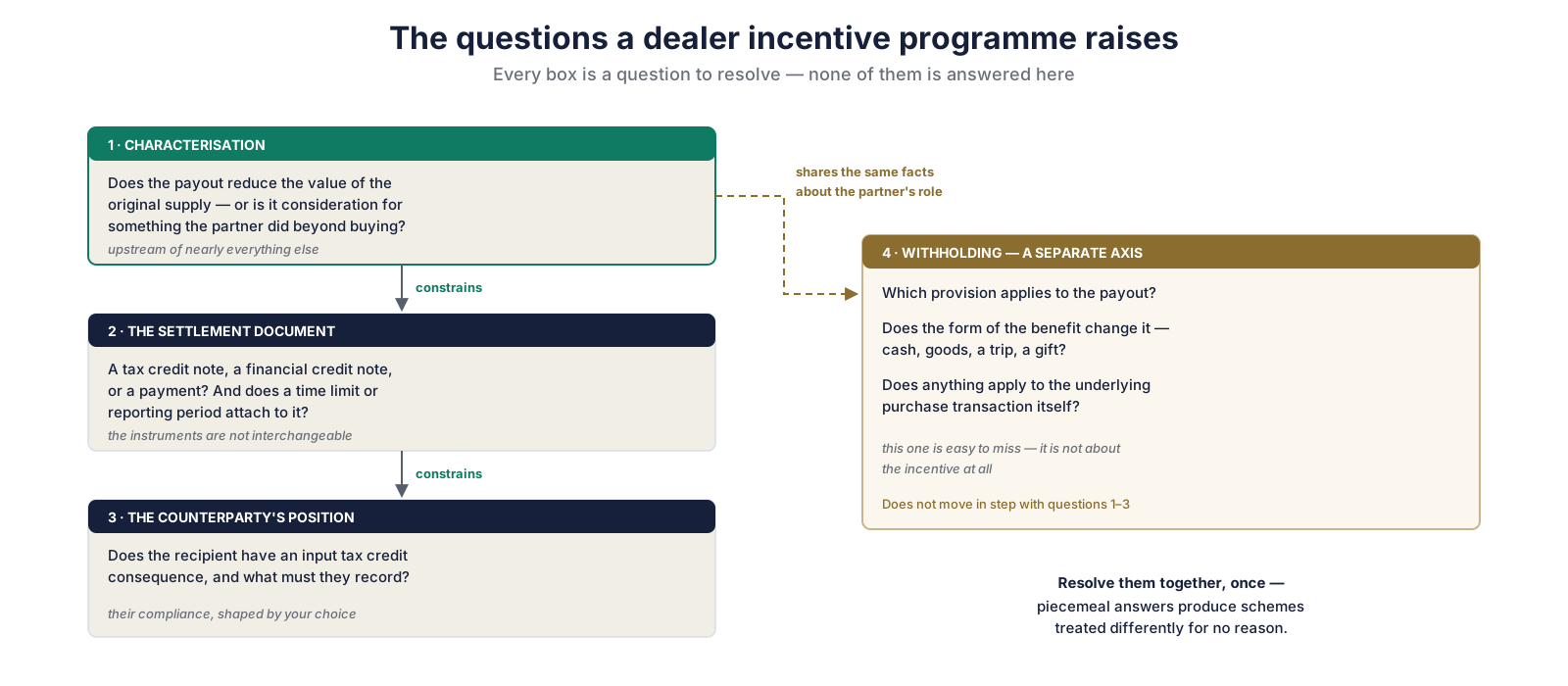
The Tax Checklist for Dealer and Distributor Incentive Programmes
A dealer incentive programme raises GST and withholding questions across several provisions. A checklist of what to ask, and where each answer lives.
Are Distributor Marketing Costs Part of GST “Consideration”?
When a distributor bears marketing or promotional costs, can they form part of GST taxable value? The question, the factors, and why it depends.
Can Your ERP Calculate Rebates, Schemes and Sales Incentives?
An ERP records transactions — it doesn't hold scheme rules or incentive plans, or compute payouts against them. Here's why they end up in spreadsheets.
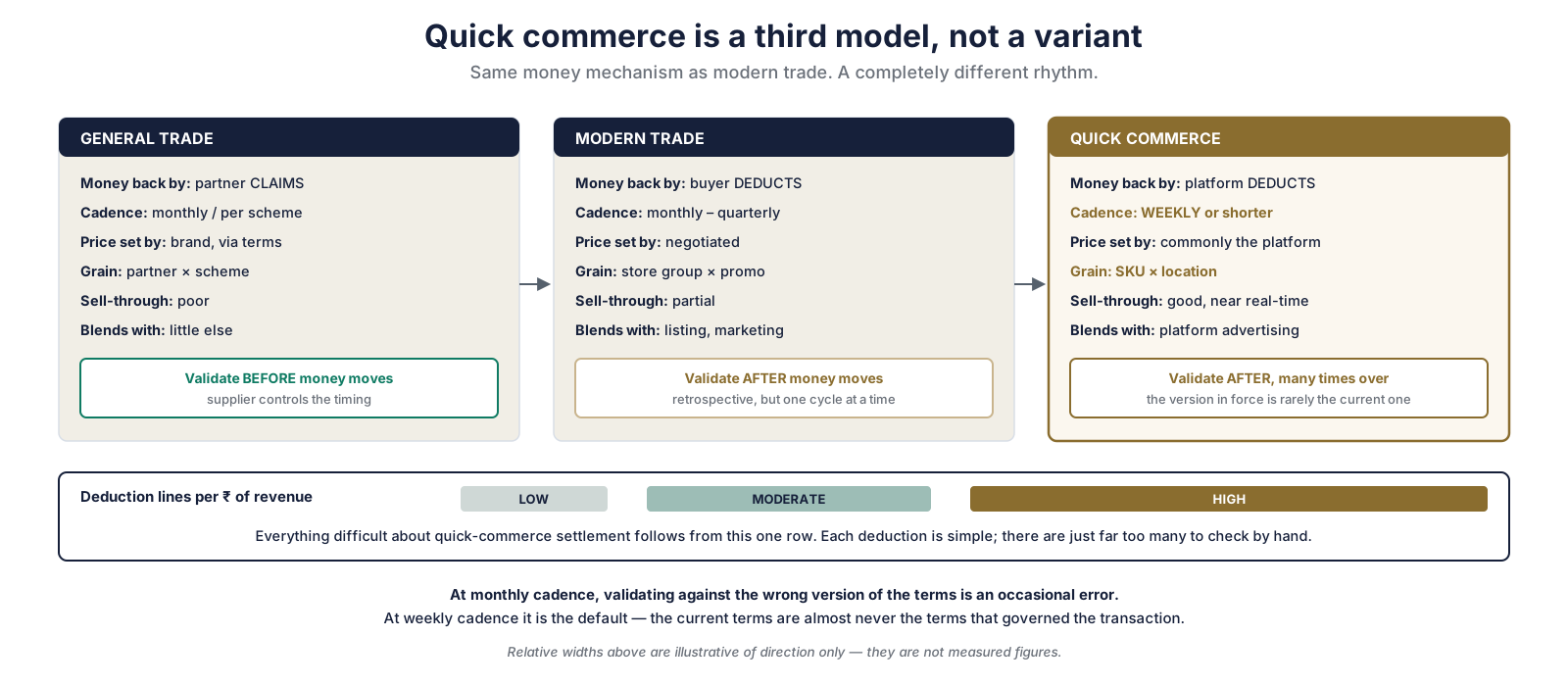
Quick Commerce Claims and Deductions: The Third Channel Model
Quick commerce settles trade spend on a weekly cadence at SKU level — neither general trade nor modern trade. What changes for claims and deductions.
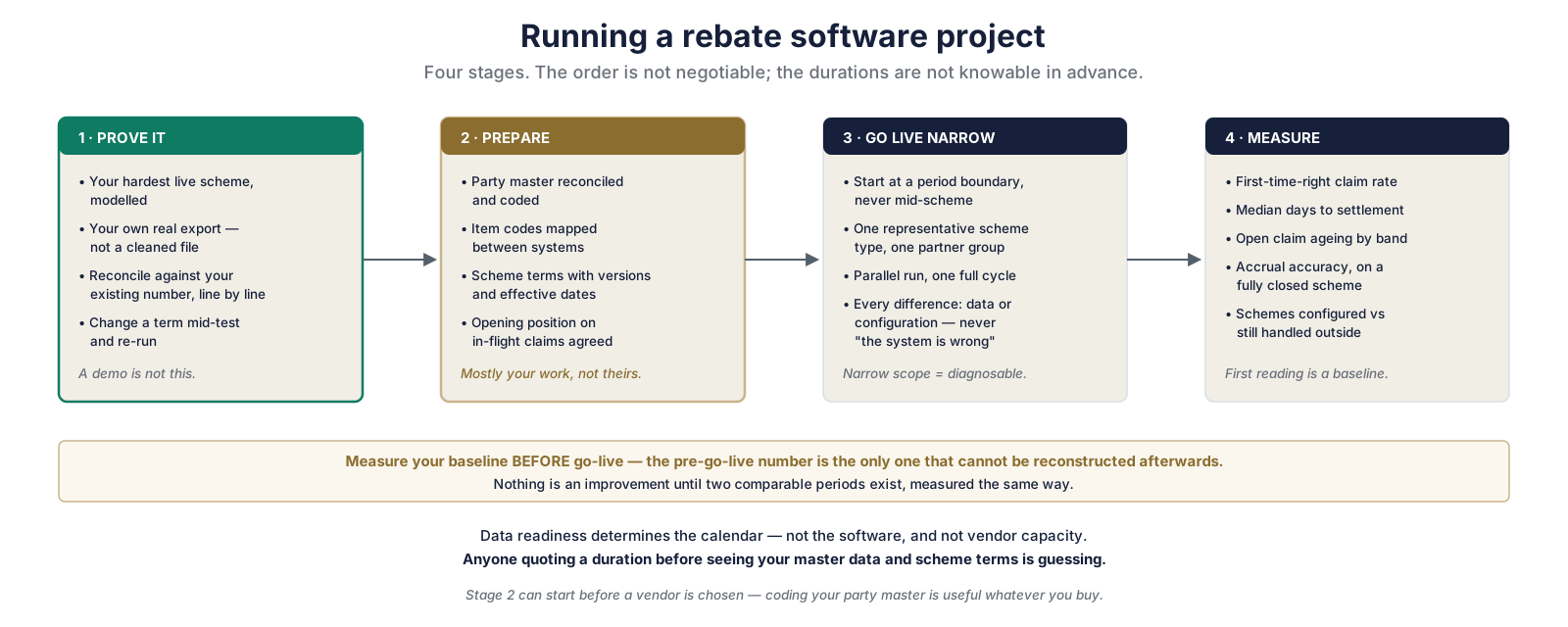
From Proof of Concept to Go-Live: Running a Rebate Software Project
What to test in a proof of concept, what belongs on a go-live checklist, and what to measure in the first ninety days of a claims or rebate implementation.
Rebates and Sales Incentives Are the Same Calculation. Only the Payee Changes.
A trade scheme and a sales incentive are the same computation — a target, an achievement, a payout. Only the payee and the tax treatment differ.
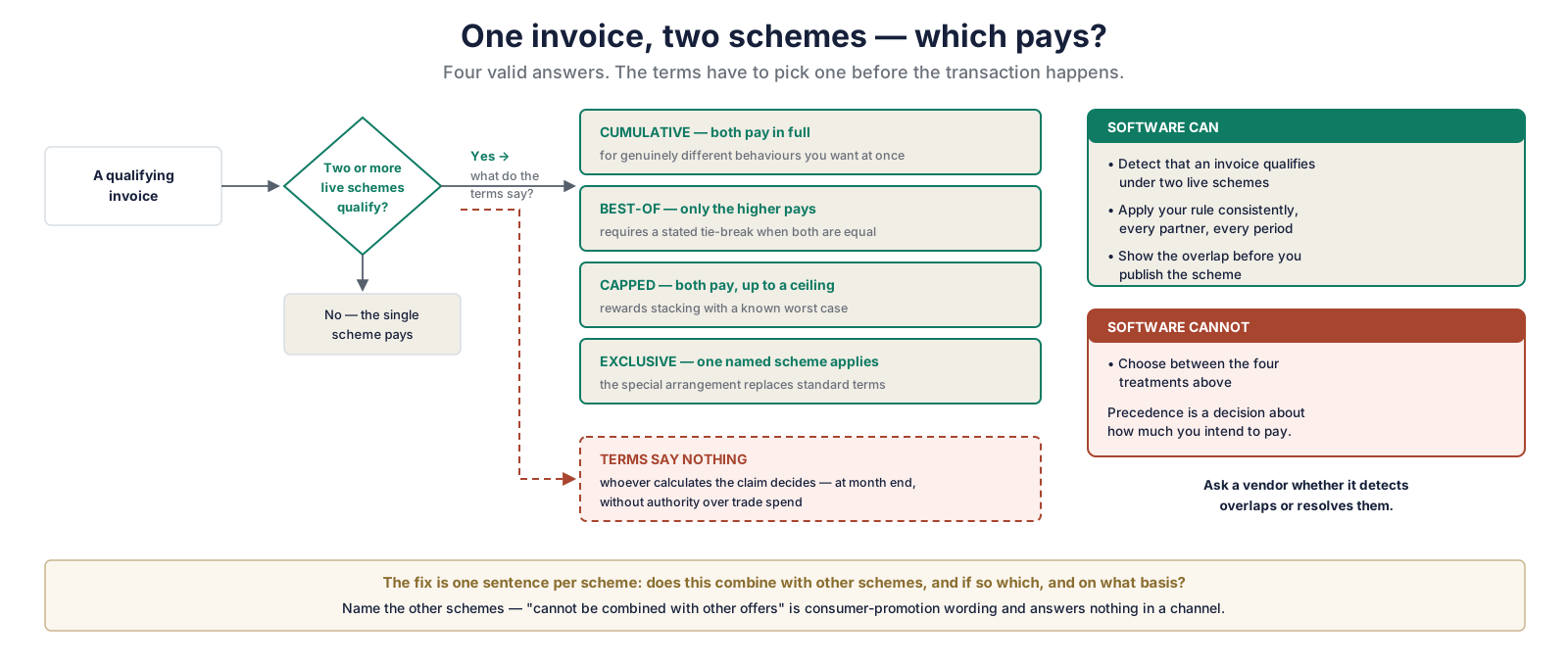
When Two Schemes Apply to the Same Sale: Resolving Scheme Conflicts
Two schemes apply to the same transaction — do both pay, or only the better one? Why no system can decide this for you, and what your terms must state.
Target-Based Incentives and GST: Discount, or Consideration for a Service?
When a distributor earns an incentive for hitting a target, is it a price adjustment or payment for a service? Why it arises and what determines it.
Tax-Inclusive vs Tax-Exclusive Pricing — and What Base Your Rebate Actually Uses
MRP includes tax; B2B invoices usually don't. So is a scheme payout on the tax-inclusive or tax-exclusive value? Why the answer changes the number.
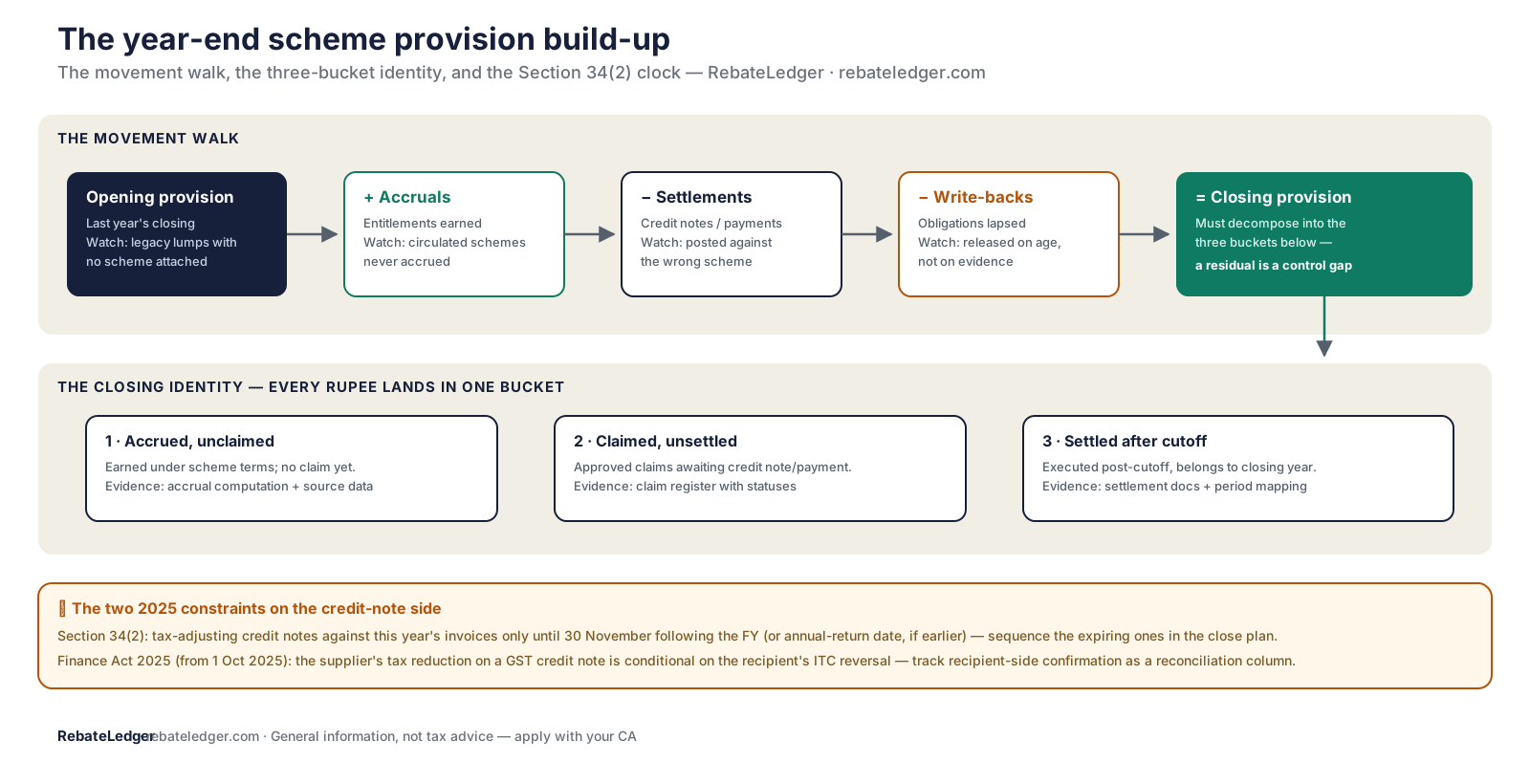
Scheme Provision and Liability Reconciliation at Year End
Prove the scheme provision equals accrued-but-unclaimed, claimed-but-unsettled and settled-after-cutoff — then clear what Section 34 makes unadjustable.
Who Needs to Be Involved in a Claims-System Implementation?
The five roles a claims-software implementation needs — commercial, accounts, data, a pilot distributor and a decision-maker — sized for an Indian SMB.
How Long Should You Run Excel and a Claims Platform in Parallel?
One full scheme cycle — usually a quarter — is the right parallel-run length. What to compare weekly, the exit criteria, and the shadow-Excel trap.
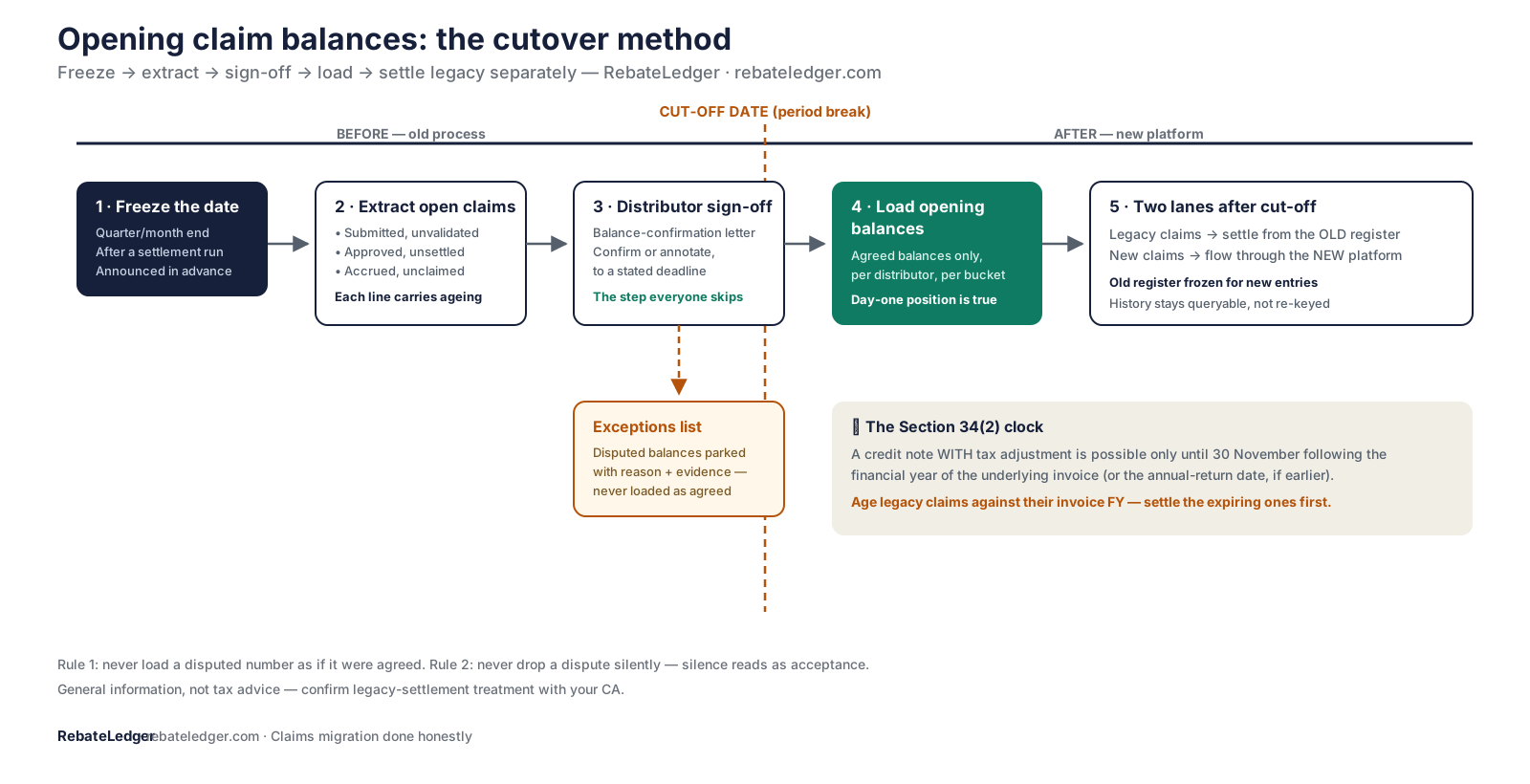
How to Reconcile Opening Claim Balances When Switching Claims Platforms
The cut-off method for opening claim balances when you move to claims software — freeze, extract, get sign-off, load, and settle legacy claims cleanly.
The Real Challenges of Implementing Rebate Management Software in India
Global implementation playbooks assume conditions Indian businesses do not have. The twelve things that actually make rebate software hard to adopt here.
Channel Incentives: The Full Range, Financial and Non-Financial
Rebates and schemes are only part of how brands influence channel behaviour. The full spectrum of incentives, what each achieves, and what each costs.
What a Distributor Actually Earns After Rebates
Your invoice margin is not your real margin. How supplier rebates, schemes and claims change what a distributor earns — and why the timing hides it.
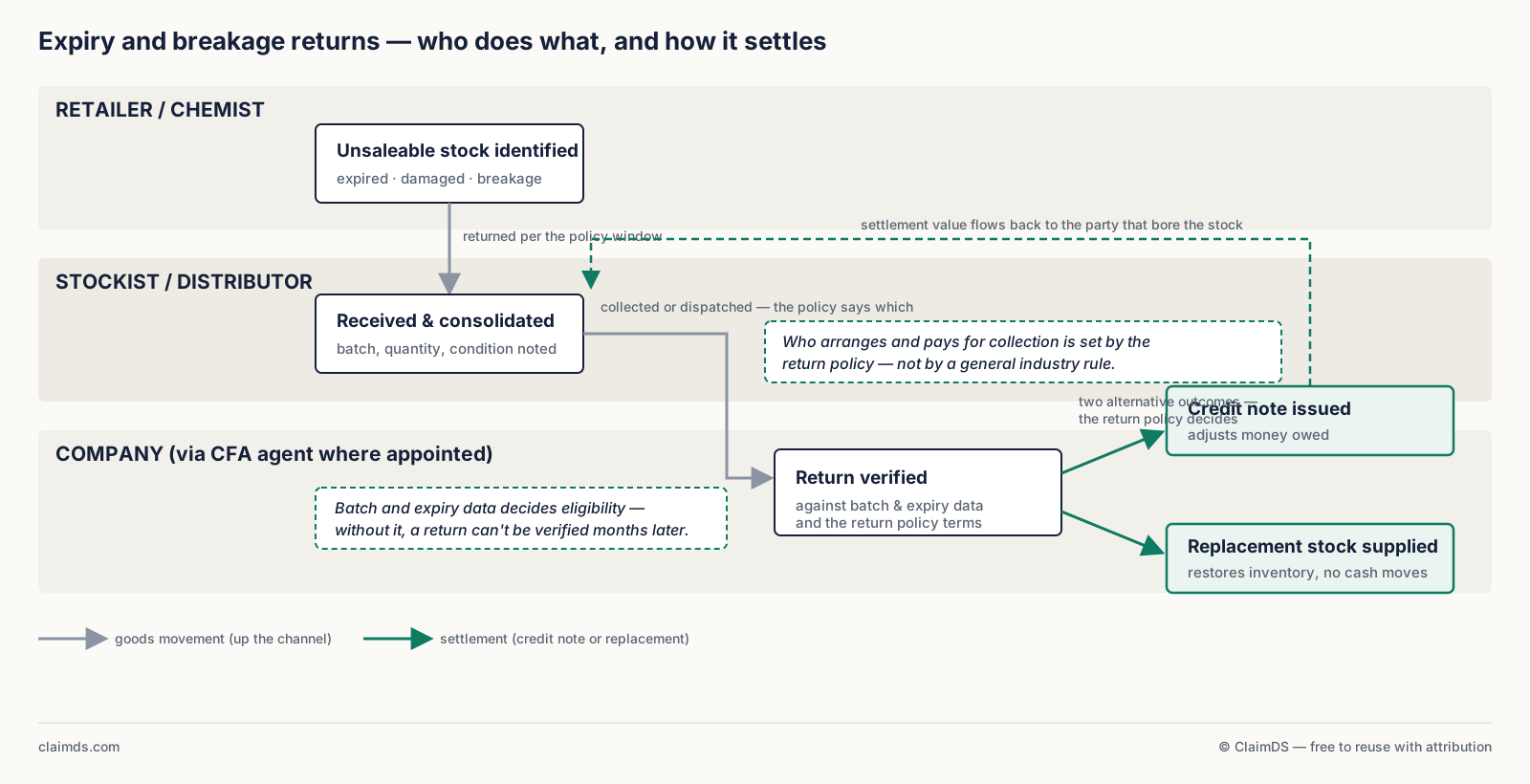
Expiry and Breakage Returns: Who Collects, Who Pays, and How It Settles
Who collects expired stock, who bears the cost, and whether it settles by replacement or credit note — the operational side of expiry and breakage returns.
Subvention Claims: How Interest and Dealer Support Actually Get Settled
When a brand funds a zero-interest offer or supports a dealer's cost, the money moves as a claim. How subvention works and what it takes to settle it.
How to Build a Claim and Scheme Simulator in Excel
The workbook structure behind a channel claim model — four tabs, codes not names, terms off the formula, and the control totals that catch silent errors.
Build a Buyback and Expiry Return Simulator in Excel
Buyback and expiry claims price returned stock by how old it is. How to band by age in Excel, apply the right rate, and keep batch data straight.
Build a Chargeback and Billback Simulator in Excel
Chargebacks and billbacks are the same calculation — a price difference on qualifying units. How to model both in Excel, and where qualifying goes wrong.
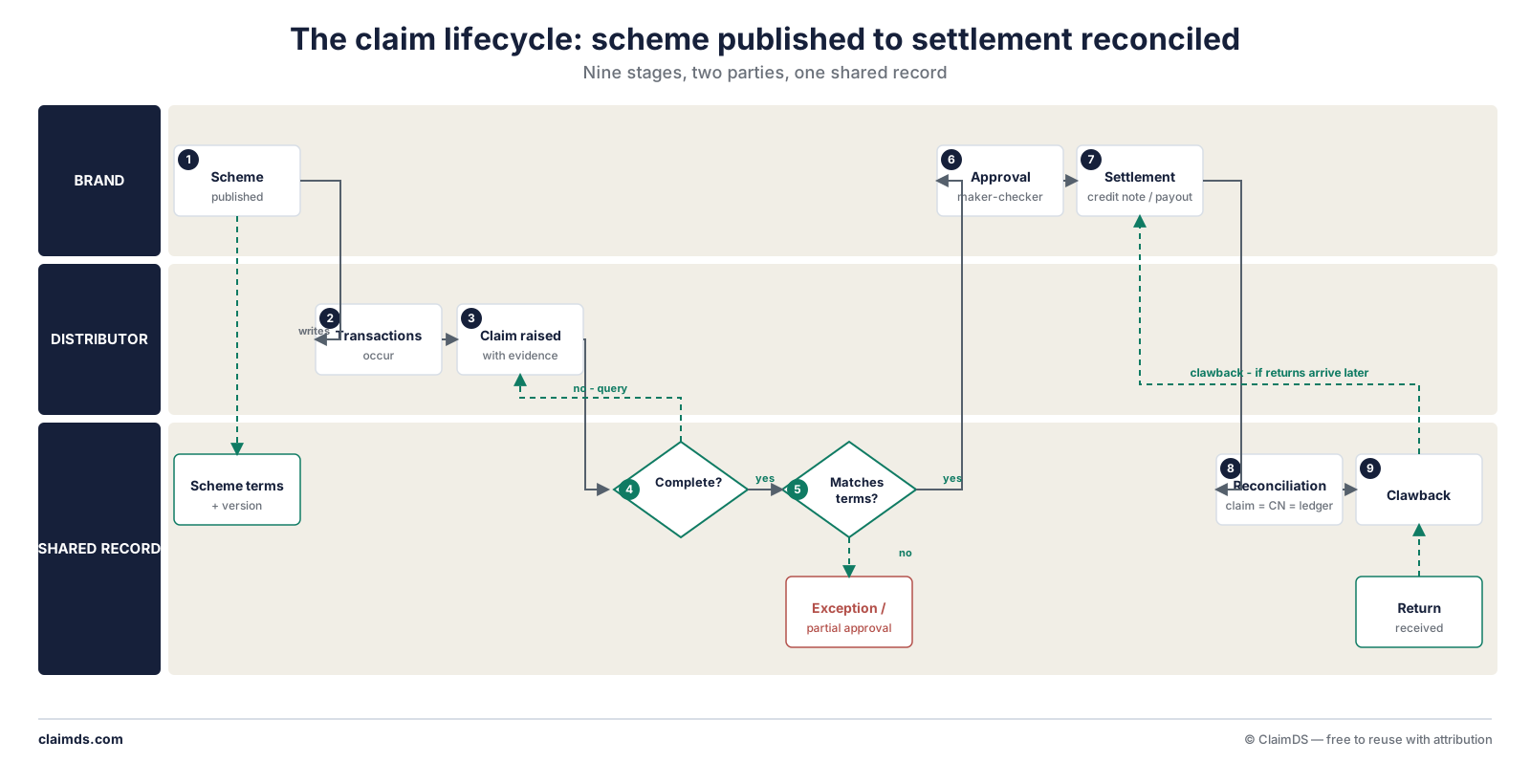
The Claim Lifecycle: From Scheme Published to Settlement Reconciled
The full process of a channel claim — scheme published, transaction, claim raised, validated, approved, settled, reconciled, clawed back. With a diagram.
How Claims Software Works Alongside a DMS — Not Instead of It
A DMS runs the front of your channel. Claim settlement runs behind it. What data moves between the two, and how reconciliation actually works.
How to Model What a Trade Scheme Will Cost Before You Launch It
Before a scheme goes live, know its best, likely and worst-case cost. How to model scheme liability against budget, with worked examples in ₹.
Build a Price Protection and Stock Compensation Simulator in Excel
Both claims value the stock a partner held on a particular date. How to establish that holding in Excel, apply the rate, and avoid double-counting.
How to Reduce Claim Disputes Between Brands and Distributors
Most brand–distributor claim disputes are not about money. They are about facts. Which facts, and how to stop them being disputed.
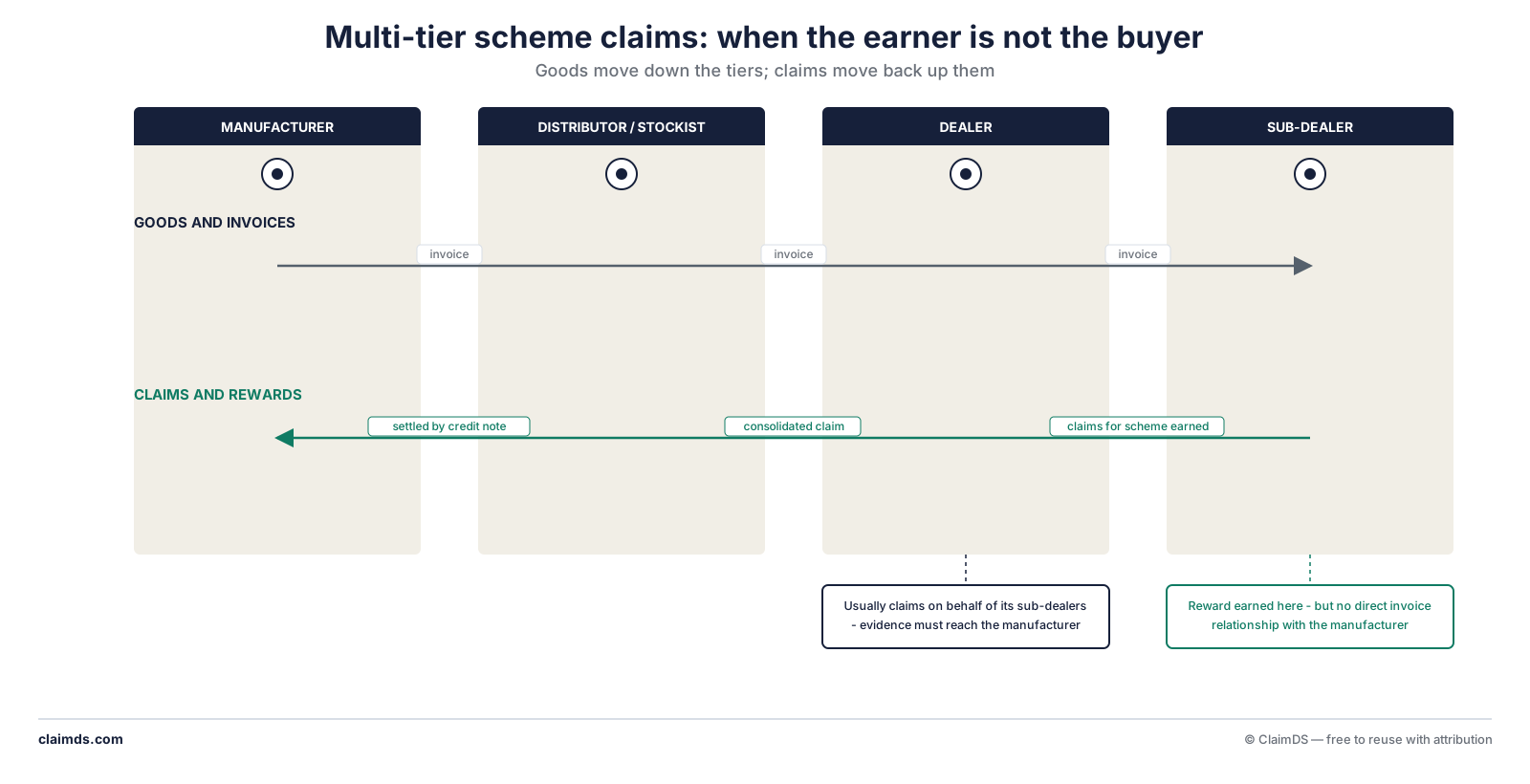
Sub-Dealer and Multi-Tier Schemes: When the Earner Isn't the Buyer
When the partner who earns the reward is not the one you invoice, claims get complicated. How multi-tier and sub-dealer schemes work, and what they need.
Trade Spend Management Software for Indian Brands and Distributors
See what your channel spend actually costs — schemes committed, claims settled, deductions taken and accruals trued up, with GST-compliant settlement.
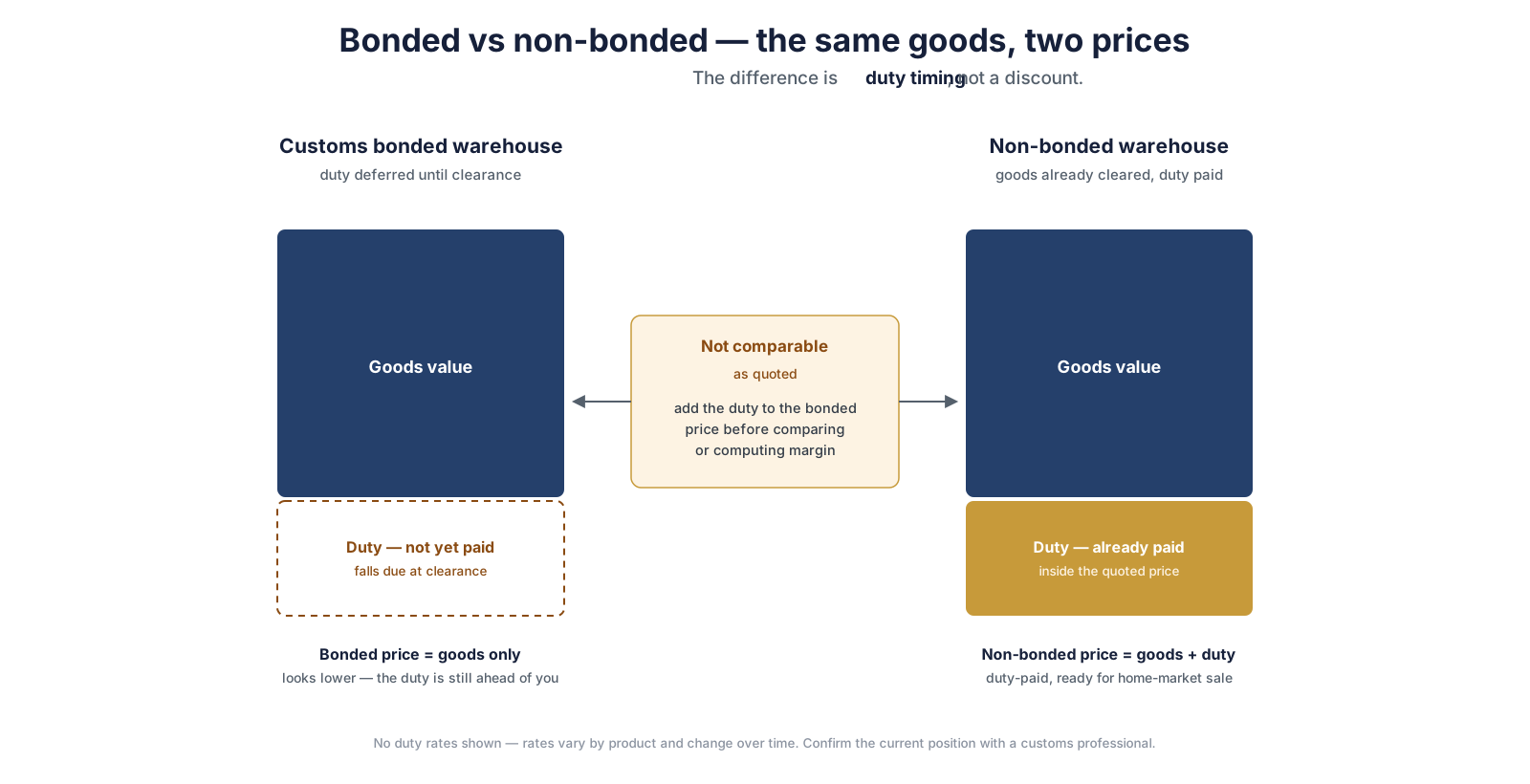
Bonded vs Non-Bonded Warehouse Pricing: Why the Same Goods Carry Two Prices
Why the same imported goods carry different prices in a bonded and a non-bonded warehouse, and what that means for quoting, costing and margin.
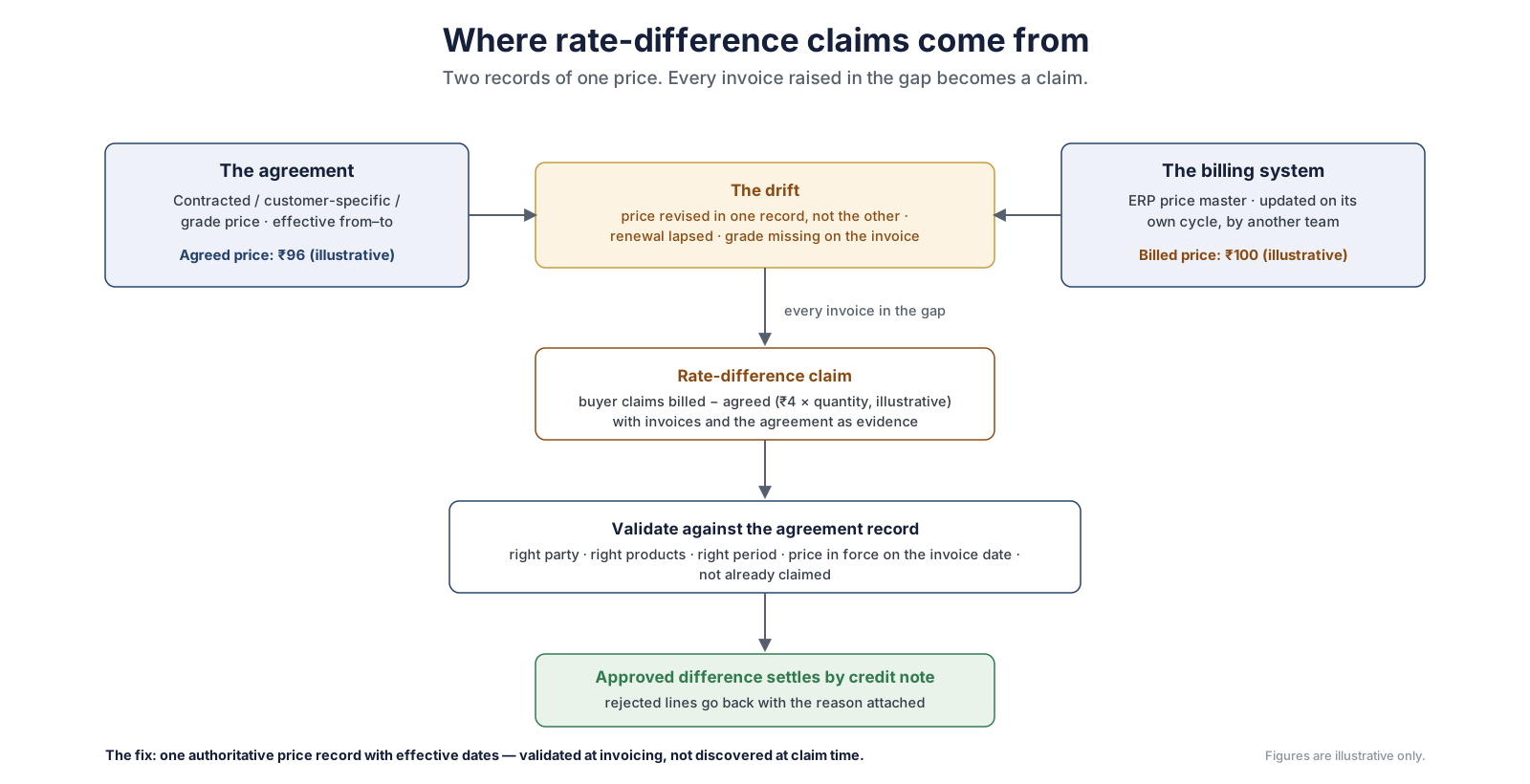
Contracted, Customer-Specific and Grade Pricing: How Negotiated Prices Work
Negotiated prices — contracted, customer-specific and grade-based — and the claims and reconciliation work each one creates.
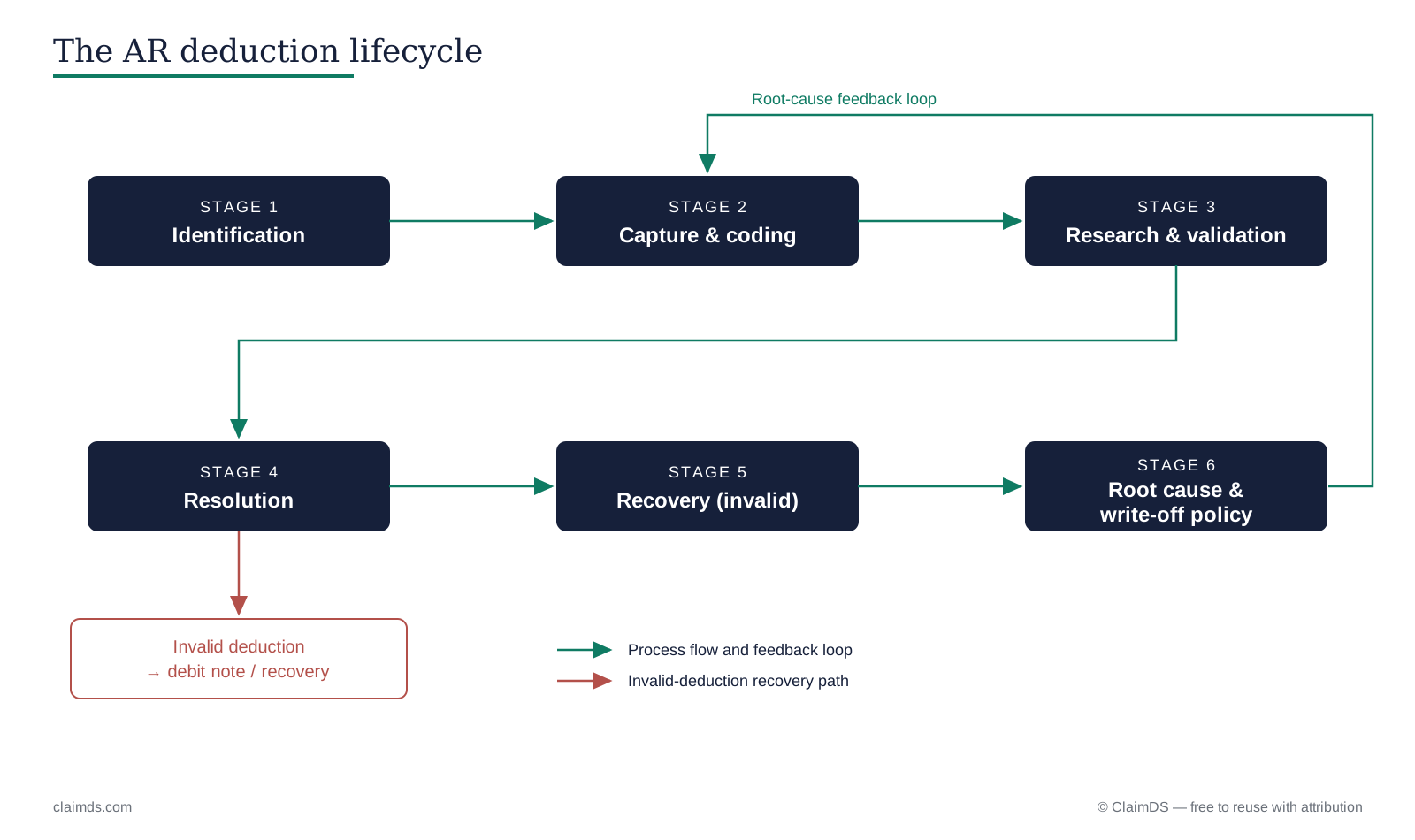
Deduction Management: Who Owns What, and Why It Matters
Who owns deduction resolution — finance, sales or claims-ops? How to split the work so deductions get resolved instead of ageing on a spreadsheet.
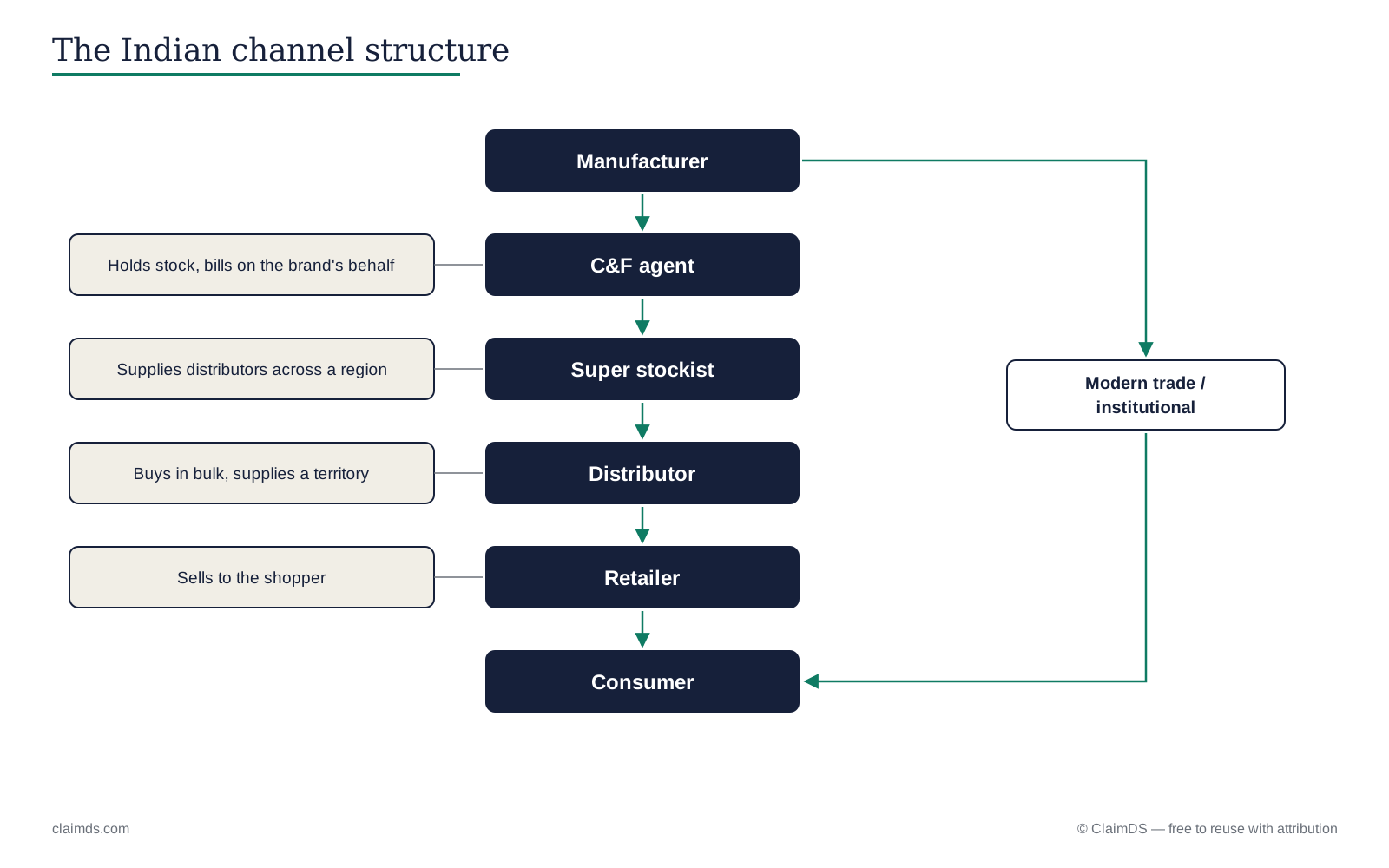
List Price, MRP, Brochure Price and Reseller Price: What Each One Means
The published prices in a channel — list, MRP, brochure and reseller price — and what each one actually commits you to in India.
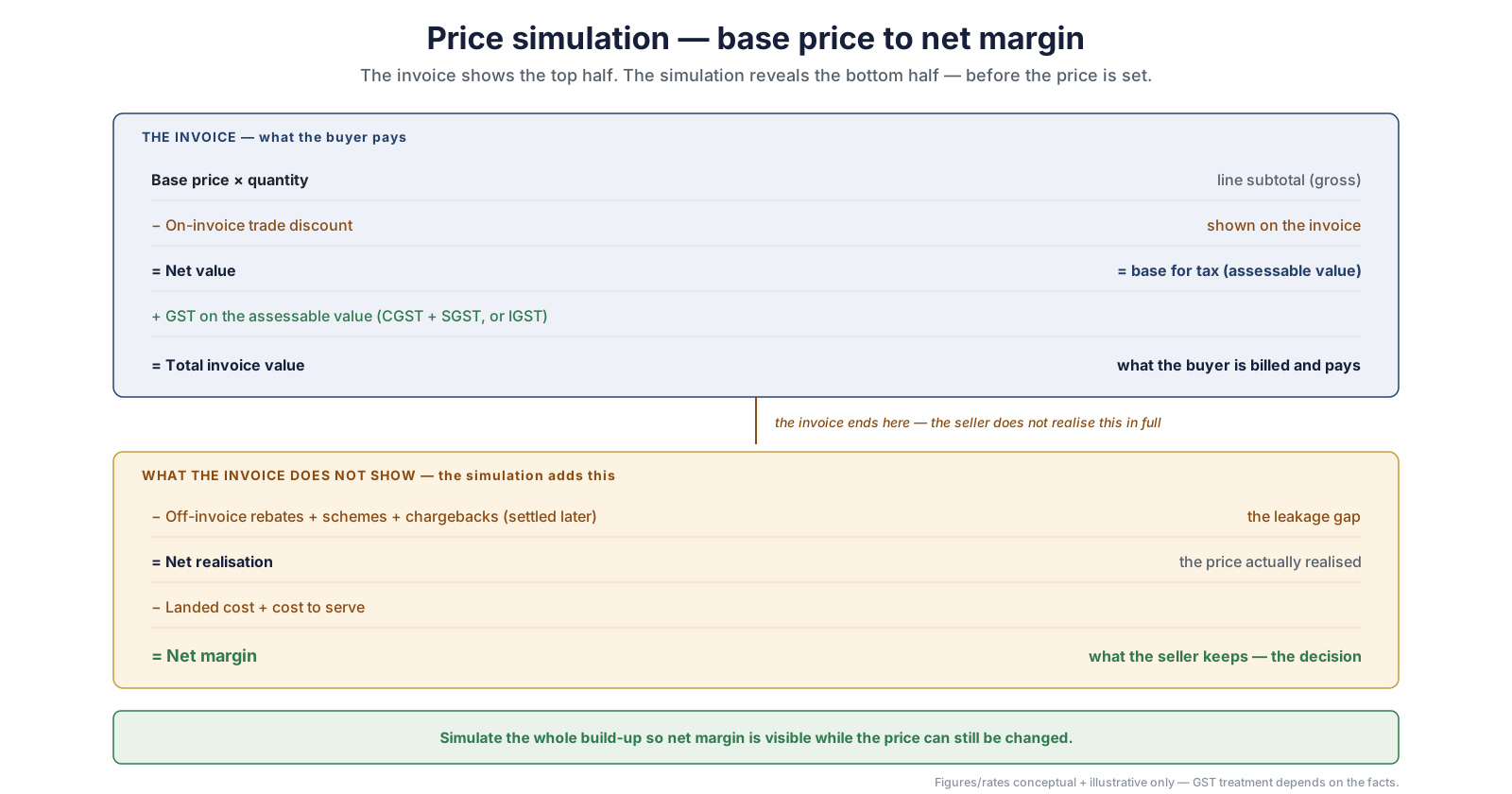
Price Simulation: From Base Price to Net Margin, Line by Line
How to simulate a price line — base price, subtotals, net value, the base for tax, total invoice value and net margin — before you commit to it.
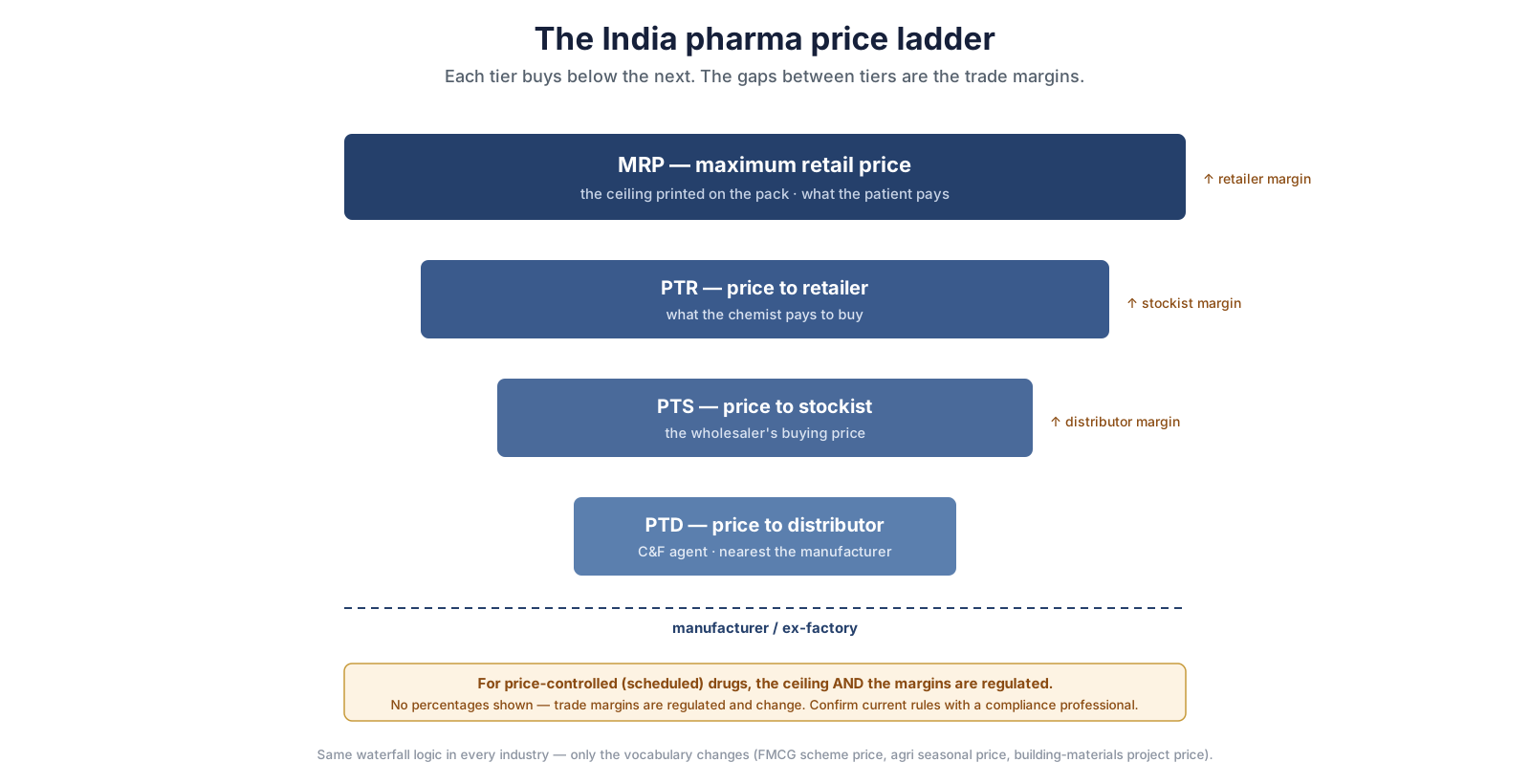
Price Types by Industry: Pharma, FMCG, Agri-Inputs and Building Materials
Price-type vocabularies differ by industry — pharma PTR/PTS/PTD, FMCG tier pricing, agri-input seasonal pricing, building-materials project pricing.
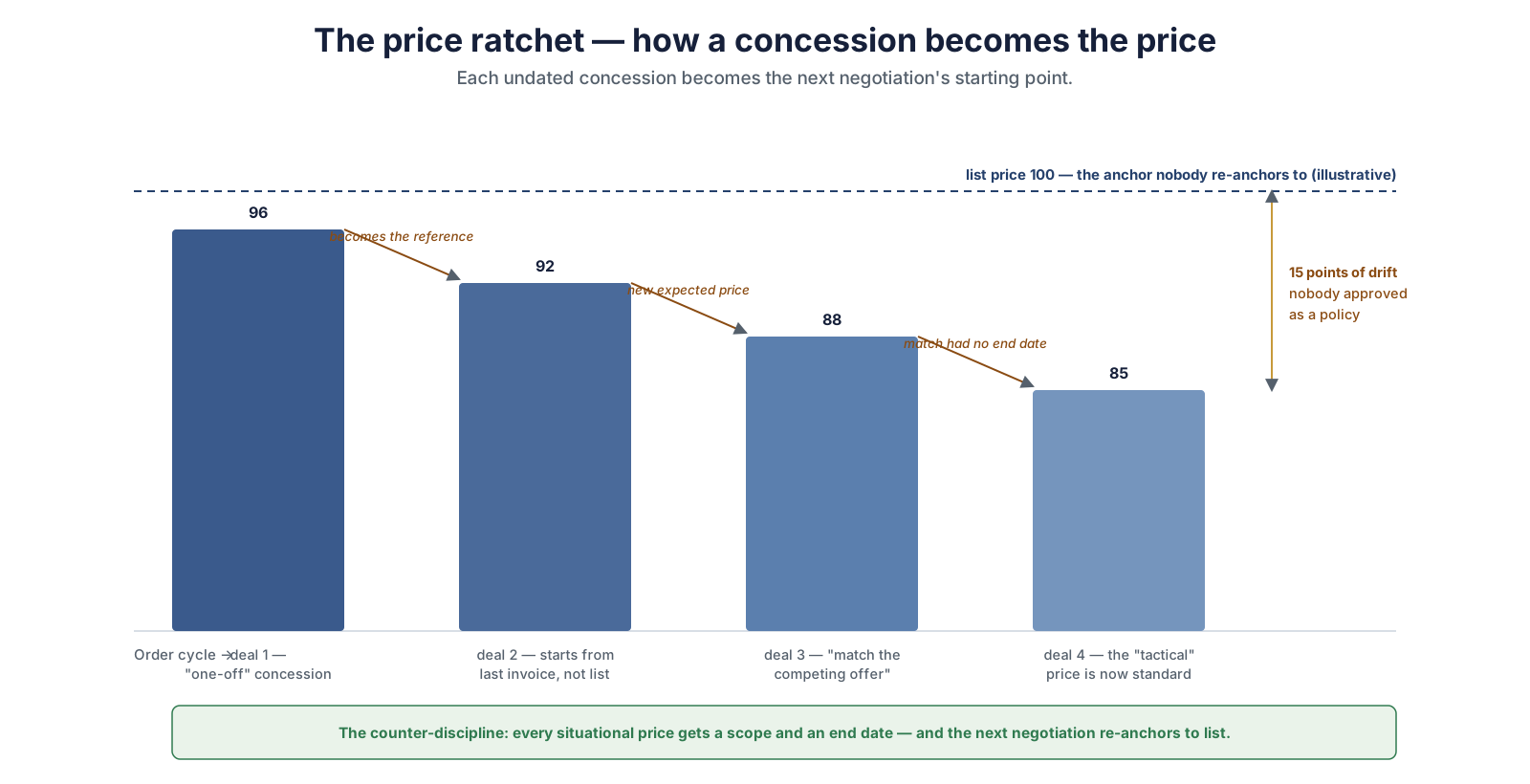
Situational Pricing: Last Invoice, Customer Expectation, Competition and Tactics
The prices that come from a situation rather than a price list — last invoice, customer expected, meeting-competition and tactical pricing.
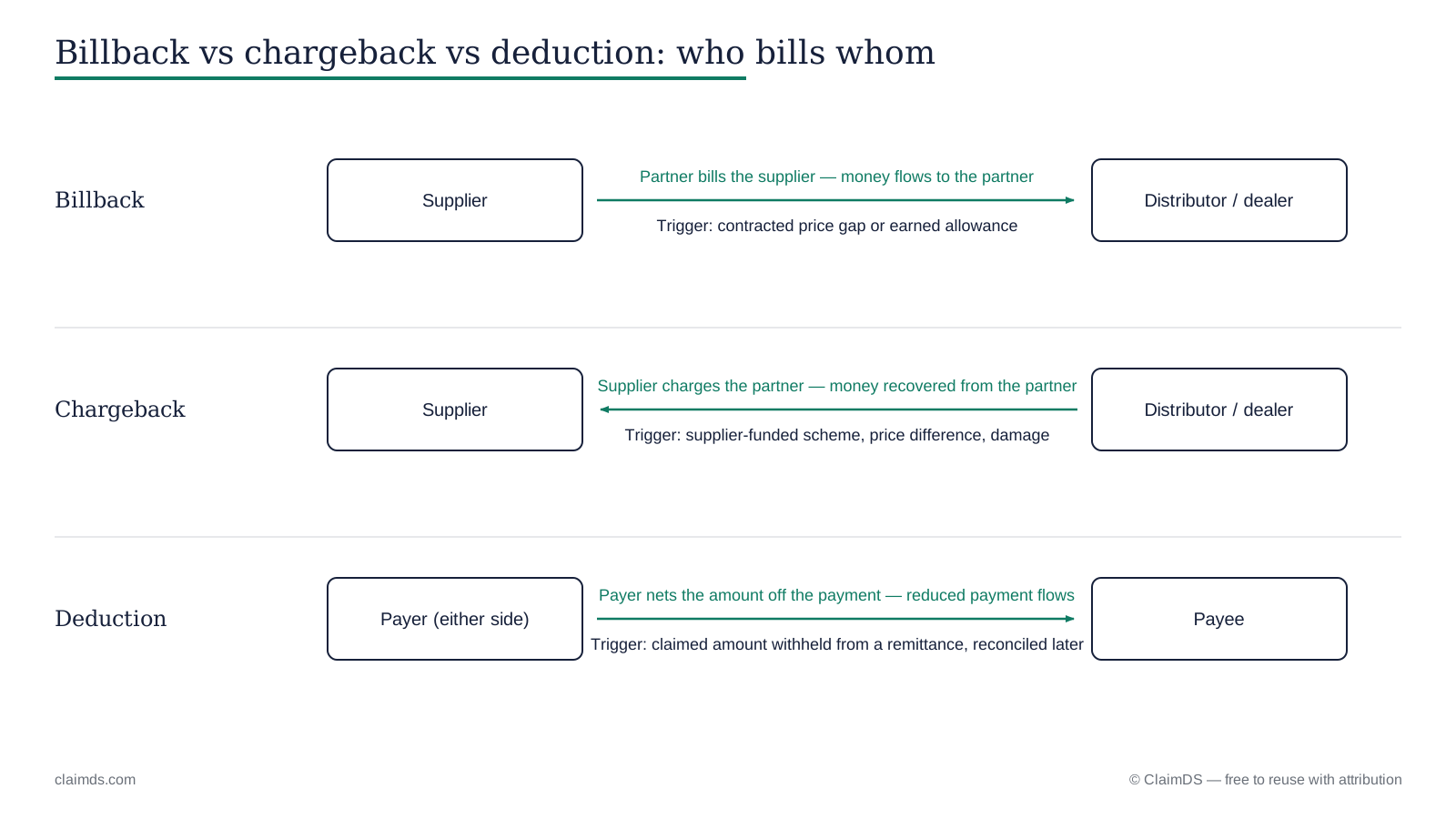
Valid vs Invalid Trade Deductions: How to Tell Them Apart and Recover What You're Owed
When a customer short-pays an invoice, is the deduction valid or should you dispute it? How to classify trade deductions and recover the invalid ones.
On-Invoice vs Off-Invoice Discounts: Why the Difference Decides Everything
A discount on the invoice and one settled afterwards can cost the same — but they behave very differently in the books and under GST.
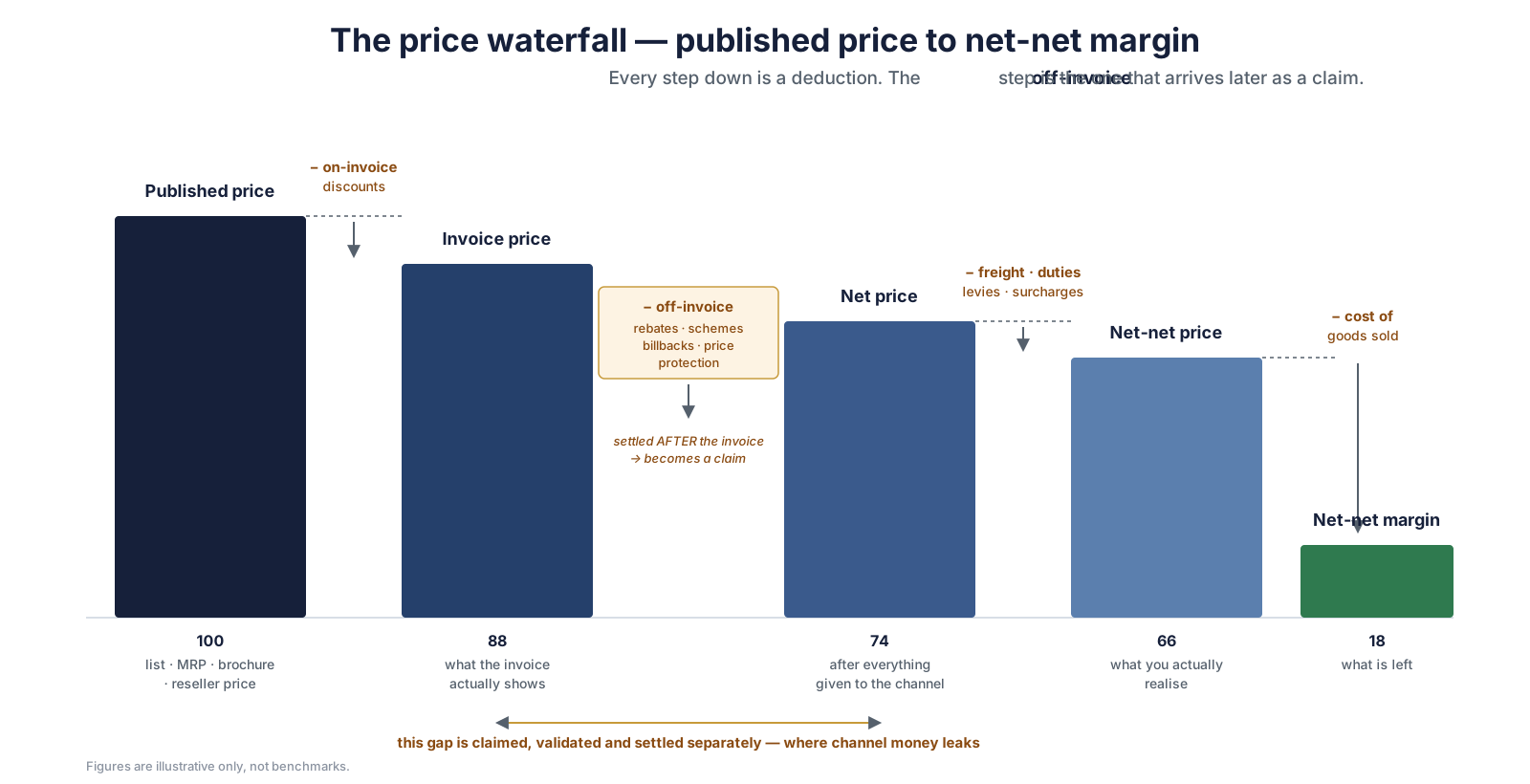
What Is a Price Waterfall? From Published Price to Net-Net Margin
Every deduction between the price you publish and the money you keep — and why the step in the middle arrives later as a channel claim.
What Faster Claim Settlement Is Worth: Claims, Cash and Working Capital
An unsettled claim is your money sitting in someone else's system. How settlement speed affects a distributor's working capital, with worked examples.
Connected Claims: How Invoice and Sales Data Moves Between Your ERP, Your Brands and Your Claims
How invoice and secondary-sales data moves between a distributor's ERP, the brand and settlement — file upload, direct connection, and when each fits.
Your E-Invoice and GSTR Data Is Already Your Claims Dataset
E-invoicing already produces validated, structured invoice data. The same data can reconcile distributor claims and scheme settlements — how it fits.
Exporting Sales and Purchase Invoices from Tally for Claim Settlement
How to get invoice data out of Tally in a form a claims workflow can use — what to export, which fields matter, and how to keep it reconcilable.
File Upload, Direct Connection or API: How Claim Data Actually Moves
Three ways invoice and claim data moves between systems — plain English, no jargon, with the trade-offs of each for an Indian distributor or brand.
Rebate Credit Notes After a GST Rate Change: Original Rate or New Rate?
Settling a rebate against an invoice issued before a GST rate change? Which rate the credit note carries, and why it anchors to the original supply.
The Invoice Upload File: What a Claims Workflow Needs, Field by Field
A practical reference for the invoice file behind every scheme claim — required fields, formats, date and number conventions, and what breaks uploads.
Maker-Checker and Audit Trails When Claim Data Is Imported
Once claim data is imported rather than typed, the control question changes. What maker-checker and an audit trail should cover for data from elsewhere.
Marg ERP: Getting Invoice Data Out for Claim Reconciliation
Distributors running Marg still have to evidence scheme claims. What invoice data a claim needs, how to get it out, and how to keep it reconcilable.
Master Data Hygiene: Why Claims Fail Before Anyone Checks the Scheme
Most claim reconciliation failures are master-data failures. How party codes, GSTINs and SKU mapping decide whether a scheme claim settles or is disputed.
QPS Full Form in FMCG: Quantity Purchase Scheme, Explained
QPS, or Quantity Purchase Scheme, is a distributor incentive paying on purchase quantity or value in a period. Definition, example, and when it's used.
Receiving Secondary-Sales Data — and Actually Settling Schemes On It
Collecting secondary-sales data from distributors is the easy part. Making it consistent enough to settle a scheme on is the real work — what that takes.
Reconciling Invoice Data Against the Agreement Before You Pay a Claim
A claim is only valid if the invoices behind it meet the agreement behind it. The checks that belong between receiving a claim and settling it.
Reducing Distributor Claim Turnaround Time: Where the Days Actually Go
A distributor claim passes through submission, validation, approval and settlement. Each stage adds days — where they accumulate, and how to compress them.
SAP Business One and Channel Claims: Exchanging Data Without a Big Project
Running SAP Business One and still settling schemes in spreadsheets? How claim data can move between a mid-market ERP and a claims workflow.
What Good Secondary-Sales Data Looks Like
A practical specification for secondary-sales data used to settle channel schemes — required fields, outlet identity, item codes, periods and restatements.
What Is a Settlement Factsheet — and Why Does It End Claim Disputes?
A settlement factsheet is the document showing how a rebate payout was calculated — terms, achievement, workings, approvals. Why it ends disputes.
Sharing Secondary-Sales Data With Brands — and What It Unlocks
Brands fund secondary schemes on data they can see. What secondary-sales data to share, in what form, and how it turns into scheme payouts.
Designing Slab-Based Volume Incentives for FMCG Distributors (Bronze to Platinum)
How to design slab-based volume incentive schemes for Indian FMCG distributors — incremental vs retroactive slabs, thresholds, the payout lookup table.
Revenue Leakage in High-Volume, Low-Margin Distribution: Where the Money Actually Goes
In high-volume, low-margin businesses like FMCG distribution, small leaks decide profitability. Where revenue leaks, and how to find it before year-end.
General Trade vs Modern Trade in India: What's the Difference?
General trade and modern trade are the two faces of Indian retail. What separates them, and why claims, schemes and margins work differently in each.
Is a Rebate a Discount? Rebate vs Discount vs Scheme
A rebate and a discount both reduce what a buyer pays, but they work differently and are booked differently. The clear difference for Indian businesses.
Trade Spend vs Advertising (A&P): Where Your Promotion Money Actually Goes
Trade spend and advertising (A&P) are two different budgets. What separates them, why finance teams confuse them, and how each is tracked.
ASM and Field-Force Incentive Structures for Indian Distribution
How to structure incentives across a field sales hierarchy — sales officer, ASM and RSM — in Indian distribution, so each tier is paid on the right base.
How to Calculate Sales Incentives in Excel (and Where It Breaks)
A step-by-step way to calculate sales incentives in Excel — mapping, slabs, gates and payout — and the point at which a spreadsheet stops being safe.
Paying C&F and DSA Partners: Commission for Carrying-and-Forwarding and Direct-Selling Agents
How carrying-and-forwarding (C&F) agents and direct-selling agents (DSA) are paid commission in India — two external partner types, clearly explained.
Channel Partner and Sales-Agent Commission in India: A Practical Guide
How to pay commission to external channel partners and sales agents in India — the agreement, the invoice, the payout, and the tax split from an incentive.
How to Structure a Commission Agent Agreement in India
What a commission agent agreement should cover — scope, rate, qualifying conditions, evidence, payment terms and tax responsibilities — in India.
Commission Invoice Format in India: What a Partner's Invoice Must Show
What a partner's commission invoice should contain — base commission, GST shown separately, GSTIN and PAN — so TDS is computed correctly on the base.
Discount or Commission? The Section 194H Line That Decides the Tax
Whether a channel payment is a discount or a commission decides the tax — credit note or 194H, ITC or GST. The principal-to-principal test, for India.
Fixed vs Variable Pay and OTE in Sales Compensation
How fixed pay, variable pay and on-target earnings (OTE) fit together in a sales comp plan — the pay mix, and how to choose it for an Indian sales team.
How to Design a Sales Incentive Plan for Your Field Sales Team
A practical guide to designing a sales incentive plan for an Indian field team — quotas, OTE, accelerators, caps, qualifier gates, payout and clawback.
Is a Sales Incentive Part of PF Wages?
Whether a sales incentive or variable pay counts towards PF wages is contested and fact-specific. What the position turns on, and why to take advice.
Referral and Channel-Partner Commission Programs
How to design a referral or channel-partner commission program — the earning event, the rate, qualification and payout — for Indian businesses.
Section 194H Becomes Section 393: What Changes for TDS on Commission from 1 April 2026
From 1 April 2026, TDS on commission moves from Section 194H to Section 393 (Income-tax Act 2025) — what changes, what doesn't, and the new payment code.
Supplier, Dealer, Vendor and Trade Scheme Incentives: What's the Difference?
Supplier incentive, dealer incentive, vendor rebate, trade scheme — used interchangeably but different things. A clear guide for Indian businesses.
TDS on Commission and Incentive in India: Section 192 vs Section 194H
Whether TDS on a commission or incentive falls under Section 192 (salary) or 194H/393 depends on who you pay and why. The employee-vs-agent test.
TDS on the GST Component of Commission: Deduct on the Base, Not the GST
When a partner invoices commission plus 18% GST, TDS is deducted on the base commission only — not on the GST. Why, and how to get the calculation right.
Scheme and Claim Management Beside Your Accounting System
What belongs in your accounting system and what belongs in a claims system beside it — schemes, claims, accruals and settlements, whatever ERP you run.
How to Move Rebate and Claim Work Off Spreadsheets
A practical guide to migrating rebate, scheme and claim work off spreadsheets — what to extract, how to map schemes, handle history, and cut over.
Managing Rebates, Schemes and Claims When You Run Busy
How Indian distributors and manufacturers on Busy handle rebates, trade schemes and claims — where the ledger ends and the claims workflow begins.
Managing Rebates, Schemes and Claims When You Run Tally
How Indian distributors and manufacturers on Tally handle rebates, trade schemes and claims — where the ledger ends and the claims workflow begins.
Managing Rebates, Schemes and Claims on Zoho Books
How Indian distributors and manufacturers on Zoho Books handle rebates, trade schemes and claims — where the ledger ends and the claims workflow begins.
Channel Claims and Rebates in Indian Agri-Inputs
How schemes, claims and rebates work across the Indian agri-input channel — fertilizers, crop-protection and seeds, seasonal schemes and expiry returns.
How to Settle Agri-Input Dealer Claims
The step-by-step process to settle agri-input dealer and distributor claims in India — seasonal schemes, liquidation claims and near-expiry returns.
Expiry and Season-End Returns in Agri-Inputs
How near-expiry, damage and season-end returns work in Indian agri-inputs — declaring returnable stock, the claim window and how each return settles.
Seasonal Schemes and Liquidation in Agri-Inputs
How seasonal schemes and liquidation claims work in Indian agri-inputs — schemes timed to Kharif and Rabi, sell-through targets and season-end settlement.
Channel Claims and Rebates in Indian Automotive
How claims, incentives and warranty work in the Indian automotive channel — the OEM and dealer network, aftermarket parts, warranty claims and settlement.
How to Settle Automotive Dealer Claims
The end-to-end process to settle automotive dealer claims — incentive, warranty and scheme evidence, validation, approval and settlement by credit note.
Automotive Spare Parts and Aftermarket Claims
How spare-parts, tyre and lubricant claims work in the automotive aftermarket — the distributor channel, schemes, rate-difference and damage claims.
Automotive Warranty Claims: Process and GST
How automotive warranty claims work and are taxed — the claim and reimbursement process, and the GST treatment of warranty replacements under Circular 216.
Channel Claims and Rebates in Building Materials
How schemes, claims and rebates work across the Indian building-materials channel — volume slabs, dealer boards, rate difference and breakage claims.
Channel Claims and Rebates in Consumer Electronics
How schemes, claims and rebates work across the Indian consumer-electronics channel — price protection, QPS schemes, and DOA and warranty returns.
How to Settle Electronics Dealer Claims
The step-by-step process to settle consumer-electronics dealer and distributor claims in India — price protection, QPS schemes and DOA returns.
DOA and Warranty Returns in Electronics
How DOA, defective and warranty returns work in Indian consumer electronics — logging an RMA, serial-level evidence and how each return settles.
Consumer Promotions vs Trade Promotions
Consumer promotions vs trade promotions — who each targets, who funds them, how they are measured, and why trade promotions create claims.
Channel Claims and Rebates in Indian Electricals
How schemes, claims and rebates work in the Indian electricals channel — wires, switchgear and lighting, volume slabs and electrician loyalty programs.
GST and TDS on Automotive Dealer Incentives
How automotive dealer incentives are taxed — credit-note choice under GST and Section 194R TDS on trips, gifts and benefits-in-kind given to dealers.
GST and TDS on Paints Dealer and Painter Rewards
How paints dealer schemes and painter loyalty rewards are taxed — GST credit-note choice and Section 194R TDS on rewards in kind to dealers and painters.
GST on Agri-Input Claims and Schemes
How agri-input dealer schemes, liquidation claims and near-expiry returns are treated under GST — credit-note choice, ITC reversal and mixed input rates.
GST on Consumer Electronics Claims
How consumer-electronics price protection and warranty replacements are treated under GST — credit-note choice, ITC reversal and TDS on incentives.
GST Treatment of Pharma Claims and Returns
How pharma returns and schemes are taxed — the Circular 72/46/2018 routes for expired goods, ITC reversal on destroyed stock, and credit-note choices.
Channel Claims and Rebates in Indian Lubricants
How schemes, claims and rebates work in the Indian lubricants channel — the bazaar market, volume schemes and mechanic loyalty programs.
Painter and Contractor Loyalty Programs in India
How painter and contractor loyalty programs work in India — points, rewards and redemption, why brands run them, and the Section 194R tax pointer.
Channel Claims and Rebates in Indian Paints
How claims, dealer schemes and painter loyalty work in the Indian paints channel — the dealer network, the influencer channel, rate difference and returns.
How to Settle Paints Dealer Claims
The end-to-end process to settle paints dealer claims — scheme, rate-difference and damage evidence, validation, approval and settlement by credit note.
Rate-Difference and Damage Claims in Paints
How rate-difference and damage claims work in paints — declaring stock at a price revision, computing the difference, and settling leakage returns.
Channel Claims and Rebates in Indian Pharma
How claims, schemes and returns work in Indian pharma distribution — the CFA and stockist channel, expiry and breakage returns, schemes and settlement.
Expiry and Breakage Returns in Pharma
How pharma expiry and breakage returns work — saleable vs non-saleable, near-expiry, destruction, and how the stockist claim settles by credit note.
How to Settle Pharma Stockist Claims
The end-to-end process to settle pharma stockist claims — expiry and breakage evidence, batch validation, approval and settlement by credit note.
Price Protection in Consumer Electronics
How price protection works in Indian consumer electronics — protecting channel stock through fast price cuts, NLC protection and modern-trade dimension.
Supplier and Purchase Rebates in Agri-Inputs
How Indian agri-input makers treat money from raw-material and packaging suppliers — turnover and cash discounts under Ind AS 2 and GST credit notes.
Supplier and Purchase Rebates in Automotive
How Indian automotive treats money received from component and material suppliers — turnover and cash discounts under Ind AS 2 and GST credit notes.
Supplier and Purchase Rebates in Electronics
How Indian electronics makers treat money received from component and packaging suppliers — turnover, cash discounts under Ind AS 2 and GST credit notes.
Supplier and Purchase Rebates in Indian Paints
How Indian paints treats money received from raw-material and packaging suppliers — turnover and cash discounts under Ind AS 2 and GST credit notes.
Supplier and Purchase Rebates in Indian Pharma
How Indian pharma treats money received from API, excipient and packaging suppliers — turnover and cash discounts under Ind AS 2 and GST credit notes.
Channel Claims and Rebates in Indian Tyres
How schemes, claims and rebates work in the Indian tyre channel — the replacement market, volume schemes and pro-rata warranty claims by tread depth.
What Is a C&F Agent (CFA)? Carrying and Forwarding, Explained
A C&F agent (carrying and forwarding) holds and dispatches a company's stock on consignment and bills on its behalf — what a CFA does and how it is paid.
Channel Claims and Rebates in Indian FMCG
How claims, schemes and rebates work in Indian FMCG — the multi-tier channel, QPS and secondary schemes, damage and expiry claims, and settlement.
Channel Rebates in India: How Scheme Settlement Works
What a channel rebate is and how multi-tier scheme and claim settlement works in India — credit notes, secondary schemes and the vocabulary that differs.
Accounts Receivable Deductions: The AR Deduction Process, Challenges and Best Practices
The AR deductions process — 6-stage lifecycle, the 7 biggest deduction management challenges, invalid-deduction recovery and a best-practice checklist.
How to Settle FMCG Distributor Claims
The end-to-end process to settle FMCG distributor claims — evidence, validation against scheme rules, approval and settlement by credit note.
FMCG Trade Schemes Explained: QPS, Slab and Secondary
The trade schemes Indian FMCG companies actually run — QPS, slab, secondary, display and festive schemes — what each is calculated on and how it settles.
GST Adjustments for Channel Settlements in India
Which document corrects what — credit notes, debit notes, e-invoice cancellation and GSTR-1 amendments for rebates, claims, returns and schemes.
GST Treatment of FMCG Claims, Schemes and Returns
How FMCG scheme settlements are taxed — Section 34 tax vs financial credit notes, ITC on damaged stock, free goods and Section 194R on incentives.
The Indian Multi-Tier Channel: Who Claims What
The Indian channel runs brand to C&F to super stockist to distributor to retailer — and claims flow back up it. Who claims what from whom, tier by tier.
MDF and Co-op Claims in India: A Practical Guide
How the MDF claim process works in India — allocation, pre-approval, proof of performance, utilization, and how co-op funds settle by credit note.
Primary, Secondary and Tertiary Sales: What They Mean and Why Your Claims Depend on Them
What primary, secondary and tertiary sales mean, where each tier's data lives, how to verify it, and why Indian trade claims settle on secondary data.
Rebate Accrual Management: Forecast, True-up, Write-back
How to manage rebate and scheme accruals — forecasting, monthly true-ups, unclaimed-scheme liabilities and the write-back decision for finance teams.
Rebate Clawbacks and Scheme Cancellations in India
When a rebate must be recovered or a scheme withdrawn — clawback clauses, recovery routes, accrual reversals and the tax questions they raise.
Returns, Reversals and Cancellations in Channel Claims
How to reverse a settled claim, cancel a claim, handle returns and correct mistakes — the document, the entry and the audit trail for each.
Supplier and Purchase Rebates in Indian FMCG
How Indian FMCG treats money received from suppliers — turnover discounts, cash discounts and target incentives — under Ind AS 2 and GST credit notes.
Tax on Rebates, Chargebacks, Billbacks and Buybacks in India
How every channel settlement is taxed in India — rebates, chargebacks, buybacks, MDF, supplier rebates and commissions — GST and TDS, both sides.
Trade Promotion Budget: Allocation and Budget vs Actual
How to allocate a trade promotion budget, track scheme-budget utilization, and run budget vs actual for Indian channel and FMCG trade schemes.
Types of Trade Schemes in India: The Complete Guide for Manufacturers and Channel Teams
Slab, QPS, target, display, visibility, tour, gift and secondary schemes — how each type is calculated, settled and taxed, with worked ₹ examples.
What Is a Billback? Meaning, Process and Accounting
Billback meaning in plain English — how billbacks work, how they are accounted for, billback vs chargeback vs deduction, and a worked example.
How to Calculate FMCG Distributor Claims (With Worked Examples)
How to calculate FMCG distributor claims — scheme slabs, secondary schemes, damage, price drops and display claims, with worked examples in ₹.
Channel Loyalty Programs for Dealers and Distributors: Design, Points and Settlement (India)
How channel loyalty programs work in the Indian route-to-market — earn rules, tiers, points economics, redemptions, and the settlement layer underneath.
Designing Claim and Rebate Approval Workflows That Don’t Bottleneck Settlement
How to design claim and rebate approval workflows — role-based routing, authority thresholds, SLAs and escalation that keep settlement moving.
CPQ Software vs. Rebate and Claims Management: Which Do You Actually Need?
CPQ meaning, in one line: Configure-Price-Quote software for pre-sale quoting. Here is how it differs from post-sale rebate and claims management.
Credit Notes for Expired and Damaged Goods Returns (Pharma and FMCG)
Expiry and damage returns under GST for pharma and FMCG — the two Circular 72/46/2018 routes, credit notes, ITC reversal, e-way bills and documentation.
GST Credit Notes for Trade Schemes: Issuance, Time Limits and GSTR Reporting
The 30 November time limit under Section 34(2), GSTR-1 Table 9B and 3B reporting, e-invoicing of credit notes, IMS and retention — for scheme teams.
GST on Distributor Margin, Commission and Incentives: Dealer vs Agent
Distributor margin carries no GST by itself, commission is taxed at 18%, and incentives depend on obligations. The dealer-vs-agent test decides which.
GST on Free Goods, BOGO and Quantity Schemes: Supply, Valuation and ITC
BOGO is not free goods under GST, but true free samples are. How Circular 92/11/2019 treats BOGO, extra-quantity packs, samples and slab discounts.
GST on Trade Discounts, Dealer Incentives and Schemes: An India Guide
When do trade discounts, dealer incentives and target schemes attract GST in India? The three-bucket framework, a decision table, and current case law.
Stock Transfers, Branch Transfers and Warranty Replacements Under GST for Channel Businesses
When is a branch transfer taxable, how is it valued, and is GST due on warranty replacements? The GST rules multi-state channel businesses need.
ITC Reversal on Post-Sale Discounts and Credit Notes: What Finance Teams Must Track
Reverse ITC only on a Section 34 tax credit note — never on a commercial credit note. What dealers must classify, track and report in GSTR-3B and IMS.
Price Protection and Rate-Difference Credit Notes for Dealer Stock Under GST
How price-protection and rate-difference credit notes work for dealer stock under GST — brand price cuts vs the Sept 2025 rate cut, worked examples.
Rebate Meanings Explained: Tax Rebate vs. GST “Rebate” vs. B2B Channel Rebates (India)
"Rebate" means four different things in India — income-tax rebate, GST refunds, consumer offers, B2B channel rebates. Find the one you meant.
Reconciling Scheme Credit Notes: GSTR-2B vs GSTR-3B for Finance Teams
A month-end loop for reconciling scheme credit notes across GSTR-2B, IMS and GSTR-3B — mismatch causes, fixes and automation for finance teams.
Rule 37 and the 180-Day ITC Reversal Rule: Impact on Channel Credit Cycles
Unpaid supplier invoices past 180 days force proportionate ITC reversal under Rule 37. Why long channel credit cycles make this a working-capital risk.
Scheme Settlement and Claim Documentation Under GST: The Ops Playbook
The end-to-end paper trail a scheme claim needs to survive a GST audit — from scheme circular to credit note to GSTR linkage — and how to automate it.
Section 15(3)(b) and Post-Supply Discounts: Conditions, ITC and the Finance Act 2026 Change
Section 15(3)(b) CGST Act — when a post-supply discount reduces taxable value, the ITC-reversal condition, and the Finance Act 2026 change.
Section 194R: TDS on Dealer and Distributor Incentives — A Manufacturer’s Guide
How Section 194R TDS applies to dealer incentives — 10% rate, ₹20,000 threshold, in-kind valuation, and the 2026 move to the Income-tax Act 2025.
How to Calculate Supplier Rebate Accruals Accurately (Step-by-Step)
A step-by-step method for calculating supplier rebate accruals — measurement basis, attainment estimation, statement reconciliation and true-up.
Distributor Claims Software: Buyer's Guide for Indian Businesses
A vendor-neutral buyer's guide to distributor claims software for India — top features, benefits, FMCG fit and an evaluation scorecard.
ERP Integration for Claims, Rebate & TPM Software: What Indian Businesses Should Check
Why ERP integration decides claims/rebate/TPM software in India — the data flows that matter, the sales-incentive data you need, and a readiness checklist.
How Rebate Schemes Work for Online Sellers & E-Commerce Channels in India
How rebate schemes work for India's e-commerce channel — brands running schemes for marketplace and D2C sellers, reconciled to platform deductions.
Rebate Software Pricing in India: Cost Models, TCO & How to Compare Plans
How to compare rebate software pricing in India — common cost models, what drives price, hidden costs, a TCO worksheet and independent reviews.
Sell-In Rebate Strategy: How to Incentivize Channel Partners Without Channel Stuffing
How sell-in rebates motivate channel partners — and how to design one without channel stuffing, using sell-through conditions, caps and growth terms.
Sell-In vs. Sell-Through Rebates: What's the Difference & When to Use Each
Sell-in rebates (paid on partner purchases) vs sell-through rebates (paid on onward sales) — what each incentivises and the channel-stuffing risk.
How Stock Compensation Claims Interact With the Rebate Process
How channel stock-compensation claims interact with rebate calculations — compensated stock reducing eligible purchases, avoiding double-benefit.
Supplier Incentive Programs: Components, Reward Structures & How to Design One
How to design a supplier incentive program — key components, reward structures, a step-by-step design process, measuring ROI and common challenges.
Supplier Rebate Agreements: Types, Key Terms & How to Negotiate Better Ones
A buy-side guide to supplier rebate agreements — agreement types, key terms to scrutinise (measurement basis, returns, clawback) and negotiation.
How TPM Software Forecasts Trade-Spend Liability and Measures Promotion ROI
How trade promotion management software projects scheme liability before period-close and measures promotion ROI from settled claims — and what it cannot.
Benefits of Automating Rebate Calculations for Channel Partners
The benefits of automating rebate calculations — accuracy, speed, leakage control and audit for the brand; transparent statements for the partner.
The Key Challenges in Manual Rebate Processing (and What They Cost You)
The failure modes of spreadsheet rebate processing in Indian channels — version conflicts, slab errors, single-person risk, no audit trail.
Core Features of a Robust Rebate Management System (Checklist)
A feature checklist for a rebate management system — scheme design, real-time accrual, claim validation, settlement, analytics and GST fidelity.
Distributor vs. Dealer vs. Super-Stockist: Who's Who in the Indian Channel
A plain-English glossary of the Indian route-to-market — C&F, super-stockist, distributor, wholesaler, dealer, retailer — and how claims flow.
How to Choose Rebate Software for Retail Companies
How to choose rebate software for Indian retail-facing businesses — scheme complexity, a step-by-step selection process and India must-haves.
Incentive Management Software & Solutions for Channel Businesses (India)
Incentive management software for Indian channel businesses — dealer and distributor schemes, target and volume incentives, accrual, GST settlement.
Purchase Incentives: How Channel Purchase-Linked Programs Work
Purchase incentives explained — buy-side incentives earned from suppliers vs sell-side incentives offered to partners. Structures and settlement.
Rebate Analytics: Reporting, Dashboards & Opportunity Analysis
What rebate analytics should deliver — real-time accrual dashboards, liability forecasting, scheme profitability and partner performance analysis.
Best Practices for Implementing a Rebate Automation Platform
A phased rebate automation implementation playbook for Indian mid-market — map schemes, clean data, parallel-run, pilot, train partners, roll out.
Features to Look for in Rebate Software for FMCG Companies
FMCG-specific rebate software features — high scheme velocity, primary plus secondary schemes, damage/expiry interplay and GST credit-note volume.
How Rebate Software Improves Financial Reporting Accuracy
How manual rebates corrupt financial reporting — under- or over-accrued liabilities, close surprises, misstated margins — and how software fixes each.
Revenue Leakage in Rebate Programs: Where the Money Goes & How to Stop It
Where rebate and trade-spend programs leak revenue in Indian multi-tier channels — overpayments, duplicates, unclaimed accruals — and how to stop it.
What Is a Rebate? How Rebates Work in B2B Channels (Plain-English Guide)
What a trade or channel rebate is, how it differs from a discount, and how it settles — plus the other meanings of the word and where each belongs.
How to Submit Rebate Claims Fast and Accurately with RebateLedger
A step-by-step guide to submitting rebate and scheme claims fast and accurately: the documents, the 5 steps, GST credit notes, and how to cut rejections.
Trade Promotion Management with RebateLedger: A Step-by-Step Guide
A step-by-step trade promotion management guide for India: plan, budget, launch, settle claims with the right GST credit note, measure trade-spend ROI.
How Indian SMBs Can Implement Affordable Trade Promotion Management
A practical guide for Indian SMBs to implement affordable trade promotion management: codify schemes, automate distributor claims, and stay GST-compliant.
Distributor Claim Settlement Software: A Buyer's Guide for Indian Mid-Market
What distributor claim settlement is, why spreadsheets fail at scale, what to look for in software, and how RebateLedger helps Indian finance teams.
Trade Promotion Management Software in India
What trade promotion management (TPM) software does, why Indian channel businesses need it, and how to choose one that fits the mid-market.
GST credit notes for rebates — what Rule 53(1A) actually requires
A plain-English guide to GST credit notes for rebates in India — the particulars Rule 53(1A) requires, and where ITC reversal trips teams up.
Customer Rebates: Programs & Software
Customer rebate programs explained — structures, claim validation, accrual and GST treatment. Distinct from supplier and distributor rebates.
SMB Rebate Software for India
Indian SMB rebate software — affordable, fast-deploy rebate management for mid-market manufacturers and distributors, without enterprise overkill.
Dealer Rebate Software & Programs (India)
Dealer rebate software for automotive, electricals and building-materials channels — scheme settlement, slabs, claim validation and credit notes.
Rebate Tracking Software: Real-Time Accruals & Visibility
Rebate tracking software gives real-time accrual dashboards, partner statements and reconciliation. Why spreadsheet tracking breaks at multi-tier scale.
Supplier Rebates: How to Claim & Manage Rebates From Suppliers
Supplier rebates explained — earning and claiming buy-side rebates, accrual against purchases, supplier incentive programs and reconciliation.
Buyback in Pharma: Expiry Returns & Compensation
Pharma expiry returns and compensation in the CFA/stockist model — saleable vs breakage returns, return windows, valuation and settlement.
Chargeback Fraud: Detection & Prevention in Channel Claims
Chargeback fraud and leakage in channel claims — duplicate, inflated and unsupported deductions — and the controls that detect and prevent them.
CPG Trade Promotion Guide: Schemes, Settlement & ROI (India)
A practical CPG trade promotion guide for India — scheme types, settlement across the channel, secondary scheme settlement and promotion ROI.
Buyback in FMCG: Expired-Stock & Damaged-Goods Programs
FMCG buyback in India — expired, near-expiry and damaged-stock return programs, eligibility windows, valuation and credit-note settlement.
Claims & Deductions Management for CFOs: A Revenue-Leakage Playbook
A CFO's playbook for channel claims and deductions — quantifying revenue leakage, accrual visibility, GST exposure, controls and KPIs to track.
Deduction Reason Codes, Claim Matching and Days-Deduction-Outstanding
How to code, match and measure deductions — a reason-code taxonomy, deduction-to-claim matching, and the days-deduction-outstanding recovery metric.
The Claim Process Explained: From Submission to Settlement
The channel claim process step by step — creation, documentation, validation, approval, settlement and reconciliation, with owners and SLAs.
Dealer Claims Management Software for Multi-Tier Channels
Dealer claims management software for automotive, electronics and building-materials channels — warranty, incentive and price-protection claims.
How to Submit a Rebate / Claim Request (Step-by-Step)
How to submit a rebate or claim request step by step — documents required, referencing invoices and schemes, claim statuses and rejection reasons.
Billbacks vs Chargebacks vs Deductions: A Glossary
Billback, chargeback, deduction and rebate defined and contrasted for Indian channels — what each means, who raises it, and how each settles.
Chargebacks in FMCG Distribution (India)
Chargebacks and deductions in Indian FMCG distribution — modern vs general trade, scheme and damage/expiry deductions, and distributor recovery.
Chargebacks in Pharma Distribution (India)
Pharma chargebacks in the Indian CFA/stockist model — contract vs list/WAC price differences, institutional and tender pricing, and validation.
Why distributor rebate claims slip through the cracks
The eight places trade-promotion claims quietly leak margin — and a practical way to plug each one without adding headcount.
The Buyback Process: Expired & Damaged Stock Returns
The channel buyback process step by step — eligibility, request, documentation, validation, returns logistics and GST credit-note settlement.
Stock Compensation Software & Claims (Channel)
Channel stock compensation software for price drops, damage, expiry and slow-moving stock — not employee equity. Claim types and settlement.
Supplier Buybacks: How Manufacturers Manage Channel Returns
Supplier buybacks — how manufacturers manage stock buybacks from the channel, including eligibility, returns logistics, valuation and settlement.
Best Price Protection Software (Buyer's Guide)
Best price protection software buyer's guide for India — evaluation criteria, inventory-on-hand accuracy, multi-tier handling and GST settlement.
Price Drop Protection: How Channel Price-Protection Claims Work
How price-drop protection claims work — identify eligible stock-on-hand at the price-change date, compute the protection and settle by credit note.
Price Protection in Sales: Clauses, Claims & Settlement
Price protection in sales and distribution agreements — typical clauses, triggers, eligibility windows, caps, claim documentation and settlement.
Chargeback Claim Software & Solutions (India)
Trade chargeback claim software automates deduction matching, validation, evidence capture and settlement in Indian channels, plus a buyer checklist.
Chargeback Dispute Process: Step-by-Step Resolution
How to dispute and resolve trade chargebacks and deductions — distinguish valid from invalid, gather evidence, run the resolution workflow and recover.
The Chargeback Process: How Trade Chargebacks Work
The trade chargeback process step by step — trigger, documentation, validation, approval and settlement. Trade/channel chargebacks, not card chargebacks.
Buyback Software for Distributor & Dealer Returns (India)
Channel buyback software for expired, damaged and unsold stock returns — program types, how claims work, FMCG vs pharma, and what it automates.
Chargeback Management Software for Channel & Distribution (India)
Trade chargeback management software for Indian channel and distribution — not card chargebacks. Types, the process, and what software automates.
Price Protection Software for Channel Inventory (India)
Price protection software automates price-drop claims on channel inventory — strong in electronics, IT and mobile. Claim mechanics and settlement.
Claims Management ROI & Settlement-Time Benchmark Guide
A transparent ROI framework for channel-claim automation and a settlement-time benchmark methodology — inputs, formula and a worked example.
Rebate Accounting in India: GST Credit Notes, Accruals & Reconciliation
Rebate accounting in India — accrual recognition, financial vs tax (GST) credit notes, ITC reversal, Section 15(3)(b) and reconciliation.
Secondary Scheme Settlement & Trade Promotion Agreement Management (India RTM)
Secondary scheme settlement in Indian RTM — primary vs secondary schemes, how secondary claims are captured and validated, and GST credit notes.
What Is Claims Management Software? A Complete Guide for Indian Channel Businesses
Claims management software for Indian channels — rebates, chargebacks, price protection and buyback settled by GST credit note in multi-tier RTM.
Volume Rebates: Slab-Based & Volume-Incentive Programs
Volume rebates explained — retrospective vs prospective slabs, growth incentives, true-ups and accrual mechanics, with worked slab examples.
Distributor Claims Management: What You Can Claim and How to Collect It
Every claim a channel partner can raise against a brand — schemes, price protection, damages, subvention — with the evidence and deadline each needs.
Distributor Rebate Software & Programs (India)
Distributor rebate software for Indian multi-tier RTM — slab and growth schemes, accrual, claim validation and GST credit-note settlement.
Vendor Rebate Management Software & Systems (India)
Vendor rebate management software automates accrual, claims and credit-note settlement of vendor-funded rebates. Features, checklist and GST fit.
Best Rebate Management Software (India Buyer's Guide)
Best rebate management software for India — evaluation criteria, an evenhanded look at global suites and Indian DMS/SFA peers, and where each fits.
Financial vs. Tax Credit Notes Under GST: What Channel Finance Must Know
Financial credit note vs tax credit note under GST — a Section 34 tax credit note reverses ITC; a commercial credit note does not. Worked examples.
Vistex Alternatives for Indian Mid-Market
Vistex rebate management explained, plus realistic alternatives for Indian mid-market — when a global suite is overkill and where RebateLedger fits.
CBIC Circular 251/08/2025 & Post-Sale Discounts: A Practical Guide
CBIC Circular 251/08/2025-GST on post-sale discounts — no ITC reversal on financial credit notes, when discounts are consideration, and Section 34.
Rebate Management Software: The Complete 2026 Guide (India)
What rebate management software does, the rebate types it handles, GST credit-note treatment, and how to choose a system for Indian multi-tier RTM.
Why RebateLedger: India-First Channel Claims vs Global Rebate Suites
Why RebateLedger for Indian channel claims — multi-tier RTM fidelity, GST credit-note depth and every claim type in one product, vs global suites.
See RebateLedger on your own claims data
A 30-minute walkthrough tailored to how your channel actually settles claims.