
Expiry and Breakage Returns: Who Collects, Who Pays, and How It Settles
Who collects expired stock, who bears the cost, and whether it settles by replacement or credit note — the operational side of expiry and breakage returns.
In short
Expired, damaged or unsaleable stock moves back up the channel — retailer to stockist to company — and is settled either by a credit note or by replacement stock. Who arranges collection, who bears the cost and what window applies are all matters the return policy sets; none of them is fixed by a general industry rule.
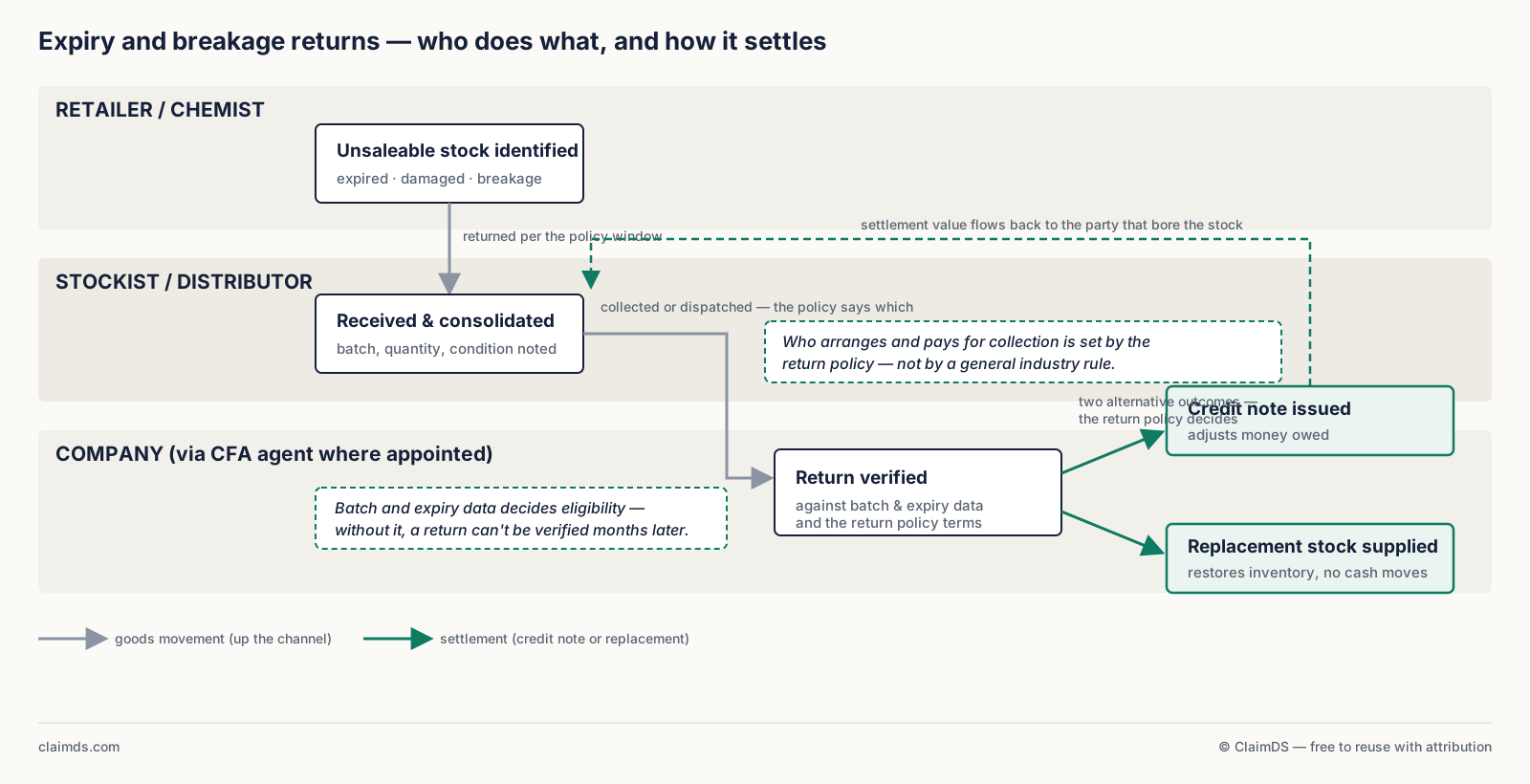
Every distribution channel that handles date-sensitive or fragile goods eventually faces the same question: the stock cannot be sold — now what? We have covered what the GST treatment of pharma returns looks like and how the credit note works for expired and damaged goods. This article covers the part those deliberately leave out: the operational flow. Who physically collects the stock, who bears the cost, what the CFA agent actually does, and what has to be recorded so the claim survives scrutiny months later.
One disambiguation before anything else: CFA here means carrying and forwarding agent — the party that warehouses and dispatches stock on a company's behalf without taking title — not Chartered Financial Analyst. And throughout, "claims" means distributor and channel claims, not insurance claims.
What the return policy must specify
The single most important fact about expiry and breakage returns is that the mechanics are contractual. Companies run them differently, and most disputes trace back to a question the policy never answered. The table below is the checklist — each row is something the policy has to specify, because no industry default will fill the gap.
| Question | What the return policy must specify | What goes wrong when it doesn't |
|---|---|---|
| Who identifies unsaleable stock | Whether the retailer declares it, the stockist inspects it, or both | Stock arrives at the company in a state nobody signed off |
| Who arranges collection | Company pickup, CFA pickup, or stockist dispatch | Stock sits at the stockist for months while each side waits for the other |
| Who bears freight and handling | Which party pays, per leg of the journey | The cost is deducted unilaterally from the settlement and disputed |
| What window qualifies | How long before or after expiry a return is eligible | Boundary cases settled by negotiation, differently every time |
| What condition the goods must be in | Saleable packs, intact strips, damaged-but-identifiable | Received condition differs from declared condition; the claim is cut |
| What documentation must accompany it | Return note, batch details, reason codes | The return cannot be matched to a claim and is settled late or short |
| Credit note or replacement | Which settlement route applies, and when | Each side assumes the route that suits it; the books disagree |
| Who bears destruction costs | Where stock must be destroyed, who pays and who certifies | An unbudgeted cost surfaces after settlement and reopens the claim |
| Stock returned outside the window | Rejected, reduced terms, or destruction without settlement | The hardest cases have no agreed answer at all |
Who moves the stock, step by step
The physical flow runs opposite to sales. The retailer or chemist identifies stock that cannot be sold — expired, damaged, or unfit — and returns it to the stockist or distributor within whatever window the policy allows. The stockist receives it, records batch, quantity and condition, and consolidates returns across its retailers, because settling one strip at a time works for nobody.
From the stockist, the consolidated stock reaches the company — and here the CFA agent enters. A carrying and forwarding agent holds and dispatches the company's stock without taking title to it. Whether that same agent also handles reverse logistics — collecting expiry and breakage from stockists — depends entirely on its appointment agreement with the company. Some appointments include reverse logistics; some exclude it; some price it separately. So the honest answer to "is the CFA liable to arrange pickup?" is: read the appointment. There is no general rule, and anyone asserting one is describing their own contract.
Once received, the return is verified: batch and expiry against the policy window, quantity and condition against what was declared, and the whole return against the policy version that applied when the stock was bought. Then it settles.
Credit note or replacement — two different settlements
The two settlement routes do different things, and the difference matters to both sides.
A credit note adjusts money owed. The partner's outstanding balance drops, which helps their cash position — but their shelf stays empty until the next order. Replacement stock does the opposite: inventory is restored and selling continues, but no cash moves, so a partner whose working capital is stretched gets no relief.
Which route applies should be the policy's call, not a per-case negotiation — partly because the commercial effect differs, and partly because the two routes are documented differently and carry different tax consequences. This article takes no position on that tax treatment: the credit-note side is covered in credit notes for expired and damaged goods and the pharma-specific treatment in GST on pharma claims and returns, and what a replacement supply means for GST depends on how it is structured — a question for your CA.
Batch and expiry data decides eligibility
A return that arrives without batch data is a claim that cannot be verified. The policy window is defined against dates — manufacture, expiry, sometimes purchase — and months after dispatch, the batch number is the only reliable link between the physical stock in the carton and those dates. Without it, the validating party can only query the return, settle it at the least favourable terms, or refuse it.
This is why batch capture at dispatch is what makes returns settleable later: the eligibility question is decided by data recorded long before anyone knew the stock would come back. If you want to model what expiry and buyback returns cost before they happen, the buyback and expiry return simulator walks through building one in Excel, and returns, reversals and cancellations covers how a settled claim is unwound when stock comes back after settlement.
What has to be recorded
Many businesses still keep a returns register manually — and the requirement is the same whether it is a book, a spreadsheet or software: the record must let someone reconstruct the decision later. That means, per return:
- The return document reference, and what it covered
- Batch and expiry details, per line
- Quantity and declared condition
- The reason code — expiry, breakage, transit damage
- The policy version that was applied
- The settlement route (credit note or replacement) and its document reference
- Who approved it
That is the same evidence discipline a settlement factsheet applies to scheme claims, and the same maker-checker principle applies to who approved what. If a regulator, auditor or counterparty asks next year why a return was settled the way it was, the register is the answer — or the absence of one is the problem. RebateLedger keeps the batch, policy-version and settlement references on the claim record so a return can be reconstructed without a separate register.
Where returns disputes come from
Returns disputes recur in predictable shapes: stock returned near the window boundary, argued both ways; goods received in worse condition than declared; missing batch data that makes eligibility unverifiable; a policy changed mid-stream without versioning, so each side applies a different edition; and returns claimed twice — once as a return, once inside a scheme claim. Every one of them is cheaper to prevent in the policy than to argue at settlement, which is the general pattern in reducing claim disputes between brands and distributors. The full journey a claim takes after the return is accepted is mapped in the claim lifecycle, end to end.
If your returns process lives in a manual register and settles by negotiation, book a demo and we will show you what a batch-verified, policy-versioned returns flow looks like on your own claim types.
Related: claims management software for the wider settlement picture, and the distributor claims category for everything else in this series.
Note: This article is general information about operational practice in Indian distribution, not legal, tax or regulatory advice. Return arrangements are contractual and vary between companies; pharmaceutical returns and destruction may additionally be subject to regulatory requirements this article does not cover — confirm your obligations with your own compliance and legal advisers.
Frequently asked questions
Who arranges collection of expired stock from a stockist?
Whoever the return policy says. In some arrangements the company or its CFA agent collects consolidated returns; in others the stockist dispatches them at its own cost or the company's. There is no general industry rule — a CFA agent's role in reverse logistics depends entirely on its appointment terms, so the answer for your business is in your agreement.
What is a breakage and expiry return?
A breakage and expiry return is unsaleable stock — expired, damaged in transit or handling, or otherwise unfit for sale — sent back up the distribution channel for settlement. The retailer returns it to the stockist, who consolidates and passes it to the company or its carrying and forwarding agent, where it is verified against batch data and the return policy before being settled.
Is expired stock settled by credit note or replacement?
Both routes are used, and the return policy decides which. A credit note reduces the money owed, which helps the partner's cash position but leaves them short of stock. Replacement restores inventory without cash moving, which keeps them selling but does nothing for cash. The two routes also carry different documentation and tax consequences, so the policy should name one.
What does a returns policy need to specify?
At minimum: who identifies unsaleable stock, who arranges and pays for collection, what window before or after expiry qualifies, what condition and documentation are required, whether settlement is credit note or replacement, who bears destruction costs, and what happens to stock returned outside the window. Every item left unspecified becomes a dispute at claim time.
Why is batch data needed for expiry returns?
Because eligibility depends on when the stock was made and when it expired — and months after dispatch, the batch number is the only reliable link between the physical goods and those dates. Without batch capture at dispatch, a return cannot be verified against the policy window, so it gets queried, settled on the least favourable terms, or refused.
What records should be kept for expiry and breakage returns?
Enough to reconstruct the decision later: the return document reference, batch and expiry details, quantity, the reason code, the policy version applied, the settlement route and its document reference, and who approved it. Whether the register is software or a book, the requirement is the same — someone auditing the claim next year should reach the same answer.
What happens to stock returned outside the eligible window?
The return policy decides. Commonly it is rejected, or accepted on different terms — a reduced credit, or acceptance for destruction without settlement — but neither is a rule. This is precisely why the window and its boundary treatment need to be written into the policy: an unwritten boundary is settled by negotiation, at whichever side has less leverage.
What format should a distributor's damage and expiry claim take?
Line-wise, one row per batch: batch number, manufacturing and expiry dates, quantity, rate, the original invoice reference, a reason code (expired, damaged in transit, damaged in storage), and photographic proof where the policy requires it. The format matters because the GST route decision — return as fresh supply versus credit note, and destruction's ITC consequences — is made per line, and a lump-sum claim makes that decision impossible to evidence.
See RebateLedger on your own claims data
A 30-minute walkthrough tailored to how your channel actually settles claims.