
Channel Finance & DMS Operations
Channel finance is the finance view of rebates, claims and schemes — the accruals they create, the liabilities they leave, the leakage they hide and the reporting a CFO needs. Because schemes accrue as sales happen and settle later, the numbers only stay reliable if accrual, true-up and reconciliation are managed continuously. These guides cover accrual management, revenue leakage, analytics and the finance registers that turn channel activity into numbers finance can close on.
Start here
In reading order- Claims & Deductions Management for CFOs: A Revenue-Leakage PlaybookA CFO's playbook for channel claims and deductions — quantifying revenue leakage, accrual visibility, GST exposure, controls and KPIs to track.
- Revenue Leakage in Rebate Programs: Where the Money Goes & How to Stop ItWhere rebate and trade-spend programs leak revenue in Indian multi-tier channels — overpayments, duplicates, unclaimed accruals — and how to stop it.
- Rebate Accrual Management: Forecast, True-up, Write-backHow to manage rebate and scheme accruals — forecasting, monthly true-ups, unclaimed-scheme liabilities and the write-back decision for finance teams.
- Rebate Analytics: Reporting, Dashboards & Opportunity AnalysisWhat rebate analytics should deliver — real-time accrual dashboards, liability forecasting, scheme profitability and partner performance analysis.
- How to Calculate Supplier Rebate Accruals Accurately (Step-by-Step)A step-by-step method for calculating supplier rebate accruals — measurement basis, attainment estimation, statement reconciliation and true-up.
More in this category
60 articles
Net Landing Cost: What You Actually Pay for a Case
Your invoice says ₹950 a case. Your real cost is ₹835. Net landing cost step by step, with the full calculation and where distributors get it wrong.
Primary vs Secondary Trade Margin: How the Chain Splits
Where margin sits at each tier of the Indian channel, how primary and secondary margin differ, and why stockist margin is rarely what a rate card says.
PTR, PTS and PTW: What Each Price Means and How to Calculate It
Price to retailer, price to stockist and price to wholesaler explained, with the formulas, a worked example from MRP downward, and the rounding trap.
Sale or Return, Consignment and Outright Sale: Who Owns the Stock
SOR, consignment and outright sale compared — where title passes, who carries unsold-stock risk, how each is invoiced, and the GST treatment of each.
How to Calculate Rebate Accruals Accurately
Accrue against each transaction at the rate you expect to earn. Tiered, retrospective and growth rebates worked month by month, with the true-up.
Supplier Rebate Accounting: Treatment, Timing and Journal Entries
Supplier rebates reduce the cost of inventory, not other income. Recognition timing, tiered rebates, journal entries and the controls auditors look for.
Trade Scheme & Rebates Ledger in Tally: Which Group, and Why
Which group to create a Trade Scheme & Rebates ledger under in Tally, whether scheme spend is an expense or a revenue deduction, and how to reconcile it.
Distributor Ledger Reconciliation With Claims and Credit Notes
Why the company ledger and the distributor's books disagree, and the monthly three-way reconciliation across ledgers and the claim register that closes it.
Channel Incentive Accrual Audit Checklist: the 15 Checks
Fifteen checks across completeness, accuracy, cutoff and documentation that prove channel incentive and scheme accruals are right — for auditors and teams.
Can Your ERP Calculate Rebates, Schemes and Sales Incentives?
An ERP records transactions — it doesn't hold scheme rules or incentive plans, or compute payouts against them. Here's why they end up in spreadsheets.
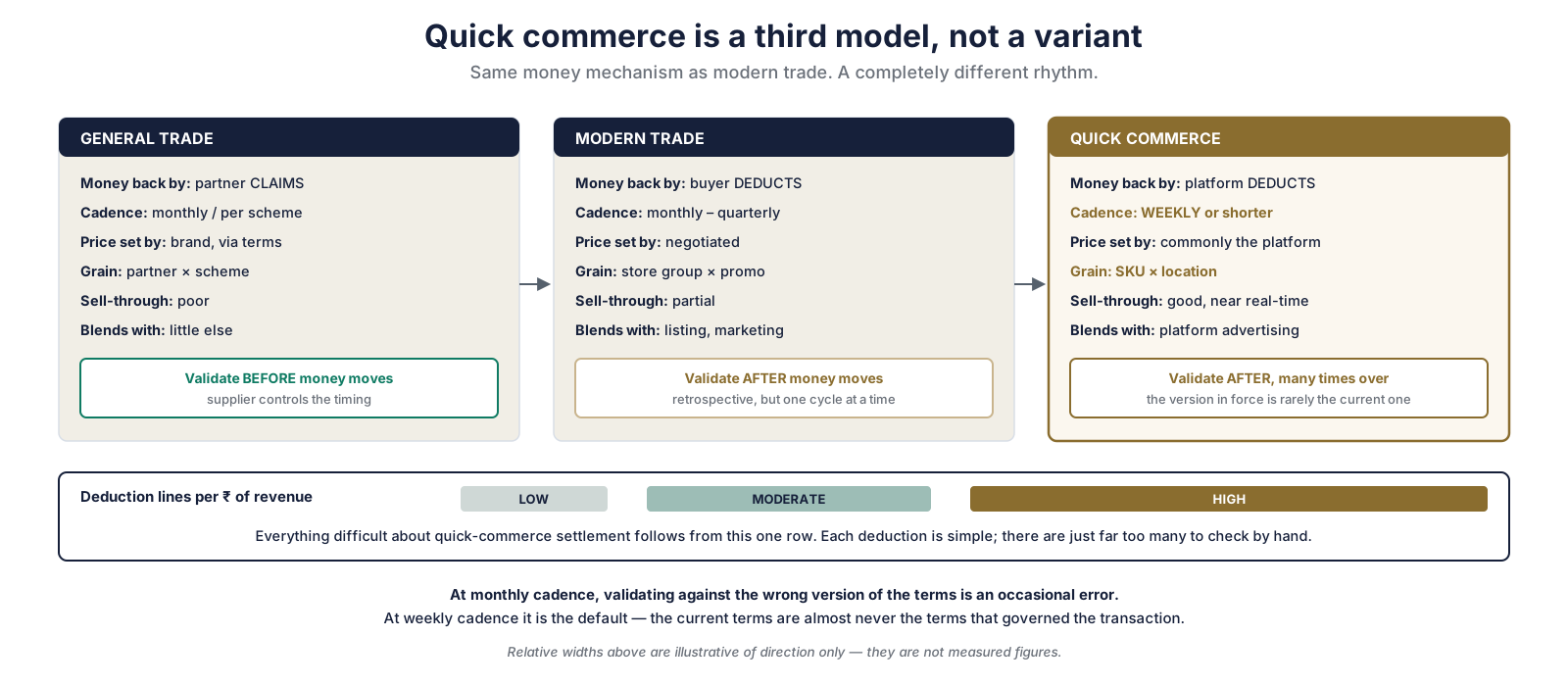
Quick Commerce Claims and Deductions: The Third Channel Model
Quick commerce settles trade spend on a weekly cadence at SKU level — neither general trade nor modern trade. What changes for claims and deductions.
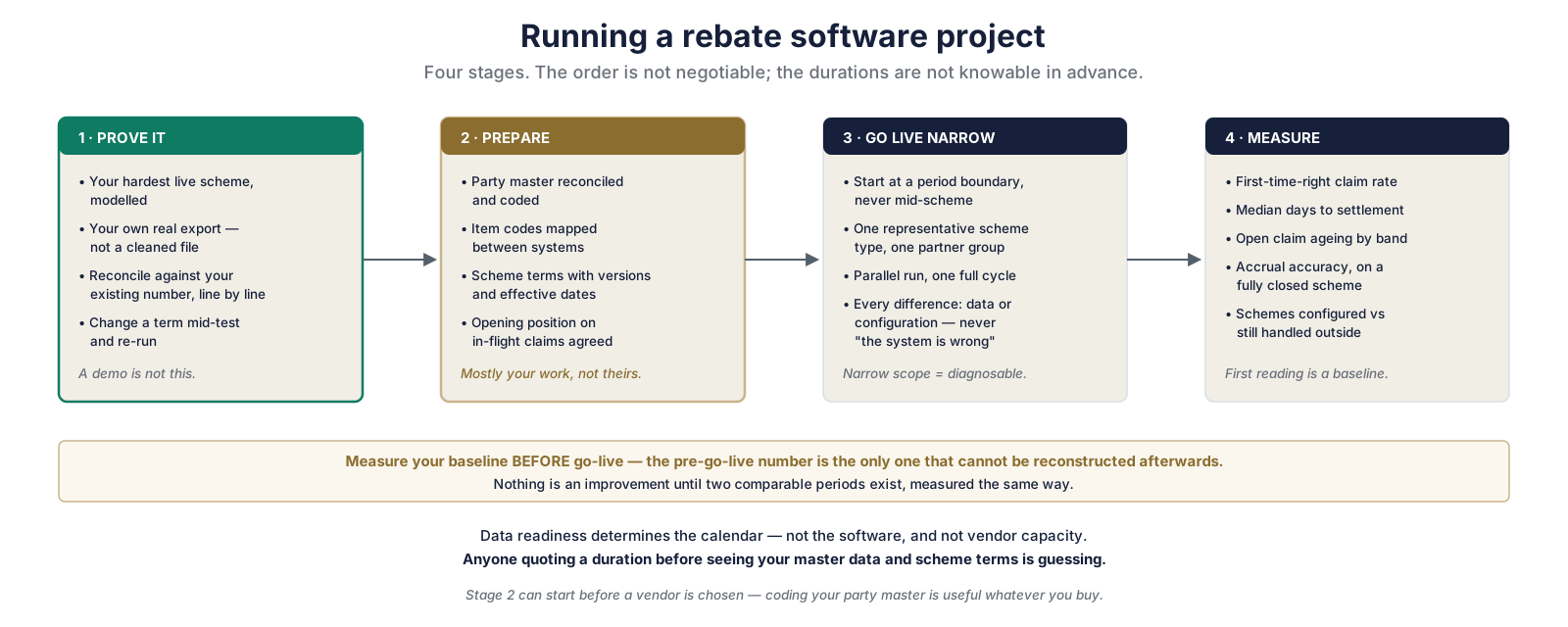
From Proof of Concept to Go-Live: Running a Rebate Software Project
What to test in a proof of concept, what belongs on a go-live checklist, and what to measure in the first ninety days of a claims or rebate implementation.
Rebates and Sales Incentives Are the Same Calculation. Only the Payee Changes.
A trade scheme and a sales incentive are the same computation — a target, an achievement, a payout. Only the payee and the tax treatment differ.
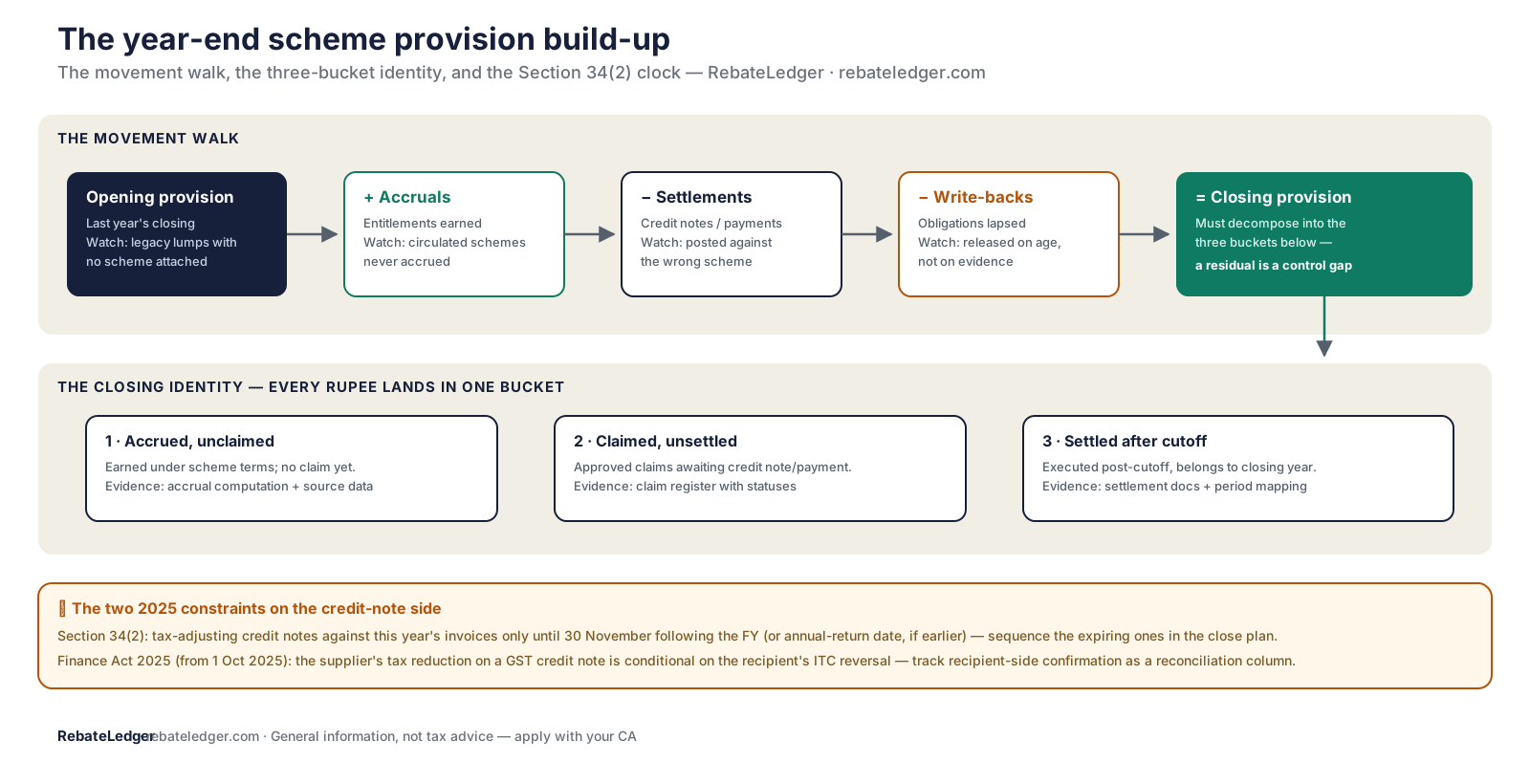
Scheme Provision and Liability Reconciliation at Year End
Prove the scheme provision equals accrued-but-unclaimed, claimed-but-unsettled and settled-after-cutoff — then clear what Section 34 makes unadjustable.
Who Needs to Be Involved in a Claims-System Implementation?
The five roles a claims-software implementation needs — commercial, accounts, data, a pilot distributor and a decision-maker — sized for an Indian SMB.
How Long Should You Run Excel and a Claims Platform in Parallel?
One full scheme cycle — usually a quarter — is the right parallel-run length. What to compare weekly, the exit criteria, and the shadow-Excel trap.
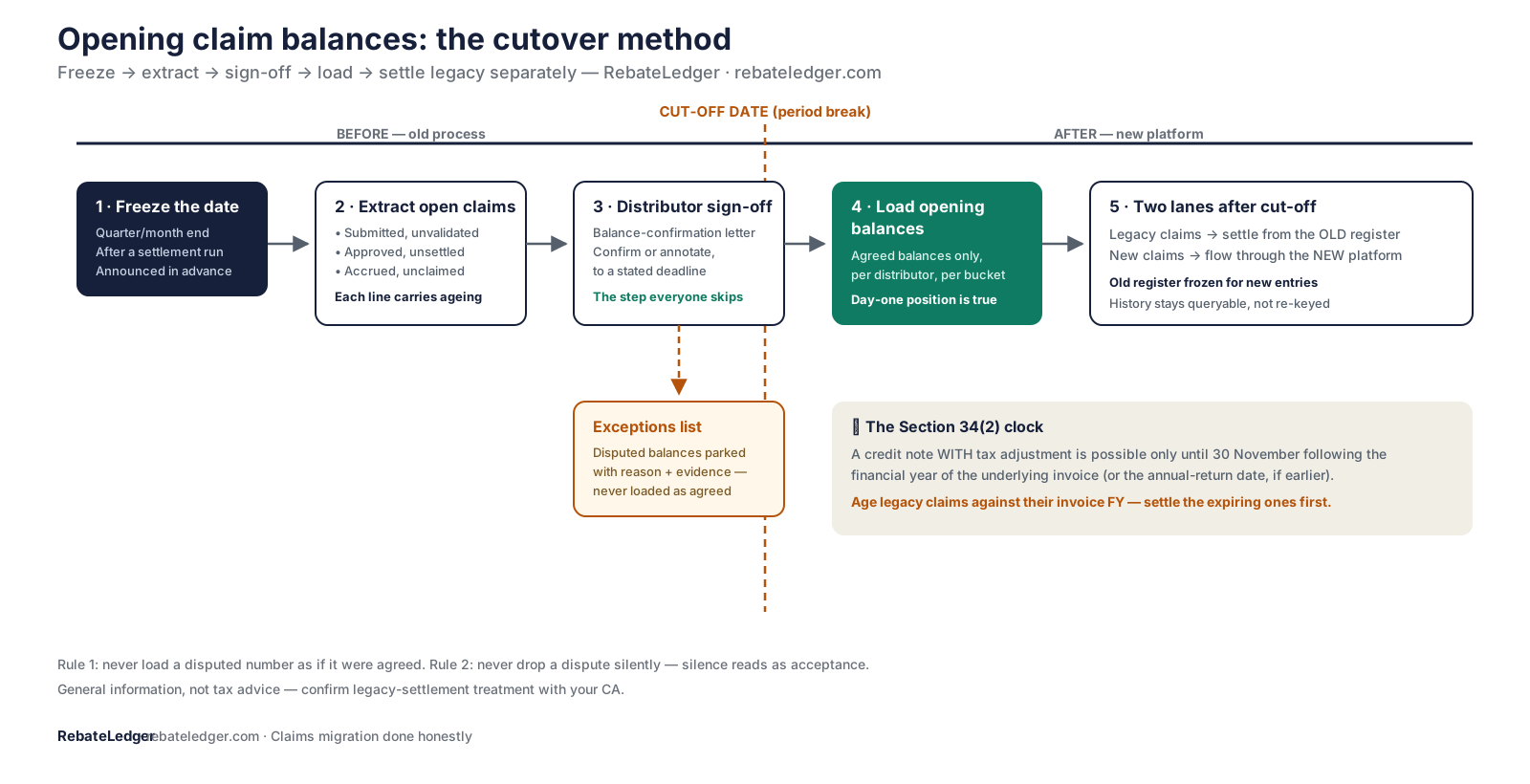
How to Reconcile Opening Claim Balances When Switching Claims Platforms
The cut-off method for opening claim balances when you move to claims software — freeze, extract, get sign-off, load, and settle legacy claims cleanly.
The Real Challenges of Implementing Rebate Management Software in India
Global implementation playbooks assume conditions Indian businesses do not have. The twelve things that actually make rebate software hard to adopt here.
What a Distributor Actually Earns After Rebates
Your invoice margin is not your real margin. How supplier rebates, schemes and claims change what a distributor earns — and why the timing hides it.
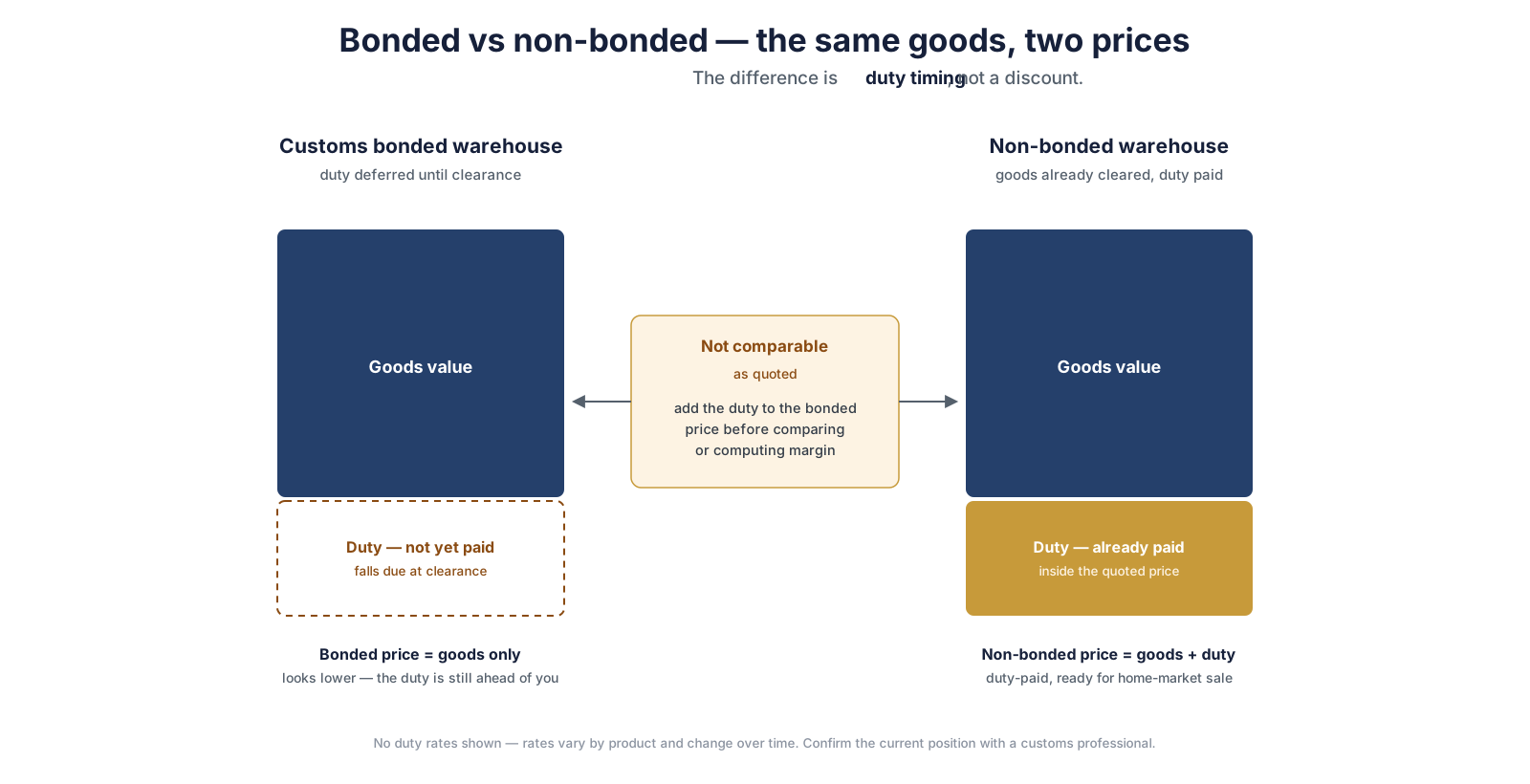
Bonded vs Non-Bonded Warehouse Pricing: Why the Same Goods Carry Two Prices
Why the same imported goods carry different prices in a bonded and a non-bonded warehouse, and what that means for quoting, costing and margin.
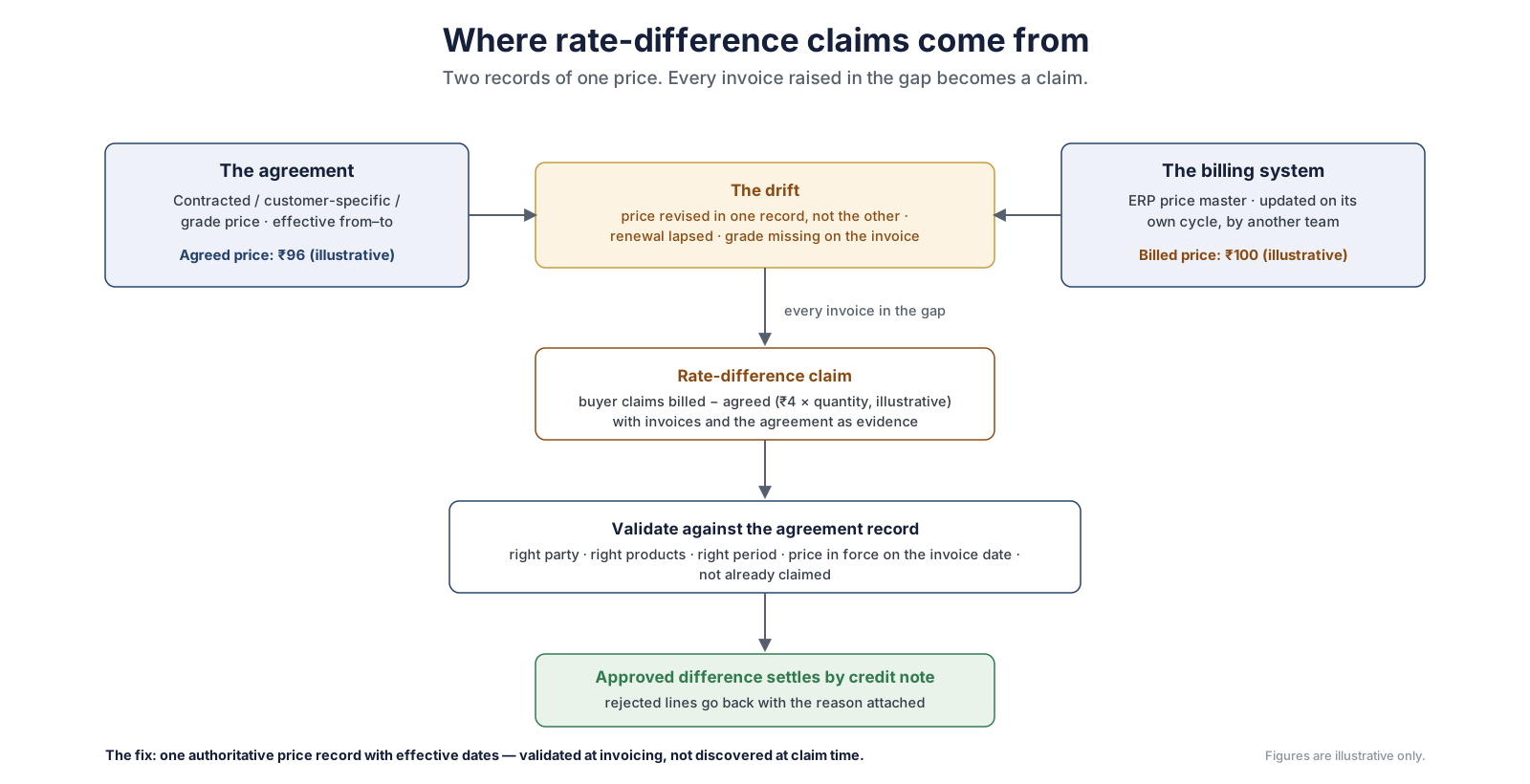
Contracted, Customer-Specific and Grade Pricing: How Negotiated Prices Work
Negotiated prices — contracted, customer-specific and grade-based — and the claims and reconciliation work each one creates.
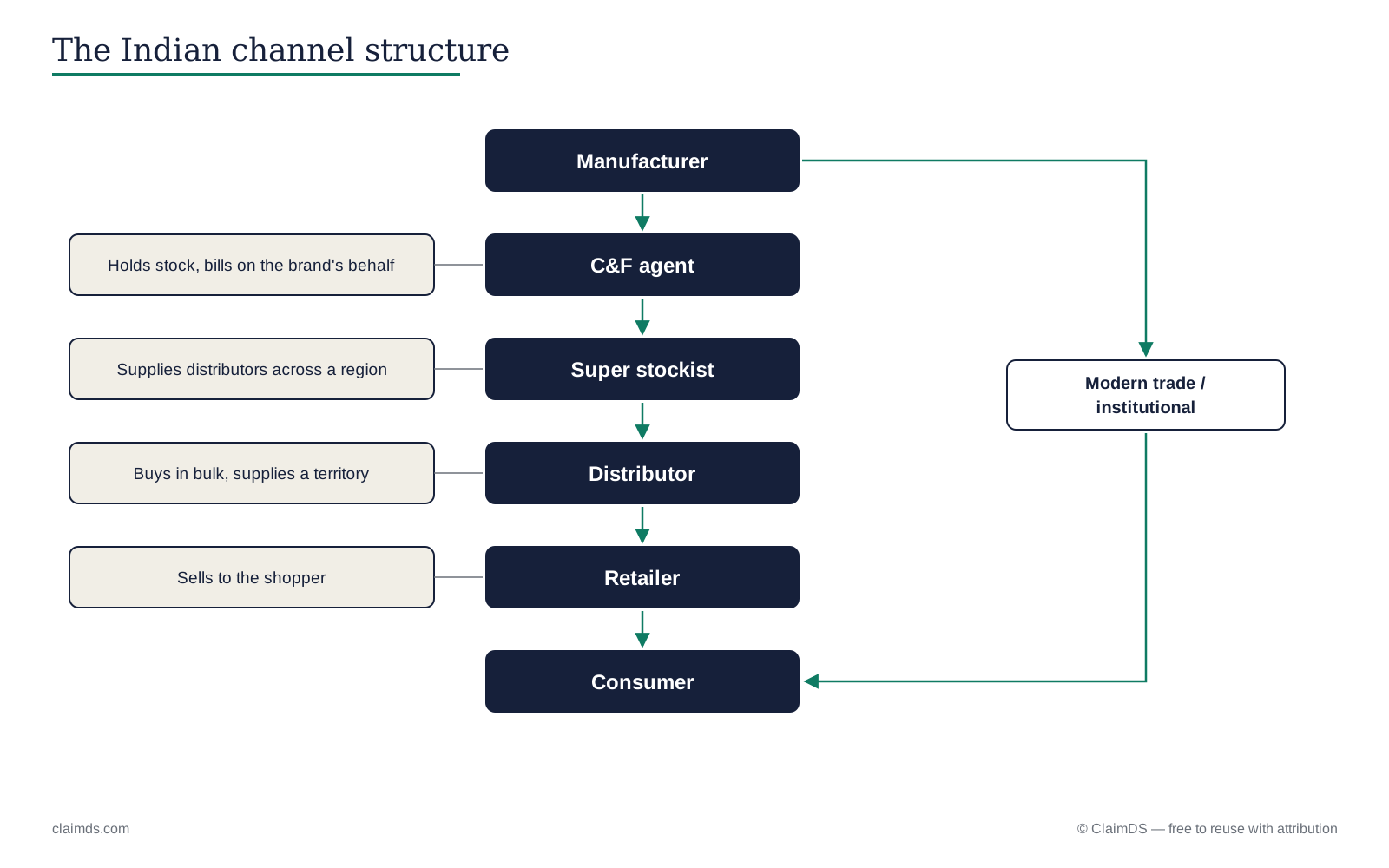
List Price, MRP, Brochure Price and Reseller Price: What Each One Means
The published prices in a channel — list, MRP, brochure and reseller price — and what each one actually commits you to in India.
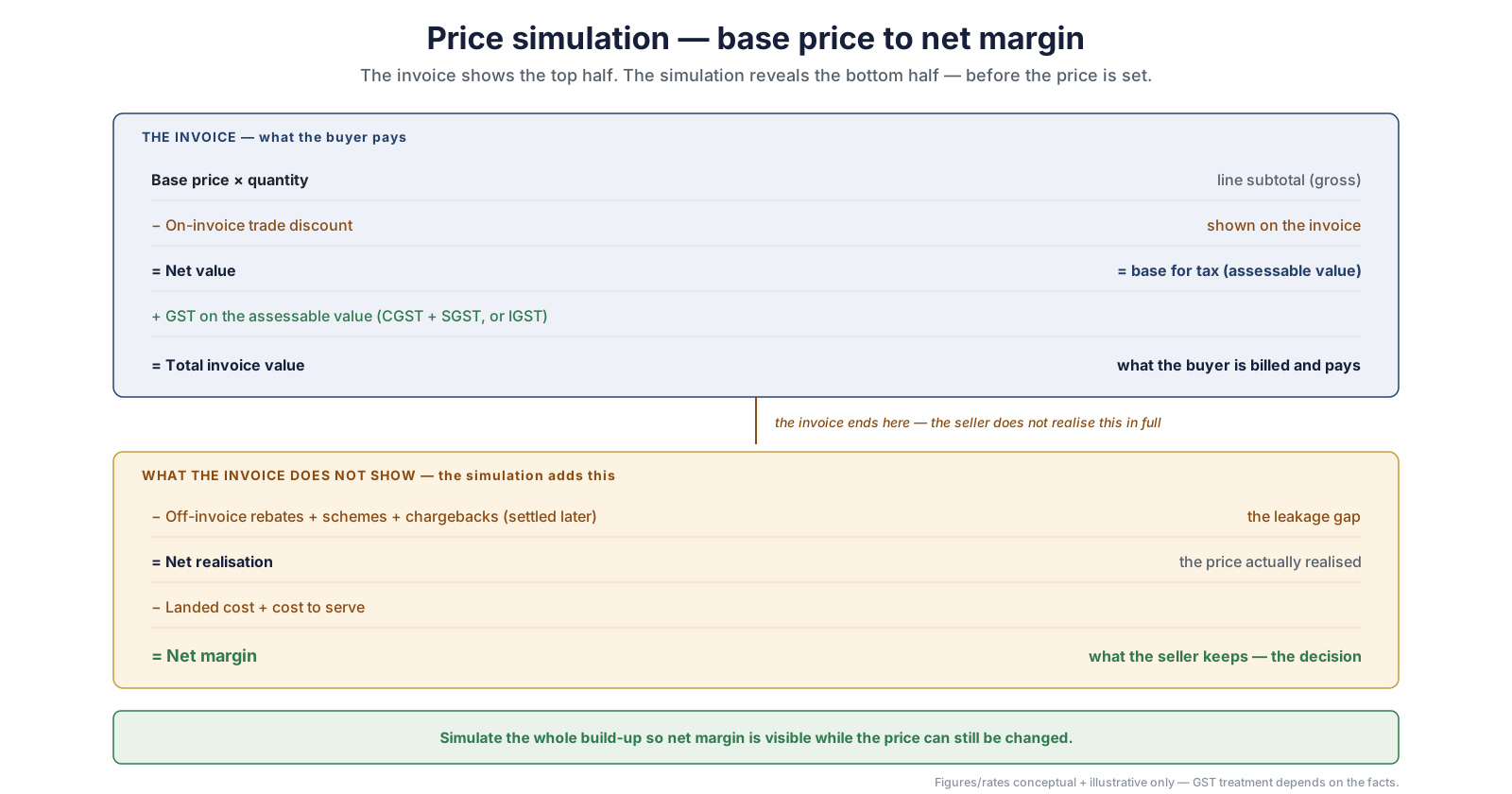
Price Simulation: From Base Price to Net Margin, Line by Line
How to simulate a price line — base price, subtotals, net value, the base for tax, total invoice value and net margin — before you commit to it.
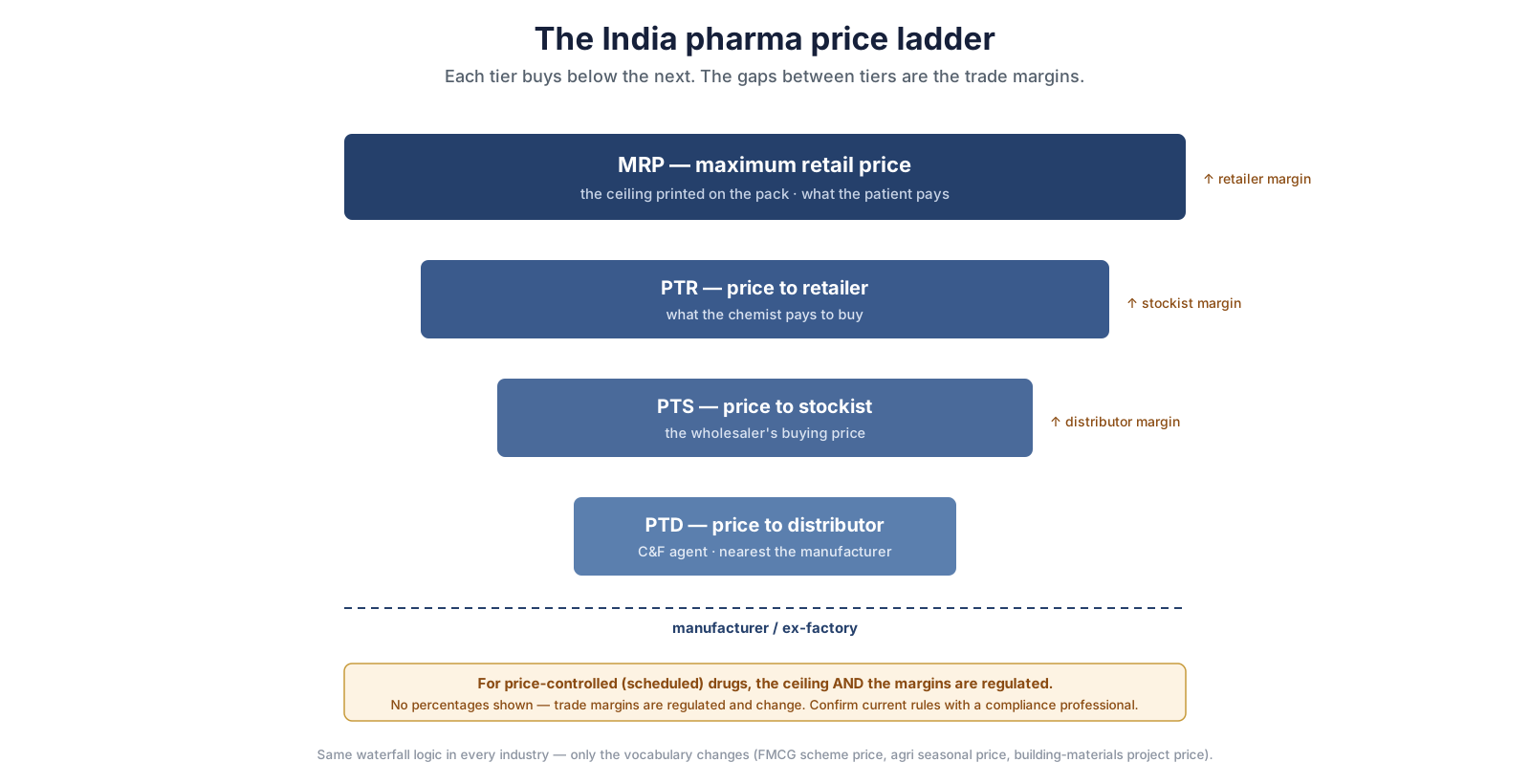
Price Types by Industry: Pharma, FMCG, Agri-Inputs and Building Materials
Price-type vocabularies differ by industry — pharma PTR/PTS/PTD, FMCG tier pricing, agri-input seasonal pricing, building-materials project pricing.
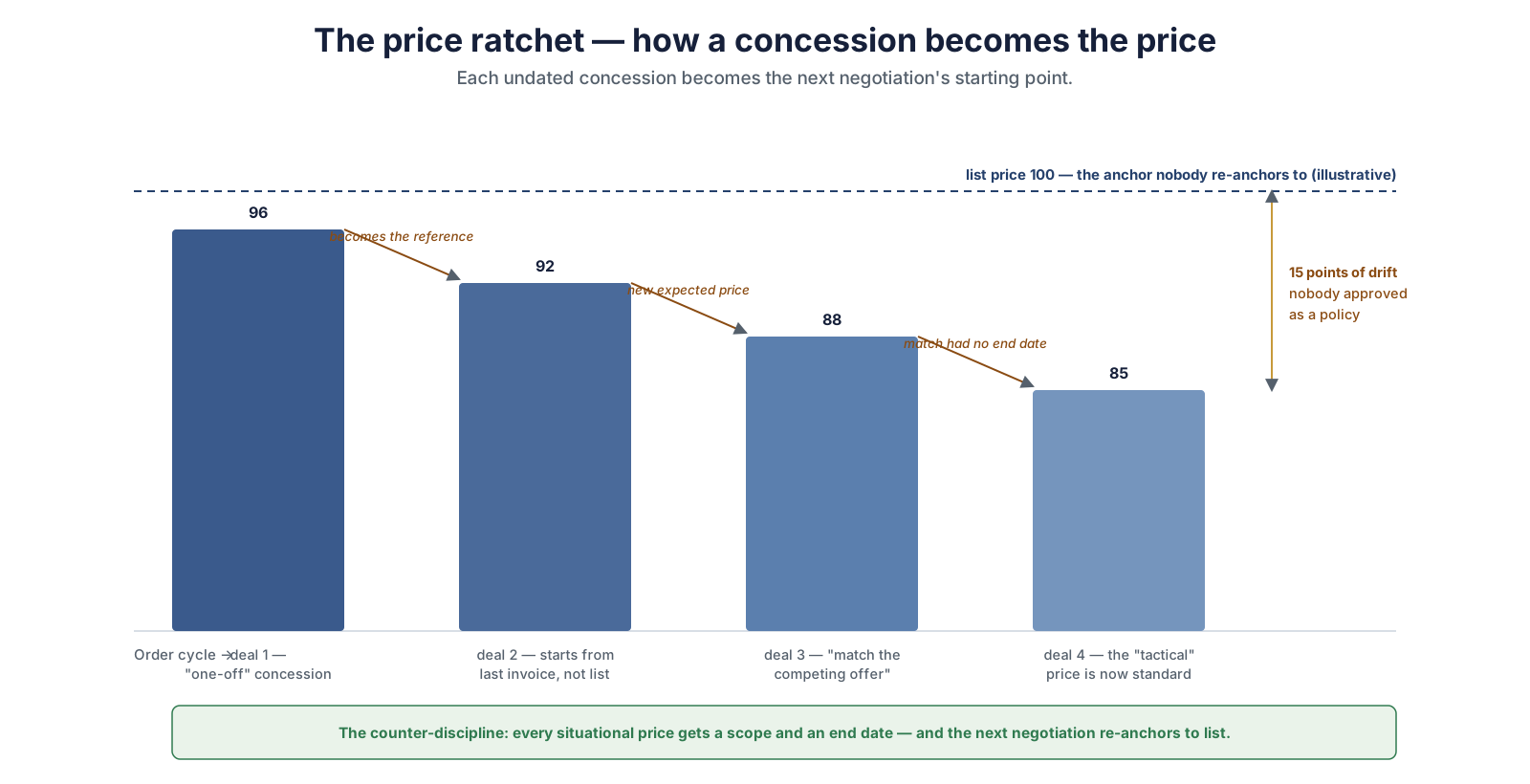
Situational Pricing: Last Invoice, Customer Expectation, Competition and Tactics
The prices that come from a situation rather than a price list — last invoice, customer expected, meeting-competition and tactical pricing.
What Faster Claim Settlement Is Worth: Claims, Cash and Working Capital
An unsettled claim is your money sitting in someone else's system. How settlement speed affects a distributor's working capital, with worked examples.
Connected Claims: How Invoice and Sales Data Moves Between Your ERP, Your Brands and Your Claims
How invoice and secondary-sales data moves between a distributor's ERP, the brand and settlement — file upload, direct connection, and when each fits.
Exporting Sales and Purchase Invoices from Tally for Claim Settlement
How to get invoice data out of Tally in a form a claims workflow can use — what to export, which fields matter, and how to keep it reconcilable.
File Upload, Direct Connection or API: How Claim Data Actually Moves
Three ways invoice and claim data moves between systems — plain English, no jargon, with the trade-offs of each for an Indian distributor or brand.
The Invoice Upload File: What a Claims Workflow Needs, Field by Field
A practical reference for the invoice file behind every scheme claim — required fields, formats, date and number conventions, and what breaks uploads.
Maker-Checker and Audit Trails When Claim Data Is Imported
Once claim data is imported rather than typed, the control question changes. What maker-checker and an audit trail should cover for data from elsewhere.
Marg ERP: Getting Invoice Data Out for Claim Reconciliation
Distributors running Marg still have to evidence scheme claims. What invoice data a claim needs, how to get it out, and how to keep it reconcilable.
Master Data Hygiene: Why Claims Fail Before Anyone Checks the Scheme
Most claim reconciliation failures are master-data failures. How party codes, GSTINs and SKU mapping decide whether a scheme claim settles or is disputed.
Receiving Secondary-Sales Data — and Actually Settling Schemes On It
Collecting secondary-sales data from distributors is the easy part. Making it consistent enough to settle a scheme on is the real work — what that takes.
Reconciling Invoice Data Against the Agreement Before You Pay a Claim
A claim is only valid if the invoices behind it meet the agreement behind it. The checks that belong between receiving a claim and settling it.
Reducing Distributor Claim Turnaround Time: Where the Days Actually Go
A distributor claim passes through submission, validation, approval and settlement. Each stage adds days — where they accumulate, and how to compress them.
SAP Business One and Channel Claims: Exchanging Data Without a Big Project
Running SAP Business One and still settling schemes in spreadsheets? How claim data can move between a mid-market ERP and a claims workflow.
What Good Secondary-Sales Data Looks Like
A practical specification for secondary-sales data used to settle channel schemes — required fields, outlet identity, item codes, periods and restatements.
Sharing Secondary-Sales Data With Brands — and What It Unlocks
Brands fund secondary schemes on data they can see. What secondary-sales data to share, in what form, and how it turns into scheme payouts.
Revenue Leakage in High-Volume, Low-Margin Distribution: Where the Money Actually Goes
In high-volume, low-margin businesses like FMCG distribution, small leaks decide profitability. Where revenue leaks, and how to find it before year-end.
General Trade vs Modern Trade in India: What's the Difference?
General trade and modern trade are the two faces of Indian retail. What separates them, and why claims, schemes and margins work differently in each.
ASM and Field-Force Incentive Structures for Indian Distribution
How to structure incentives across a field sales hierarchy — sales officer, ASM and RSM — in Indian distribution, so each tier is paid on the right base.
How to Calculate Sales Incentives in Excel (and Where It Breaks)
A step-by-step way to calculate sales incentives in Excel — mapping, slabs, gates and payout — and the point at which a spreadsheet stops being safe.
Paying C&F and DSA Partners: Commission for Carrying-and-Forwarding and Direct-Selling Agents
How carrying-and-forwarding (C&F) agents and direct-selling agents (DSA) are paid commission in India — two external partner types, clearly explained.
Channel Partner and Sales-Agent Commission in India: A Practical Guide
How to pay commission to external channel partners and sales agents in India — the agreement, the invoice, the payout, and the tax split from an incentive.
How to Structure a Commission Agent Agreement in India
What a commission agent agreement should cover — scope, rate, qualifying conditions, evidence, payment terms and tax responsibilities — in India.
Commission Invoice Format in India: What a Partner's Invoice Must Show
What a partner's commission invoice should contain — base commission, GST shown separately, GSTIN and PAN — so TDS is computed correctly on the base.
Fixed vs Variable Pay and OTE in Sales Compensation
How fixed pay, variable pay and on-target earnings (OTE) fit together in a sales comp plan — the pay mix, and how to choose it for an Indian sales team.
How to Design a Sales Incentive Plan for Your Field Sales Team
A practical guide to designing a sales incentive plan for an Indian field team — quotas, OTE, accelerators, caps, qualifier gates, payout and clawback.
Is a Sales Incentive Part of PF Wages?
Whether a sales incentive or variable pay counts towards PF wages is contested and fact-specific. What the position turns on, and why to take advice.
Referral and Channel-Partner Commission Programs
How to design a referral or channel-partner commission program — the earning event, the rate, qualification and payout — for Indian businesses.
Scheme and Claim Management Beside Your Accounting System
What belongs in your accounting system and what belongs in a claims system beside it — schemes, claims, accruals and settlements, whatever ERP you run.
How to Move Rebate and Claim Work Off Spreadsheets
A practical guide to migrating rebate, scheme and claim work off spreadsheets — what to extract, how to map schemes, handle history, and cut over.
Managing Rebates, Schemes and Claims When You Run Busy
How Indian distributors and manufacturers on Busy handle rebates, trade schemes and claims — where the ledger ends and the claims workflow begins.
Managing Rebates, Schemes and Claims When You Run Tally
How Indian distributors and manufacturers on Tally handle rebates, trade schemes and claims — where the ledger ends and the claims workflow begins.
Managing Rebates, Schemes and Claims on Zoho Books
How Indian distributors and manufacturers on Zoho Books handle rebates, trade schemes and claims — where the ledger ends and the claims workflow begins.
Primary, Secondary and Tertiary Sales: What They Mean and Why Your Claims Depend on Them
What primary, secondary and tertiary sales mean, where each tier's data lives, how to verify it, and why Indian trade claims settle on secondary data.
ERP Integration for Claims, Rebate & TPM Software: What Indian Businesses Should Check
Why ERP integration decides claims/rebate/TPM software in India — the data flows that matter, the sales-incentive data you need, and a readiness checklist.
How Rebate Software Improves Financial Reporting Accuracy
How manual rebates corrupt financial reporting — under- or over-accrued liabilities, close surprises, misstated margins — and how software fixes each.
Claims Management ROI & Settlement-Time Benchmark Guide
A transparent ROI framework for channel-claim automation and a settlement-time benchmark methodology — inputs, formula and a worked example.
Key terms
Quick definitionsRelated topics
See RebateLedger on your own claims data
A 30-minute walkthrough tailored to how your channel actually settles claims.