
Incentive Management Software & Solutions for Channel Businesses (India)
Incentive management software for Indian channel businesses — dealer and distributor schemes, target and volume incentives, accrual, GST settlement.
In short
Incentive management software automates the trade and channel incentives a business runs for its distributors and dealers — scheme design, accrual, claim validation, settlement and analytics — across a multi-tier channel, settling in India through GST credit notes. It is distinct from HR-style sales-commission software.
Incentive management software automates the trade and channel incentives a business runs for its distributors and dealers — scheme design, accrual, claim validation, settlement and analytics — across a multi-tier channel, settling in India through GST credit notes. It is the commercial software layer that turns scattered scheme circulars into a controlled, auditable program.
What incentive management means here
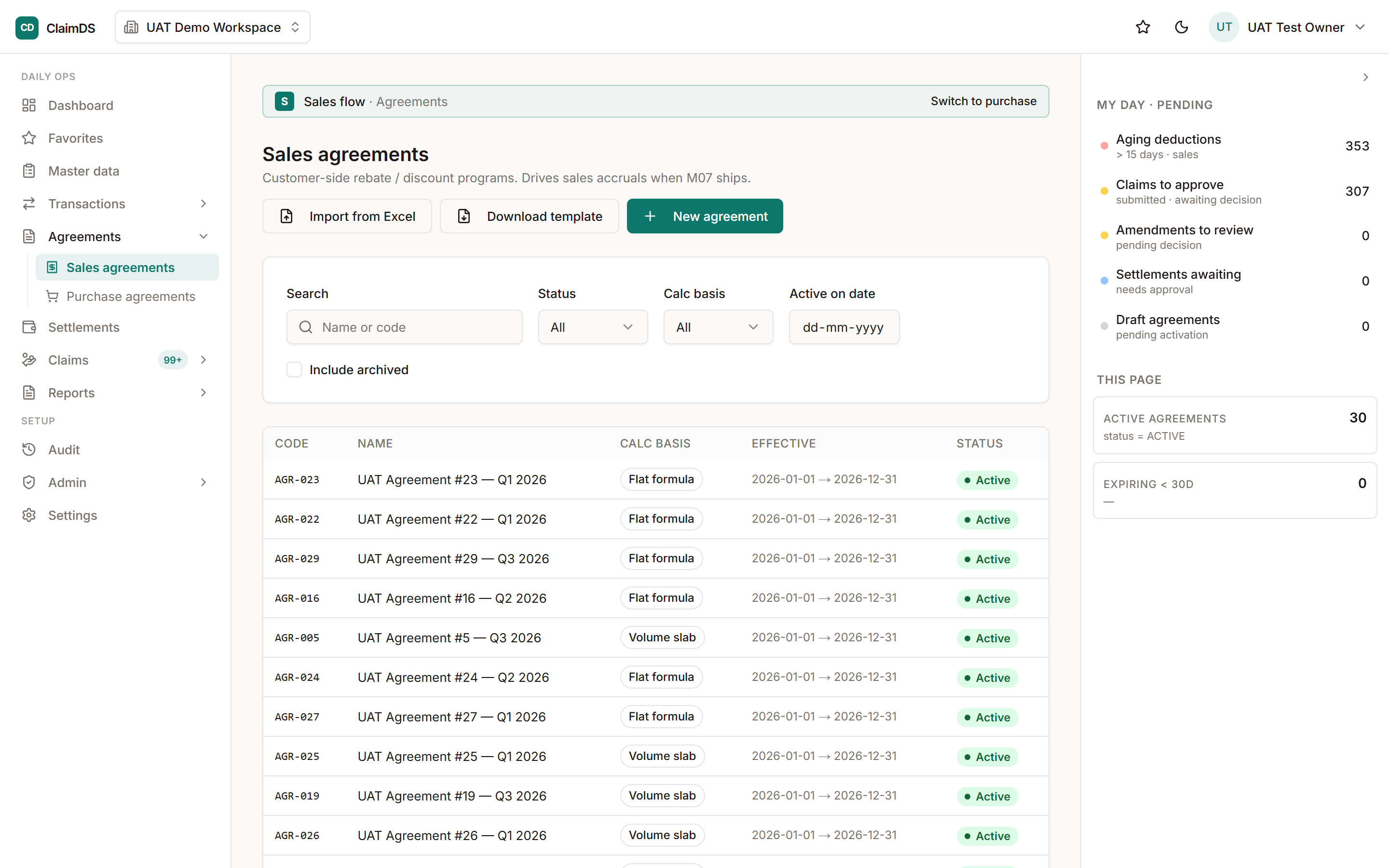
In the Indian channel, "incentives" are the schemes a manufacturer or brand runs to move product: volume and target incentives, dealer and distributor schemes, growth bonuses. Managing them is a software problem once the volume outgrows spreadsheets. This is the commercial companion to the broader guide on channel incentive programs, and it sits under the rebate management software pillar.
Not the same as sales-commission software
Channel incentive management ≠ incentive compensation. HR/sales-commission tools pay your own reps for closing deals. Channel incentive management settles what your external distributors and dealers earn — a different payee, a different lifecycle, and, in India, GST credit-note settlement. Keeping the two apart avoids buying the wrong category.
Capabilities buyers evaluate
| Capability | Why it matters |
|---|---|
| Scheme/program design | Model slab, growth, target and mix incentives as rules |
| Real-time accrual | Finance sees the live liability, not a quarter-end guess |
| Claim validation | Each claim checked against agreement + data |
| Settlement | GST-correct credit note with an audit trail |
| Analytics | Scheme profitability and partner performance |
| GST fidelity | Right credit-note type by rule |
For the deeper feature list, see core features of a rebate management system. To see partner-incentive tracking end-to-end — from scheme design to settled credit note — see channel partner incentive tracking.
An adjacent capability some buyers ask about is gamification — leaderboards, badges and milestone recognition that make dealer and partner engagement visible alongside the money. It can lift participation in long-running schemes, and some channel-engagement platforms lead with it; treat it as a complement to, not a substitute for, accurate accrual and GST-correct settlement, and evaluate it separately from the settlement capabilities above.
Incentive software for small businesses and startups
You don't need enterprise turnover to need this. A small manufacturer or startup brand running even three or four dealer schemes hits the same spreadsheet failure modes as a large one — just with less finance headcount to absorb them. What changes at this size is the buying criteria: cloud-based delivery with nothing to install or maintain, subscription pricing that stays affordable relative to the scheme spend it controls, and mobile access so field teams and channel partners can check scheme status and raise claims from the market rather than from a desk. The category caution above applies doubly here — low-cost sales-commission (ICM) tools aimed at paying your own reps are a different product, however similar the name.
Where RebateLedger fits vs DMS/SFA peers
RebateLedger handles channel incentives as one of several claim types in one India-first product, with multi-tier RTM fidelity and GST credit-note depth at a mid-market price (a RebateLedger-supplied ~₹3–5 lakh/yr figure, positioning not a benchmark). The realistic alternative set is Indian DMS/SFA platforms — strong on distribution and field force, lighter on the settlement of incentives — rather than Western enterprise suites. The positioning is in why RebateLedger; incentive structures connect to distributor rebate software, dealer rebate software, volume rebates and the trade promotion management pillar.
What the software needs to support depends on which incentive types you actually run. The full catalogue of channel incentive structures is the checklist to evaluate against.
GST note: Incentives settle via credit notes/discounts with real ITC consequences. This article is general information, not tax or legal advice; GST positions — including CBIC Circular No. 251/08/2025-GST and the Finance Act 2026 amendments to Section 34 of the CGST Act (assented 30 March 2026, not yet notified into force as of publication) — must be re-verified at publish time with a qualified professional.
Frequently asked questions
What is incentive management software?
Incentive management software automates the trade and channel incentives a business runs for its distributors and dealers — scheme design, accrual, claim validation, settlement and analytics — across a multi-tier channel. In India it settles through GST credit notes. It is distinct from HR/sales-commission "incentive compensation" software.
How is channel incentive management different from sales-commission software?
Sales-commission (incentive compensation) software pays your own salespeople for deals they close. Channel incentive management settles the schemes you run for external distributors and dealers — volume, growth and target incentives claimed and reconciled across tiers, and settled by credit note. Different payee, different mechanics.
How are channel incentives settled in India?
Usually by GST credit note. The choice between a tax credit note (with ITC reversal) and a financial credit note (no reversal) depends on whether the incentive meets the Section 15(3)(b) conditions, per CBIC Circular 251/08/2025-GST.
Can incentive software calculate distributor slab schemes automatically?
Yes — automated slab calculation is a defining feature, and the detail to verify is retroactive versus incremental logic. In a retroactive scheme, crossing a threshold re-rates all eligible purchases: a distributor buying ₹1.2 crore against slabs of 2 percent up to ₹1 crore and 3 percent above earns 3 percent on the whole amount, not just the excess — a computation spreadsheets routinely get wrong. Good software configures either behaviour explicitly.
How does incentive software help with TDS compliance on channel incentives?
By classifying every payout at source and accumulating values per recipient across the year. Benefits in kind — gold coins, trips, gadgets, channel-meet gifts — can attract withholding once a recipient's aggregate crosses the statutory yearly threshold, while normal trade discounts and rebates are excluded. Software tags each payout type at design time, tracks cumulative per-recipient value across schemes, and produces the workings the tax team needs.
What are the core features of incentive management software?
Seven core capabilities: programme configuration covering slabs, targets, growth multipliers and product-mix conditions; live achievement tracking against sales data so participants see their standing; transparent earnings calculation showing how each rupee was computed; payout management across credit notes, transfers and points; approval workflows with audit trails; withholding and settlement classification for compliance; and programme analytics measuring cost against incremental performance. Partner-facing transparency is the motivational core.
What is dealer loyalty program software and how does it relate to claims systems?
Dealer loyalty software runs points-based programmes for channel influencers — points earned on purchases or scans, redeemed from a catalogue. It is a sibling channel-spend stream needing the same discipline — budgets, accruals, audit trails and tax handling. Running loyalty and trade schemes in silos loses sight of total spend per partner; one channel-spend view restores it — the design RebateLedger follows.
Is sales incentive software the same as channel incentive software?
No — they differ in audience, data and tax. Sales-incentive software rewards your employees, computing what each has earned and handing that amount to payroll, which processes it under its own rules. Channel-incentive software rewards independent businesses: channel sales data, partner-level scheme rules, claim workflows and settlement through credit notes. Buying one tool for both usually compromises one side. RebateLedger works the channel stream and is not an HR or payroll product.
See RebateLedger on your own claims data
A 30-minute walkthrough tailored to how your channel actually settles claims.