
Chargeback Dispute Process: Step-by-Step Resolution
How to dispute and resolve trade chargebacks and deductions — distinguish valid from invalid, gather evidence, run the resolution workflow and recover.
In short
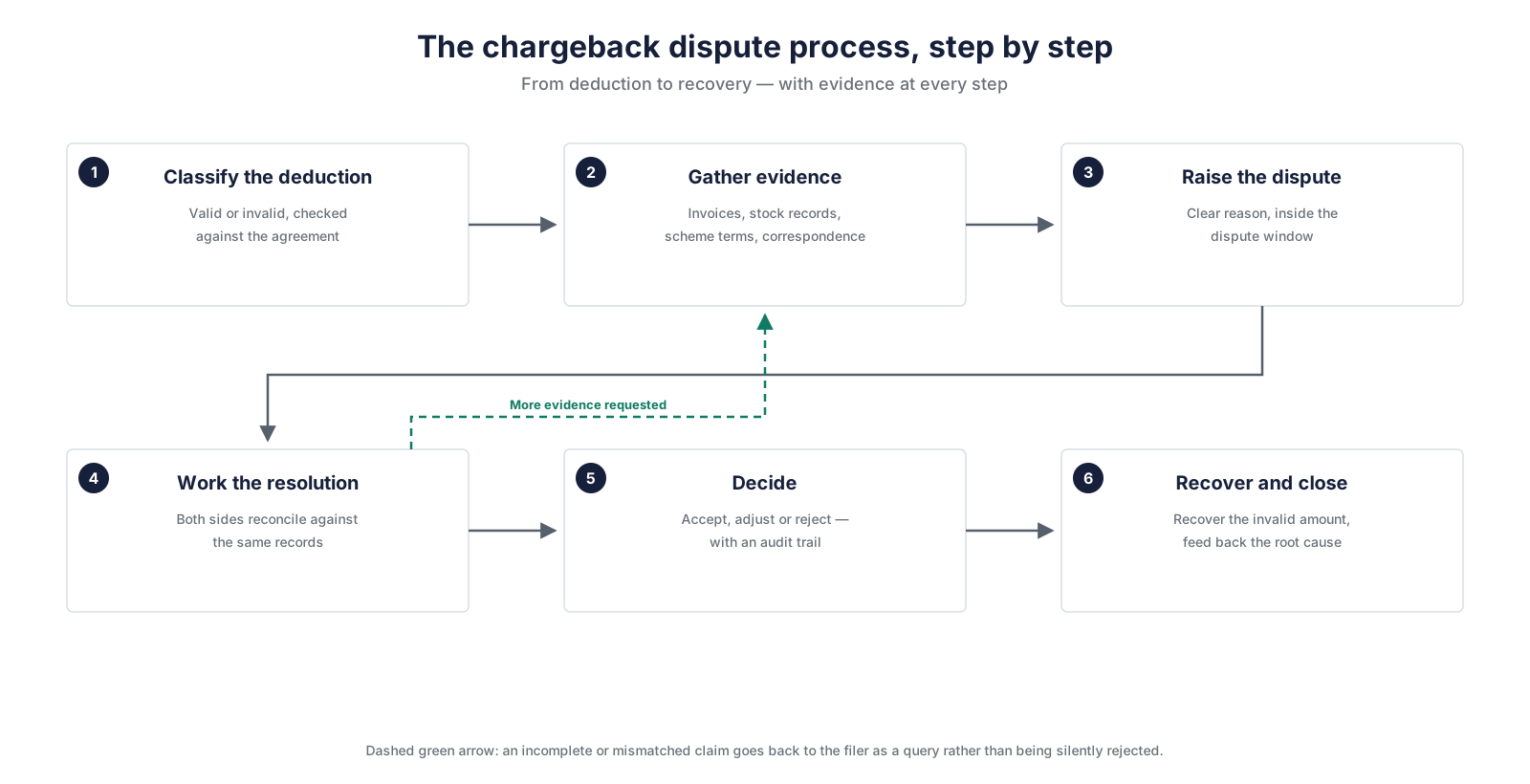
To dispute a trade chargeback: classify the deduction as valid or invalid against the agreement, gather evidence such as invoices and stock records, raise the dispute with a clear reason inside the window, work the resolution workflow, and recover the amount. Most disputes are lost on missing evidence and missed deadlines, not on merit.
The chargeback dispute process resolves contested trade deductions: classify the deduction as valid or invalid against the agreement, gather evidence, raise the dispute within the window, work the resolution workflow, and recover the amount. Most disputes are lost not on merit but for missing evidence and missed deadlines — which is exactly what a system fixes.
Valid vs invalid deductions
| Test | Valid | Invalid (dispute it) |
|---|---|---|
| Matches agreement | Yes | No / not covered |
| Within window | Yes | Out-of-window |
| Calculation | Correct vs data | Over-claimed / duplicate |
| Quantity | ≤ supplied | Exceeds supply |
The first job is triage: accept the valid, dispute the invalid. Doing this at scale by hand is impractical — hence chargeback claim software and the broader chargeback management hub.
The dispute playbook
- Classify the deduction. Run the valid/invalid tests against the agreement and data.
- Gather evidence. Invoices, scheme terms, proof of delivery, stock records — assembled before you raise the dispute, not after.
- Raise the dispute. Submit within the window with a clear, specific reason. Vague disputes get rejected.
- Resolve. Work the agreed resolution workflow; escalate by exception, not by default.
- Recover. Recover the amount, close the record, and capture the reason for analytics.
What does the dispute lifecycle look like end-to-end?
The five-step playbook above is the skeleton. In practice a contested chargeback moves through six operational stages, each with its own owner and its own clock. (The terms billback, chargeback and deduction are disambiguated in the glossary — this lifecycle applies to any of them once contested.)
1. Notice. The chargeback lands — as a debit note, a deduction on a remittance, or a portal entry. The stage is won or lost on capture: the item is logged the day it arrives, given a reference, coded with a reason, and matched to the account and agreement it cites. An item that sits unlogged in an inbox is already ageing against a window nobody is watching.
2. Evidence assembly. Before any letter is written, the file is built: the agreement clause the deduction cites (or fails to cite), the invoices, the proof of delivery, the scheme circular and its dates, the price list in force, prior credit notes on the same subject. Assembly is fast when these live in one system and archaeological when they are scattered — the difference described in deduction management best practices.
3. Representation. The formal contest: a dispute letter stating the specific ground of failure with the evidence attached, submitted inside the response window. Specificity is the discipline — "we dispute this deduction" invites rejection; "the cited scheme closed on 31 March and the purchases fall in April, circular attached" invites a decision.
4. Escalation. If the window passes without a substantive response, the dispute moves up — from the partner's accounts contact to their commercial owner, and internally from claims ops to the sales relationship. Escalation is by exception and by rule: a defined trigger (deadline breach), a defined path, no personal discretion about whether chasing is "worth the awkwardness".
5. Resolution. A recorded decision: the chargeback is upheld (evidence supported it), reversed (your dispute prevailed), or split (part conceded, part recovered). Whoever approves the resolution should not be the person who researched it — the same segregation-of-duties logic as claim and rebate approval workflows.
6. Recovery. The money actually moves: collection, offset against the next payable credit note, or — where the resolution went against you — a clean, approved acceptance. The record closes with its reason code captured, because the pattern analysis across closed disputes is what shrinks next quarter's queue.
Which evidence wins which dispute?
Evidence requirements differ by dispute type, and assembling the wrong pile is as fatal as assembling none. A working checklist by type:
| Dispute type | Core evidence | What usually decides it |
|---|---|---|
| Scheme / rebate deduction | Scheme circular with validity dates, claim record, slab calculation, sales data | Whether purchases fall inside the window and the slab math holds |
| Rate difference | Price list effective on invoice date, price-change communication, approval trail | Which price was operative on the date — documentation beats recollection |
| Damage / shortage | POD with remarks, transporter records, photos, GRN | Quantity evidence at the point of handover |
| Duplicate deduction | Prior credit note or settlement reference, remittance history | A traceable document showing the amount was already settled |
| Promotional compliance | Activity proof, display photos, agreed cost caps, trade agreement clause | Whether the activity matched what was agreed, at the agreed cost |
| Suspected invalid or inflated claim | Full transaction trail across the above | Pattern evidence — see chargeback fraud for the escalated version |
The industry flavour matters too: the evidence customs of FMCG distribution chargebacks and pharma distribution chargebacks differ in what partners deduct for and what proof each side keeps. The common thread is that winning evidence is captured at transaction time — the standard set by the settlement documentation playbook — because no dispute stage can conjure a POD that was never filed.
How do you run SLA and deadline discipline?
Disputes are lost to the calendar more often than to the merits, so the clocks are managed explicitly (day counts illustrative — set your own and enforce them):
- Classification SLA — every incoming chargeback logged and coded within a few working days of notice. This is the clock that protects all the others.
- Representation deadline — the contractual or agreed response window is tracked per item from the notice date, with the dispute filed comfortably inside it, not on its last day.
- Escalation trigger — a lapsed response window escalates automatically; silence from the partner must cost them attention, not buy them time.
- Ageing review — the whole dispute queue reviewed weekly by age band, with days-deduction-outstanding as the headline number; a rising band is next quarter's write-off forming.
- Closure discipline — no dispute closed without a recorded resolution and reason; "went quiet" is not a resolution state.
An illustrative stake: a ₹75,000 rate-difference chargeback disputed in week one, while the price-change email and approval trail are at hand, is a strong recovery candidate. The same chargeback surfaced at quarter-end — window lapsed, price list superseded, approver transferred — is a write-off wearing a dispute's clothes. The amount never changed; the calendar decided it.
What goes into the dispute letter?
Not a template — a contents checklist. A representation that gives the counterparty everything needed to decide contains:
- Identification — the chargeback or deduction reference, invoice number(s), remittance date and the exact amount disputed.
- The specific ground — the one reason this deduction fails: out of window, duplicate, quantity unsupported, price unsupported, not covered by the agreement. One ground argued with proof beats five asserted without it.
- The evidence list — each attached document named and tied to the ground it supports (circular with dates, prior credit-note reference, POD, price list).
- The remedy sought — reversal, repayment or offset, and the amount conceded if the dispute is partial.
- The clock — a stated response deadline, and what happens on breach (escalation, debit note).
- Named contacts — one owner on each side, so the dispute cannot dissolve into an unattributed email thread.
Evidence that wins
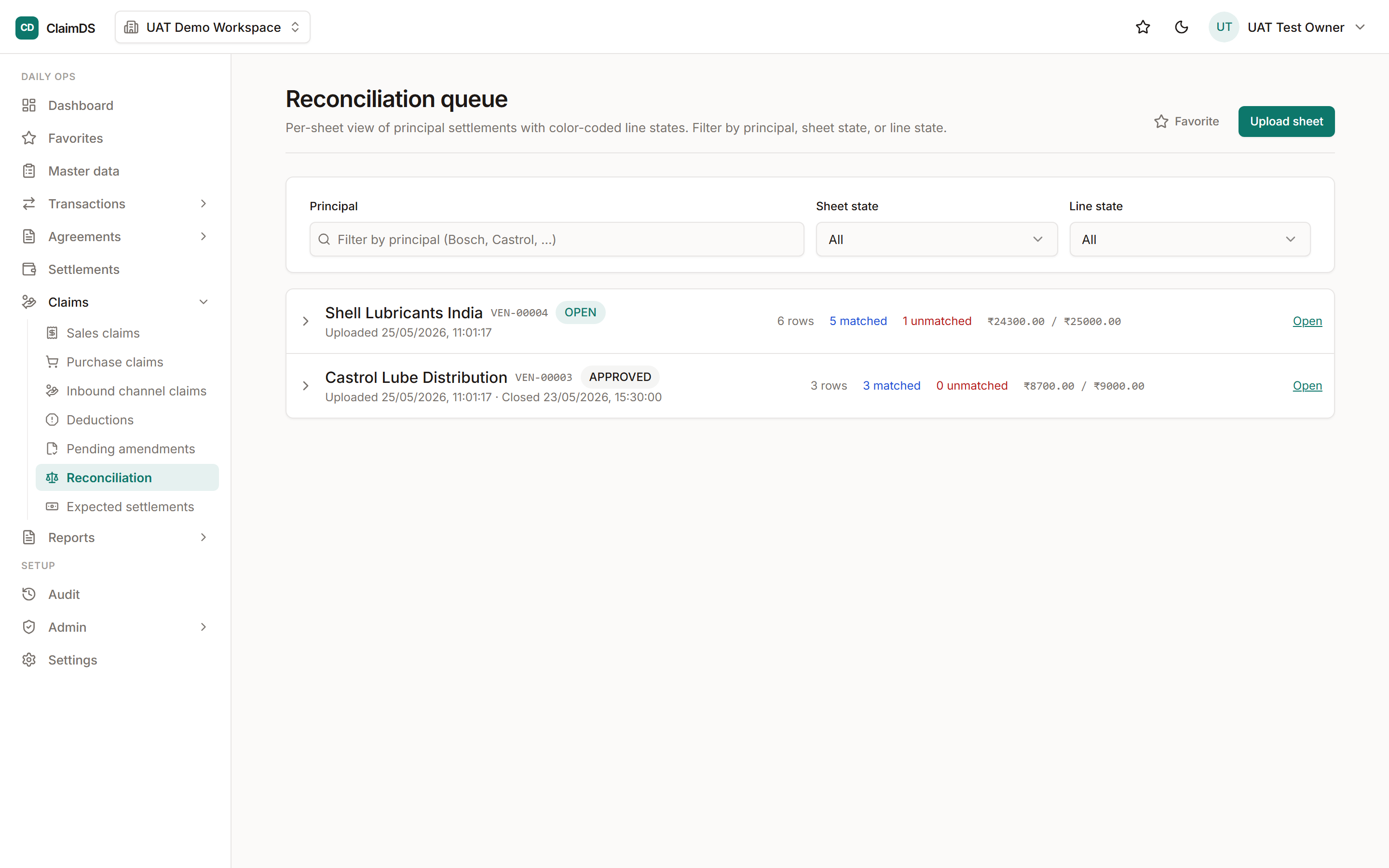
Evidence is the whole game. A valid claim with no organised proof is a write-off; an organised audit trail turns the same claim into a recovery. This is why disputes belong in a system that captured the original transaction, the agreement and the deduction together — see deduction reason codes and claim matching and the upstream chargeback process.
Resolution and recovery
Most disputes on these claims come down to a number neither side can reproduce. Building the chargeback and billback model in Excel sets out the three definitions — which two prices, which units qualify, which window — that decide it.
Track a days-deduction-outstanding clock so ageing disputes do not quietly become write-offs. The finance-leadership framing of recovery and leakage is in the CFO revenue-leakage playbook.
GST note: This article is general information, not tax or legal advice. Where settlement involves GST credit notes, positions — including CBIC Circular No. 251/08/2025-GST and the Finance Act 2026 amendments to Section 34 of the CGST Act, assented 30 March 2026 but not yet notified into force as of publication — must be re-verified at publish time with a qualified professional.
Frequently asked questions
How do you dispute a trade chargeback?
Classify the deduction as valid or invalid against the agreement, gather supporting evidence such as invoices and stock records, raise the dispute with a clear reason within the window, work the resolution workflow, and recover the disputed amount.
How do you tell a valid deduction from an invalid one?
A valid deduction matches the agreement, is in-window and is correctly calculated against verifiable data. An invalid one fails one of these tests — for example a duplicate claim, an out-of-window deduction, or a quantity that exceeds what was supplied.
Why are chargeback disputes lost?
Disputes are most often lost for lack of evidence and missed deadlines. Without an organised audit trail, valid claims cannot be substantiated and the deduction is written off by default.
What are the stages of a chargeback dispute lifecycle?
Six stages: notice, when the chargeback or deduction lands and is logged and classified; evidence assembly, gathering the agreement, invoices, PODs and records that prove or break it; representation, formally contesting it with a specific reason; escalation, moving it up both organisations when the window lapses without response; resolution, the recorded accept, recover or split decision; and recovery, collecting or offsetting the amount and closing the record.
What should a chargeback dispute letter contain?
A complete dispute letter identifies the chargeback reference, invoice numbers, dates and exact amount; states the single specific ground on which the deduction fails; lists each evidence document attached; states the remedy sought and the amount conceded, if any; sets a response deadline; and names a contact on each side. One ground argued with proof beats five grounds asserted without it.
What deadlines and SLAs should a dispute process run on?
Classify every incoming chargeback within days of notice, assemble evidence and represent well inside the contractual response window, escalate automatically when a deadline passes without response, and track days-deduction-outstanding on the whole queue. Most disputes are lost to the calendar, not the merits, so the clock is managed as seriously as the evidence.
What is a dispute win rate and how should it be used?
Dispute win rate is the percentage of disputed chargeback value ultimately recovered or reversed in your favour. Track it by reason code, counterparty and evidence type — the aggregate hides the signal. A high win rate on shortage disputes says contest every shortage; a chronically low rate on late-filing rejections says fix internal timeliness instead. Win-rate data also strengthens terms negotiations. Improve it by choosing better battles, not fighting harder.
How much time do partners have to dispute a chargeback decision?
Dispute windows are contractual, typically 30 to 90 days from the adjudication or deduction date; retailers publish theirs in vendor manuals and marketplaces in seller terms, some as short as a few weeks. As the disputing party, calendar the deadline the day a rejection lands and file a protective dispute rather than waiting for a perfect file. As the adjudicating party, enforce windows consistently and apply them uniformly across the channel.
See RebateLedger on your own claims data
A 30-minute walkthrough tailored to how your channel actually settles claims.